

Key Takeaways
- A minimalist skincare routine typically uses three to five products covering cleansing, moisturizing, and sun protection.
- Fewer products reduce the risk of ingredient interactions, irritation, and product-induced breakouts.
- Minimalism works well for sensitive and oily skin types but may leave some concerns — like hyperpigmentation or acne — underaddressed.
- Cost savings are real, but going too sparse can mean skipping genuinely useful actives.
- The goal is intentionality, not deprivation: every product should earn its place.
Reduces risk of irritation and allergic reactions
Each additional product introduces new potential allergens and irritants. Fewer formulations mean a smaller exposure surface, which is especially meaningful for sensitive or reactive skin types.
Easier to identify problem products
When a breakout or reaction occurs, a short ingredient list narrows down the culprit immediately. Troubleshooting becomes straightforward rather than a process of elimination across a dozen products.
Lower ongoing cost
Three to five products cost significantly less to replace than a ten-step shelf. Over time, the savings compound without necessarily sacrificing skin health outcomes for most people.
Builds consistent daily habits
Short routines are more sustainable. A two-step regimen completed every day delivers more reliable results than a complex multi-product routine that gets skipped when time is short.
Reduces decision fatigue
Choosing between several serums every morning adds low-level cognitive load. A fixed, minimal set of products removes that friction entirely.
May underserve specific skin concerns
Conditions like acne, hyperpigmentation, and visible signs of photoaging often respond to targeted actives that a bare-bones routine simply doesn't include. Minimalism without strategy can mean neglect.
Can create a false sense of completeness
Stopping at moisturizer and cleanser feels sufficient until an unaddressed issue worsens. The simplicity of the routine can discourage adding genuinely needed products.
Minimal routines still require ingredient knowledge
Choosing three products wisely demands more label literacy than choosing ten by instinct. The bar for each product's quality and suitability rises when it has to do more work.
Not always budget-friendly in practice
Effective fragrance-free, gentle formulations can be harder to find at lower price points. Minimalism in theory doesn't always translate to minimalism in cost.
Our Verdict
A minimalist skincare routine is a sound starting point and a useful reset for anyone overwhelmed by a crowded shelf. It reduces the risk of irritation, saves money, and builds a sustainable daily habit. Where it falls short is for people managing specific skin conditions that genuinely benefit from targeted actives — in those cases, minimalism means being selective, not bare.
Best suited to those with sensitive, reactive, or generally healthy skin who want a consistent, low-effort routine without the noise of an overstuffed regimen.
What Minimalist Skincare Actually Means
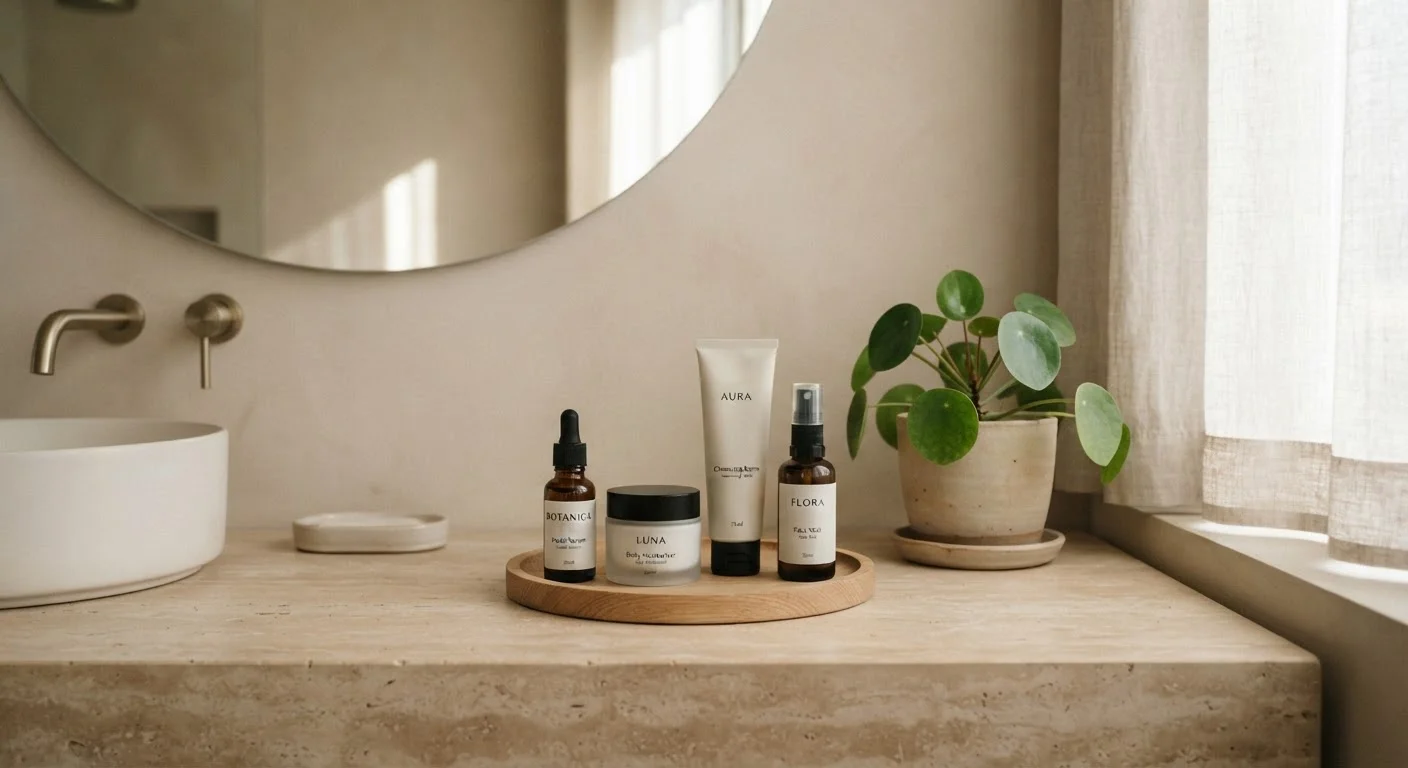
Minimalist skincare isn't about abandoning your routine — it's about stripping it to the essentials that genuinely perform. At its core, a minimalist approach typically involves a gentle cleanser, a moisturizer suited to your skin type, and a broad-spectrum sunscreen. Everything beyond that is optional and should be justified by a specific concern rather than habit or marketing pressure.
This philosophy mirrors the logic behind a capsule wardrobe: fewer, well-chosen pieces that work harder than a bloated collection. In skincare terms, that means understanding what each product actually does — which is easier said than done when ingredient lists run to 30 lines.
The appeal is intuitive. Simpler routines are easier to maintain, cost less over time, and eliminate the guesswork of figuring out which of seven products caused a new breakout.
The Advantages of Paring Back
There are real, evidence-informed reasons dermatologists and estheticians often recommend restraint when building a skincare routine.
Reduces risk of irritation and allergic reactions
Each additional product introduces new potential allergens and irritants. Fewer formulations mean a smaller exposure surface, which is especially meaningful for sensitive or reactive skin types.
Easier to identify problem products
When a breakout or reaction occurs, a short ingredient list narrows down the culprit immediately. Troubleshooting becomes straightforward rather than a process of elimination across a dozen products.
Lower ongoing cost
Three to five products cost significantly less to replace than a ten-step shelf. Over time, the savings compound without necessarily sacrificing skin health outcomes for most people.
Builds consistent daily habits
Short routines are more sustainable. A two-step regimen completed every day delivers more reliable results than a complex multi-product routine that gets skipped when time is short.
Reduces decision fatigue
Choosing between several serums every morning adds low-level cognitive load. A fixed, minimal set of products removes that friction entirely.
One of the most practical benefits is reducing the chance of ingredient conflicts. When products are layered without attention to formulation compatibility — certain acids alongside retinoids, for example — you can inadvertently destabilize active ingredients or increase skin sensitivity. Using fewer products naturally lowers that risk. For a deeper look at how product sequencing works, see our guide on skincare layering logic.
Consistency is another underrated advantage. A two-minute routine is far easier to maintain than a ten-step one. Dermatologists frequently note that a simple routine done reliably outperforms a complex one done sporadically.
Where Minimalism Falls Short
A stripped-back approach isn't without genuine trade-offs. Understanding them helps you decide whether minimalism is a permanent strategy or a useful starting point.
May underserve specific skin concerns
Conditions like acne, hyperpigmentation, and visible signs of photoaging often respond to targeted actives that a bare-bones routine simply doesn't include. Minimalism without strategy can mean neglect.
Can create a false sense of completeness
Stopping at moisturizer and cleanser feels sufficient until an unaddressed issue worsens. The simplicity of the routine can discourage adding genuinely needed products.
Minimal routines still require ingredient knowledge
Choosing three products wisely demands more label literacy than choosing ten by instinct. The bar for each product's quality and suitability rises when it has to do more work.
Not always budget-friendly in practice
Effective fragrance-free, gentle formulations can be harder to find at lower price points. Minimalism in theory doesn't always translate to minimalism in cost.
Perhaps the most significant limitation is that some skin concerns — persistent acne, post-inflammatory hyperpigmentation, signs of photoaging — respond best to specific active ingredients like retinoids, niacinamide, or chemical exfoliants. A truly bare routine may sidestep these entirely, leaving treatable concerns unaddressed.
It's also worth noting that fragrance-free, minimal-ingredient products — often the format minimalists gravitate toward — aren't universally available at every price point. Our breakdown of fragrance in skincare covers what to weigh when navigating that trade-off.
Building Your Minimalist Routine in Practice
When to Consider Adding Back a Product
Minimalism doesn't mean permanence. If a concern — persistent dryness, recurring breakouts, uneven tone — hasn't improved after four to six weeks of a consistent basic routine, it may be time to introduce one targeted product. Add only one at a time and give it at least four weeks before evaluating. This is general guidance, not medical advice; a dermatologist can offer personalized direction.
If you're starting from scratch or resetting an overloaded shelf, a useful framework is: cleanse, protect moisture barrier, apply SPF. From there, add one targeted product only if you have a specific, consistent skin concern — not because a product seems appealing.
For those working through a more structured morning regimen, our step-by-step morning routine guide walks through each stage and why order matters. Pair that with foundational grooming habits that support your skin health beyond what's in a bottle.
3–5
Products in a functional minimalist routine
Dermatologists generally suggest a cleanser, moisturizer, and SPF as the non-negotiable core, with one or two targeted additions if needed.
70%+
Of skin barrier disruptions linked to over-cleansing or over-exfoliating
Estimates from dermatology literature suggest that a significant share of reactive skin issues stem from too many active products, not too few.
Minimalism in skincare, like most wellness habits, is most sustainable when it's built around your actual skin — not an aesthetic or an ideal. The goal is a routine you'll actually do, with products you genuinely need.
This article is for general informational purposes only and is not a substitute for professional dermatological advice. If you have persistent or concerning skin conditions, consult a qualified dermatologist or healthcare provider.