

Key Takeaways
- Apply products from thinnest to thickest consistency to maximize absorption.
- Cleansing first ensures actives aren't blocked by sunscreen, makeup, or excess oil.
- Toners and essences go before serums to prep skin and support ingredient delivery.
- Moisturizer seals in earlier layers — apply it before any occlusive product.
- Sunscreen always goes last in a morning routine, after all other skincare steps.
- Waiting 30–60 seconds between steps gives each product time to settle.
Skincare Layering
Skincare layering refers to applying multiple skincare products in a deliberate, logical sequence so each one can be absorbed effectively and work as intended. The general principle is to move from the thinnest, most water-based formulas to the thickest, most occlusive ones. Getting this order right helps active ingredients reach the skin, prevents products from blocking one another, and keeps your routine from working against itself.
Occlusive ingredients — such as petrolatum or dimethicone — form a physical barrier on the skin's surface. Applied too early, they can prevent water-based actives from penetrating the skin, which is why they belong toward the end of any layering sequence.
Why Sequence Changes Everything
Think of skincare layering like getting dressed in winter. You wouldn't put a coat on before a base layer — the order is functional, not arbitrary. The same reasoning applies to your skin. Each product in a routine has a job, and that job depends on whether the skin surface is ready to receive it.
The core principle is simple: apply products from the thinnest, most water-based texture to the thickest, most occlusive one. Water-based formulas — like toners, essences, and lightweight serums — need direct contact with the skin to penetrate effectively. If a heavy cream or oil goes on first, it creates a physical barrier that subsequent layers can't pass through.
This matters most when you're using active ingredients like retinol, niacinamide, or vitamin C. Those actives need a clear path to the skin to work. Trapping them on top of a moisturizer essentially wastes the product.
Morning vs. Night Routines Differ
The layering logic is consistent across both routines, but the product lineup changes. Sunscreen is a morning-only step, while richer treatments like retinoids and heavier occlusives are generally better suited to nighttime use. This is partly because retinoids can be degraded by UV exposure, and at night your skin enters a natural repair cycle that benefits from more intensive moisture support.
The Step-by-Step Layering Logic
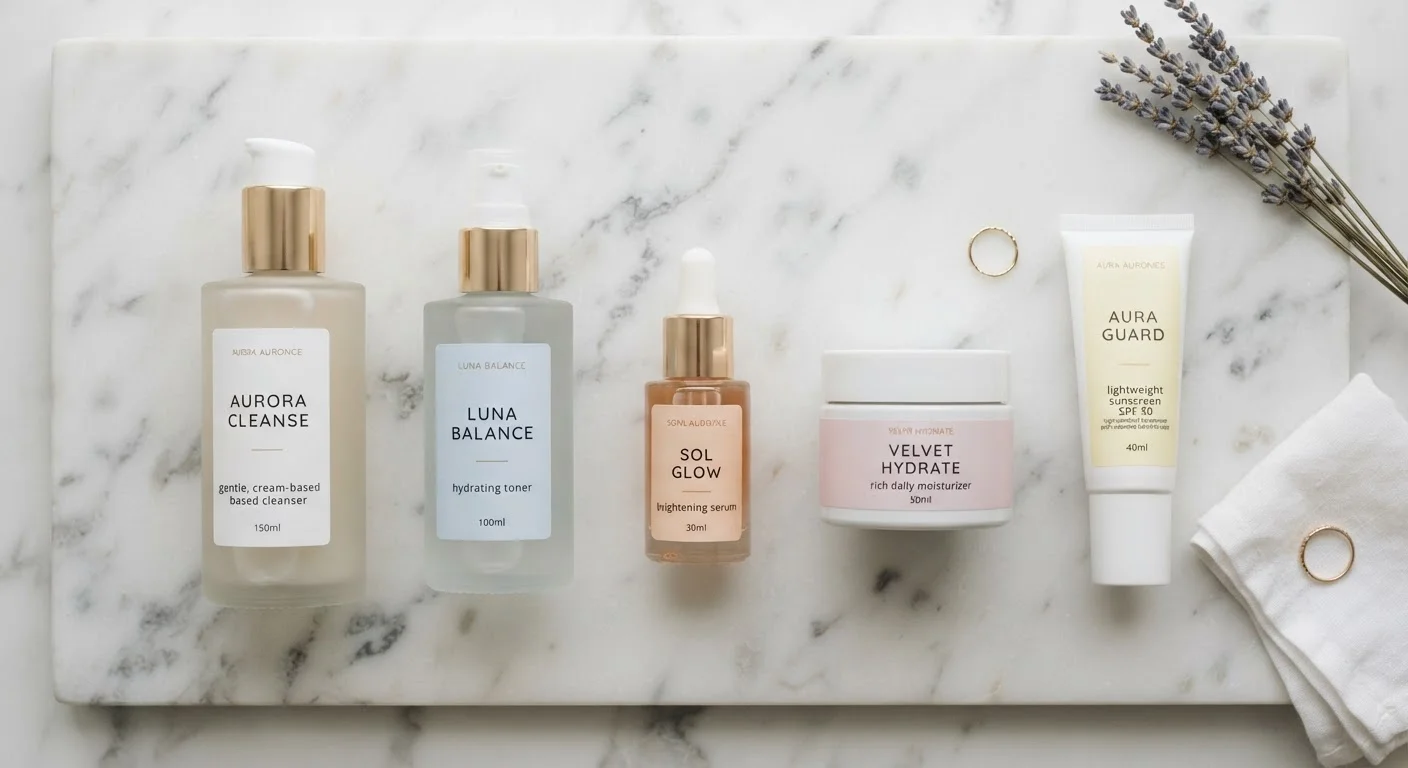
Step 1 — Cleanser: Every routine starts here, morning and night. Cleansing removes sunscreen, makeup, pollutants, and excess sebum that would otherwise block everything applied after. A clean surface is a receptive surface.
Step 2 — Toner or Essence: These lightweight, water-heavy formulas restore the skin's pH after cleansing and begin to hydrate. They also prepare the skin to absorb what follows. Apply to slightly damp skin or use a cotton pad.
Step 3 — Targeted Serums: Serums carry the highest concentration of active ingredients in the thinnest format. This is where treatments for pigmentation, fine lines, or hydration live. Because they're lightweight, they sink in before heavier layers are applied. If you're using more than one serum, apply the most watery texture first.
Step 4 — Moisturizer: Moisturizer doesn't just hydrate — it helps lock in everything applied before it. A good moisturizer supports the skin barrier, which in turn improves how well actives perform over time. See why your moisturizer might stop working if results have plateaued.
Step 5 — Sunscreen (AM only): Sunscreen is the final step in any morning routine. Whether you use a chemical or physical formula — and each type works differently — it needs to sit on top of your skin to form an effective UV barrier. Applying it before moisturizer undermines that function.
Wait Before You Layer
Rushing through your routine can reduce how well each product absorbs. After applying a toner or serum, wait roughly 30–60 seconds before moving to the next step. This brief pause lets each formula settle at its working pH and begin absorbing before the next layer is added — particularly important for active ingredients like AHAs or vitamin C.
Common Layering Mistakes — and the Logic Behind Each
Applying oil before a water-based serum: Oils are lipophilic — they attract and mix with other oils, and they repel water. Applying a face oil before a water-based serum means the serum sits on a hydrophobic surface and doesn't absorb. Oils belong after moisturizer, before or after sunscreen depending on their weight.
Skipping pH-sensitive timing: Some actives — like AHAs, BHAs, and vitamin C — work best at a low pH. Applying them immediately after a toner with a high pH can temporarily neutralize their effectiveness. Waiting 30–60 seconds between steps gives each product time to settle at its working pH before the next layer arrives.
Using too many actives at once: Layering multiple strong actives without understanding their interactions can cause irritation or cancel out their benefits. For example, certain combinations — like vitamin C and niacinamide — have historically been flagged as potentially counterproductive, though current research is more nuanced. When in doubt, alternate actives by AM and PM routines.
Reading labels carefully helps decode formulation intent. Understanding how cosmetic labels are structured makes it easier to identify what texture category a product falls into and where it belongs in a sequence.
~30–60s
Recommended wait time between skincare layers
Skincare educators and formulators commonly suggest a 30–60 second pause between product applications to allow each layer to settle before the next is added.
5
Core steps in a full AM skincare sequence
A complete morning routine — cleanser, toner, serum, moisturizer, sunscreen — involves five product categories, each with a distinct function and optimal placement.
Keeping It Simple Without Losing Results
Skincare layering doesn't require a ten-step routine to be effective. A well-ordered three-step approach — cleanser, moisturizer, sunscreen — can maintain a healthy skin barrier and provide meaningful UV protection. The logic still holds whether you own three products or ten.
If routine length feels overwhelming, a minimalist approach may be worth exploring. Fewer products with correct sequencing often outperform a cluttered routine applied in the wrong order.
And if you're wondering whether fragrance in your products affects how well your routine works for sensitive skin, that's worth considering separately from layering order — it's a formulation question rather than a sequencing one.
This article is for general informational purposes only and is not medical or dermatological advice. Consult a qualified skincare professional or dermatologist for guidance specific to your skin type, concerns, or conditions.