

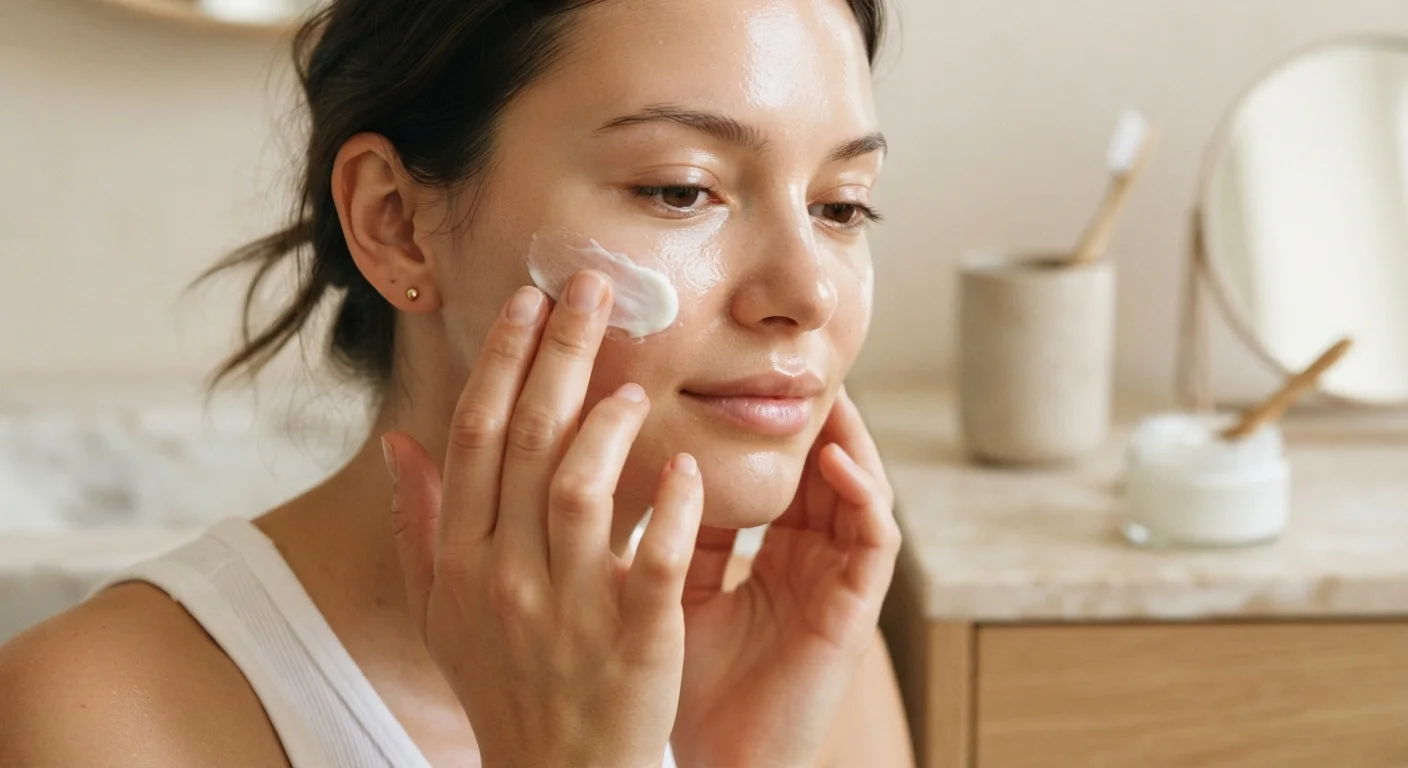
Key Takeaways
- Applying moisturizer to dry skin reduces how much hydration your skin actually absorbs.
- The wrong formula for your skin type can cause dryness, breakouts, or a greasy finish.
- Skipping SPF or active serums before moisturizer can undermine your entire routine.
- Seasonal skin changes often require switching up your moisturizer formula entirely.
- Over-exfoliating damages the skin barrier, making moisturizer less effective over time.
The Real Reason Your Skin Still Feels Dry
You apply your moisturizer every morning and night — and yet your skin still feels tight, dull, or flakey by midday. Before assuming your product has stopped working, consider that the problem is often in the how, not the what. Moisturizers don't hydrate skin the way a drink of water hydrates the body. They work by creating a barrier that slows water loss, and by delivering humectants that draw moisture into skin cells. When either process is disrupted — by technique, timing, or the wrong formula — results fall flat.
Understanding the most common mistakes can save you money and frustration, and it can genuinely transform how your skin responds to a routine you may already have. See how these errors fit into the morning skincare routine to get the full picture.
Applying moisturizer to completely dry skin instead of damp skin.
Why it happens: Most people pat their face fully dry out of habit before reaching for moisturizer, not realizing that timing affects absorption.
Using a formula that doesn't match your actual skin type or current skin condition.
Why it happens: Many people choose moisturizers based on marketing language — 'hydrating,' 'nourishing' — rather than on ingredient lists matched to their skin's needs.
Over-exfoliating and then wondering why moisturizer isn't soothing the irritation.
Why it happens: Exfoliants are popular for their brightening effects, so it's easy to overuse them without realizing the cumulative damage to the skin barrier.
Skipping moisturizer when skin feels oily, triggering a cycle of dehydration.
Why it happens: Oily skin is often mistaken for well-hydrated skin. In reality, skin can be simultaneously oily and dehydrated — producing excess sebum partly as a stress response to moisture loss.
Applying moisturizer before serums or treatments, blocking active ingredients from reaching the skin.
Why it happens: There's no universal visual cue for product order, so many people simply apply thickest to thinnest — or in whatever order products are lined up on the shelf.
Never switching up your moisturizer despite visible changes in skin behavior.
Why it happens: Once a product is part of a routine, it's easy to assume it's still working, even when skin signals — increased tightness, dullness, or congestion — suggest otherwise.
How Formula and Routine Gaps Make Things Worse
Beyond technique errors, the formulation you choose matters enormously — and it's not static. Skin changes with the seasons, with hormonal cycles, with age, and with stress. A lightweight gel moisturizer that worked perfectly in summer may be completely insufficient in winter when humidity drops and indoor heating pulls moisture from the air.
~75%
Adults who experience some form of skin barrier disruption
Dermatology literature consistently notes that impaired skin barrier function is among the most common contributors to chronic dryness and sensitivity in adults.
60 seconds
Window for optimal moisturizer absorption post-cleanse
Skincare educators and estheticians widely recommend applying moisturizer within one minute of cleansing while skin retains some surface moisture.
Ingredient interactions are another hidden factor. Certain active ingredients — like retinoids or exfoliating acids — alter the skin barrier temporarily, meaning your skin may need a richer or more barrier-focused moisturizer on nights you use them. Applying your standard formula on those nights may simply not be enough.
It's also worth rethinking how many products you're stacking. Sometimes a simplified approach yields better results — explore the minimalist skincare approach if your routine has grown complex. And if you want to understand exactly where moisturizer fits among other products, skincare layering logic explains the reasoning behind product order.
Fragrance Can Undermine a Moisturizer's Benefits
Fragranced moisturizers — including those with 'natural' botanical scents — are a leading cause of contact dermatitis and sensitization, particularly on facial skin. If your moisturizer routinely causes redness, stinging, or breakouts, fragrance is a common culprit worth investigating. Consider switching to a fragrance-free formula before attributing the reaction to your skin type.
This article is for general informational purposes only and is not a substitute for advice from a qualified dermatologist or skincare professional. If you experience persistent skin concerns, consult a licensed healthcare provider.