

Key Takeaways
- Product order matters — applying steps out of sequence reduces effectiveness.
- Sunscreen is non-negotiable in every morning routine, regardless of skin type.
- A simplified three-step routine (cleanse, moisturize, SPF) is valid and effective.
- Toners and serums are optional but can address specific skin concerns when chosen thoughtfully.
- Heavier formulas always go on after lighter ones to support proper absorption.
What you will need
Why Morning Skincare Follows a Specific Order
A morning routine isn't just a collection of products — it's a sequence. Applying skincare in the wrong order can prevent active ingredients from reaching the skin effectively, or cause formulas to pill and separate on the surface. The general principle is straightforward: thinnest to thickest, water-based before oil-based.
For a deeper look at the science behind layering, skincare layering follows a clear logic that's worth understanding before building your full routine. And if you're not sure what's actually in your products, reading a skincare label is a skill that pays dividends over time.
The five-step routine outlined below — cleanse, tone, treat, moisturize, protect — represents a complete approach. But it's worth noting that more steps don't automatically mean better results. If a full routine feels overwhelming, a minimalist three-step approach of cleanser, moisturizer, and SPF is entirely defensible and effective for many people.
What you will need
What You'll Need
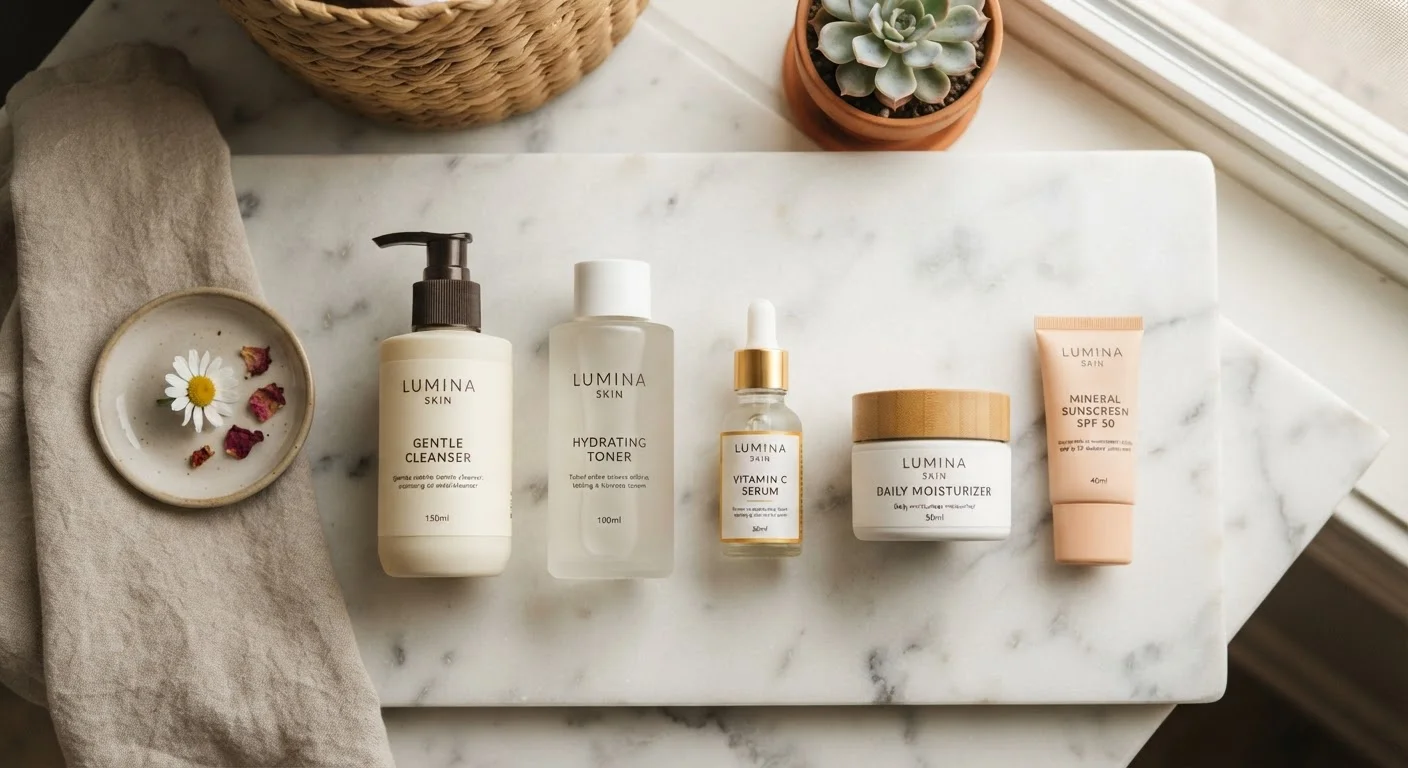
Before walking through the steps, gather your products. The tools below reflect a complete routine — required items are the non-negotiables, while optional items address specific skin concerns you may or may not have.
Gentle facial cleanser
Removes overnight sebum, sweat, and any residue from nighttime products without disrupting the skin barrier.
Toner
Rebalances skin pH after cleansing and can deliver lightweight hydration or exfoliation depending on formulation.
Serum or treatment
Delivers concentrated active ingredients targeting specific concerns like hyperpigmentation, dullness, or dehydration.
Moisturizer
Seals in hydration and supports the skin's protective barrier — essential for all skin types.
Broad-spectrum sunscreen (SPF 30 or higher)
Protects skin from UVA and UVB radiation, the leading cause of premature aging and UV-related skin damage.
Patch-Test New Products First
Before adding a new product to your full-face routine, apply a small amount to your inner forearm or jaw area for a few days. This helps identify potential sensitivity or irritation before it becomes a wider issue. It's a small step that prevents a lot of unnecessary setbacks.
Good skincare habits extend well beyond the bathroom shelf. If you're also thinking about foundational grooming practices, everyday grooming habits cover a broader set of self-care basics worth building alongside your skincare routine.
The Five Steps, In Order
Sunscreen Is the Most Important Step
Broad-spectrum SPF is the single most evidence-backed step in a morning skincare routine. Dermatologists consistently cite daily sun protection as key to reducing the risk of UV-related skin damage and premature aging. Skipping it — even on cloudy days or when spending most of your time indoors near windows — undermines every other product you've applied. Apply it as your final skincare step, before makeup if you wear it.
Cleanse your face
Begin with a gentle, pH-balanced cleanser suited to your skin type. Use lukewarm water — hot water can strip the skin's natural oils, while cold water may not effectively remove debris. Massage the cleanser in circular motions for about 30 to 60 seconds, then rinse thoroughly and pat (don't rub) dry with a clean towel.
If your skin feels tight after washing, your cleanser may be too harsh. Oily skin tends to tolerate foaming cleansers well; dry or sensitive skin often responds better to cream or gel formulas.
Apply toner (optional)
Toners are an optional but useful step, particularly if you have specific concerns like excess oil, dullness, or uneven texture. Apply a small amount to a cotton pad or press directly into skin with your palms — the latter reduces product waste.
Hydrating toners (often called essences) work for most skin types. Exfoliating toners containing AHAs or BHAs are better suited to oily or acne-prone skin and should generally be used sparingly in the morning. Always check the formulation before layering with other actives.
Apply serum or targeted treatment
Serums are lightweight, fast-absorbing formulas designed to deliver active ingredients deeper into the skin. Common morning serums include vitamin C (for brightening and antioxidant protection), hyaluronic acid (for hydration), and niacinamide (for pore appearance and tone evenness).
Apply two to three drops and press gently into skin — don't tug or drag. Allow the serum to absorb for about 30 seconds before moving to the next step. Since serums are among the thinner products in your routine, they go on before moisturizer.
Moisturize
Moisturizer isn't just for dry skin. Every skin type benefits from a well-formulated moisturizer that reinforces the skin barrier and prevents transepidermal water loss. Oily skin does well with lightweight, oil-free gel moisturizers; dry skin benefits from richer creams with occlusives like shea butter or ceramides.
Apply in upward, gentle strokes across the face and neck. If you notice your moisturizer stops feeling effective over time, this common issue has straightforward causes worth exploring.
Apply sunscreen
Broad-spectrum sunscreen with at least SPF 30 is the final — and most critical — step in your morning routine. Chemical sunscreens absorb UV rays and should be applied and allowed to settle before sun exposure. Mineral sunscreens (zinc oxide, titanium dioxide) sit on top of skin and provide more immediate protection.
Apply approximately a quarter teaspoon to the face and blend evenly, extending to the ears, neck, and any exposed areas. Allow it to set for a few minutes before applying makeup.
Don't Layer Active Ingredients Without Research
Certain active ingredients — such as retinol, vitamin C, AHAs, and BHAs — can irritate or destabilize each other when applied together. If you're incorporating targeted treatments, introduce one at a time and allow your skin to adjust. When in doubt, consult a dermatologist before combining multiple actives in a single routine.
This article is for general informational and educational purposes only. It is not a substitute for professional dermatological or medical advice. Consult a qualified dermatologist if you have specific skin concerns, sensitivities, or conditions requiring individualized guidance.