

| Common budgeting framework | 50/30/20 rule (needs / wants / savings) (Widely referenced in personal finance education) |
| Recommended emergency fund size | 3–6 months of essential expenses (Consumer Financial Protection Bureau guidance) |
| Number of core budget categories | 4 broad groups (Fixed essentials, variable essentials, discretionary, financial goals) |
| Most commonly missed budget category | Irregular / annual expenses (Frequently cited in household budgeting research) |
| Suggested retirement savings target | At least 10–15% of gross income (General personal finance guideline; individual needs vary) |
Why Category-Based Budgeting Works
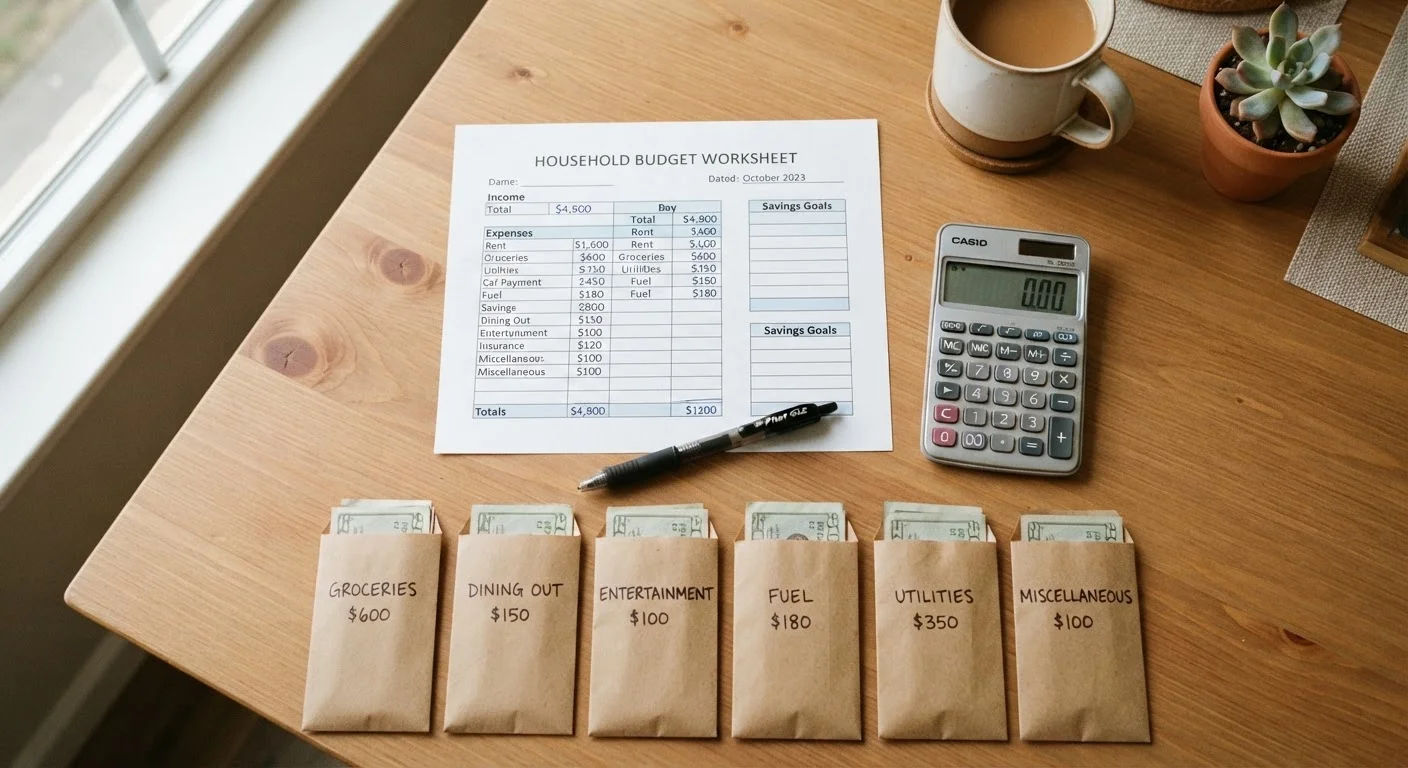
A budget without categories is just a number. When you assign every dollar to a specific purpose, you transform a vague spending intention into a concrete plan. Category-based budgeting makes overspending visible — you can see at a glance whether you've outpaced your grocery limit or still have room in your transportation bucket.
If you're new to building a budget from scratch, this introduction to personal budgeting covers the foundational steps before you start allocating by category. Once your categories are set, use a monthly review checklist to track how well your allocations match reality each cycle.
| Common budgeting framework | 50/30/20 rule (needs / wants / savings) (Widely referenced in personal finance education) |
| Recommended emergency fund size | 3–6 months of essential expenses (Consumer Financial Protection Bureau guidance) |
| Number of core budget categories | 4 broad groups (Fixed essentials, variable essentials, discretionary, financial goals) |
| Most commonly missed budget category | Irregular / annual expenses (Frequently cited in household budgeting research) |
| Suggested retirement savings target | At least 10–15% of gross income (General personal finance guideline; individual needs vary) |
The Core Budget Categories
Most household budgets fall into four broad groups: fixed essentials, variable essentials, discretionary spending, and financial goals. Here's what belongs in each:
Fixed Essentials
- Housing — rent or mortgage payment, renters or homeowners insurance, property taxes (if not escrowed)
- Utilities — electricity, gas, water, trash collection
- Insurance premiums — health, auto, life
- Minimum debt payments — student loans, car loans, credit cards
Variable Essentials
- Groceries — food and household supplies purchased at a store
- Transportation — fuel, public transit, parking, rideshare
- Medical and pharmacy — copays, prescriptions, out-of-pocket costs
- Child or dependent care — daycare, after-school programs, elder care
Discretionary Spending
- Dining and takeout — restaurants, coffee shops, food delivery
- Entertainment — streaming services, events, hobbies
- Clothing and personal care — apparel, haircuts, grooming products
- Subscriptions — apps, publications, gym memberships
Financial Goals
- Emergency fund contributions — building three to six months of expenses in reserve
- Retirement savings — 401(k) contributions, IRA deposits
- Debt payoff beyond minimums — accelerated repayment to reduce interest costs
- Specific savings goals — vacation, home down payment, major purchase
For a deeper look at how debt management fits into your overall plan, see the Debt & Credit hub.
Fixed expense
A cost that stays the same amount each billing cycle, such as a rent payment or loan installment. These are easy to plan for because the amount doesn't change.
Variable expense
A necessary cost whose amount changes from month to month, such as groceries or utility bills. You can estimate these but should expect some fluctuation.
Discretionary spending
Non-essential spending on wants rather than needs, such as dining out, entertainment, or hobbies. This is typically the most flexible part of a budget.
Sinking fund
A dedicated savings pool funded by small, regular contributions toward a known future expense. It prevents irregular costs from disrupting your monthly budget.
Emergency fund
A reserve of liquid savings set aside specifically for unexpected financial shocks, such as job loss or a major car repair. Most financial guidance suggests three to six months of essential expenses.
The Category Most Budgets Miss: Irregular Expenses
Irregular expenses — costs that don't arrive monthly — are the most common reason budgets fall apart. Annual subscriptions, car registration fees, holiday gifts, back-to-school shopping, and home maintenance all qualify. Because they don't show up every month, it's easy to leave them unplanned until they arrive as a surprise.
The solution is a sinking fund: a dedicated savings bucket where you set aside a small amount each month toward a known future cost. For example, if you expect to spend $600 on holiday gifts in December, setting aside $50 per month from January eliminates the year-end crunch.
Common irregular expense categories worth building sinking funds for include:
- Vehicle registration and annual inspections
- Home and appliance repairs
- Holiday and birthday gifts
- Annual insurance premiums paid in lump sum
- Seasonal clothing
- Vacations and travel
Unfamiliar with sinking funds or other budgeting terms? The budgeting terms glossary explains the vocabulary clearly. If your income varies month to month, budgeting on an irregular income offers strategies tailored to unpredictable cash flow.
This article is for general informational and educational purposes only. It does not constitute personalized financial, tax, or legal advice. Consult a qualified financial professional for guidance specific to your situation.