

Key Takeaways
- Setting a firm clothing budget before shopping prevents overspending and impulse buying.
- A small set of versatile, mix-and-match pieces outperforms a large, disjointed closet.
- Secondhand sources can significantly reduce cost without sacrificing quality.
- Prioritizing fit and neutral colors maximizes the number of outfits you can create.
- Building a wardrobe gradually over time is more sustainable than buying everything at once.
Start here
Start With a Spending Plan, Not a Shopping Cart
Next
The Core Pieces Worth Prioritizing First
Then
New, Secondhand, or a Mix: Knowing When Each Makes Sense
Apply it
Building Outfits From What You Have
Avoid pitfalls
What to Avoid When Starting From Zero
Start With a Spending Plan, Not a Shopping Cart
The most common mistake when rebuilding a wardrobe from scratch is reaching for a cart before setting a ceiling. Without a clear clothing budget, spending tends to expand to fill whatever space is available. Before buying a single item, decide on a total amount you can realistically allocate — and treat that figure as a firm constraint, not a rough estimate.
If personal budgeting feels unfamiliar, the foundational concepts in our guide to budgeting from the ground up can help you set spending limits that actually hold. Once you have a number, divide it roughly: allocate more to pieces you'll wear daily, less to occasional-use items.
Set Your Budget Before You Open Any App
Decide on your total clothing allocation before browsing any store or site. Even a rough but firm number — such as $150 or $300 — creates a constraint that shapes smarter decisions. Without it, the ease of digital shopping makes it very easy to exceed what you intended to spend without noticing.
Tracking what you already own before spending anything is equally important. A closet audit helps you identify what's genuinely missing rather than duplicating what you already have.
The Core Pieces Worth Prioritizing First
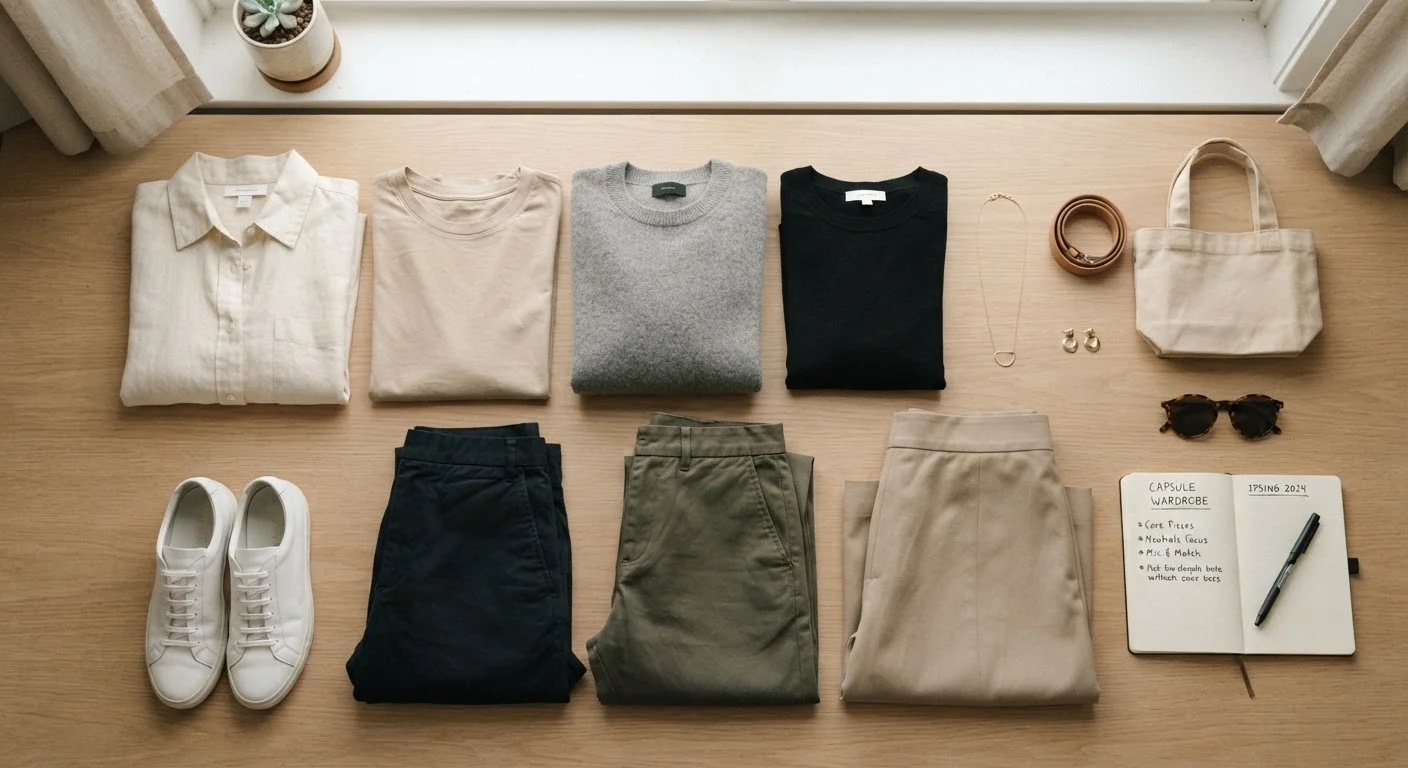
Not all wardrobe gaps are equal. When money is limited, prioritize pieces that do the most work — items that pair with multiple other things across different occasions and seasons. Certain staples consistently appear in functional wardrobes not because of trends but because they solve real everyday styling problems.
Capsule wardrobe
A small, curated collection of clothing pieces that all work well together, covering most everyday outfit needs without excess.
Cost-per-wear
The true cost of a garment divided by the number of times you actually wear it — a useful way to evaluate whether a higher upfront price is worth it.
Neutral palette
A color scheme based on shades like black, white, gray, navy, and beige that coordinate easily with one another and with accent colors.
Foundational piece
A versatile, everyday clothing item — like a plain T-shirt or classic jeans — that forms the base of multiple outfits rather than standing alone.
Resale / secondhand
Clothing that has been previously owned and is sold again, typically at a lower price through thrift stores, consignment shops, or online platforms.
As quietly anchor most versatile wardrobes, these typically include: a well-fitting pair of dark denim jeans, two or three plain-colored tops in neutral tones, a layer that bridges casual and professional contexts (such as a structured jacket or cardigan), a reliable pair of everyday shoes, and one or two bottom options beyond denim. Selecting colors that naturally coordinate — such as navy, gray, black, white, and camel — multiplies the number of outfits you can build from a small number of pieces.
New, Secondhand, or a Mix: Knowing When Each Makes Sense
A tight clothing budget doesn't have to mean compromising on quality across the board — it means being strategic about where quality matters most. Secondhand and resale options can significantly extend what your budget covers, particularly for outerwear, denim, knitwear, and structured jackets, which tend to hold up well through previous ownership.
Secondhand and new clothing each come with real trade-offs worth understanding before you shop. Items worn directly against the skin — underwear, socks, and base layers — are generally better purchased new. When shopping secondhand, inspect seams, fabric condition, and fastenings carefully. Fit is especially important with pre-owned clothes, since alterations add cost.
Fit Problems Are Harder to Fix Than They Look
Buying something because it's an attractive price — even secondhand — can backfire if the fit is significantly off. Basic alterations like hemming are affordable, but restructuring shoulders or resizing a waist can cost more than the garment itself. Only purchase items that fit well as-is, or need only minor adjustments.
Building Outfits From What You Have
Once you have a small set of foundational pieces, the goal shifts from buying to combining. A wardrobe of 12 well-matched items can theoretically yield dozens of distinct outfits — but only if the pieces were chosen with coordination in mind. Lay out what you own and deliberately practice pairings before assuming something doesn't work.
Seasons add another layer of complexity. Layering and storage strategies can help the same core pieces carry across weather changes without requiring an entirely new wardrobe each time. Dressing for seasonal shifts without replacing everything is a learnable skill that saves money over time. Adding a lightweight layer, swapping footwear, or adjusting accessories can meaningfully shift how the same base outfit reads across different contexts.
What to Avoid When Starting From Zero
Several common patterns consistently derail budget wardrobe-building efforts. Buying too many trend-driven pieces early on is one of them — trends have a short lifespan, and clothes purchased to chase them often go unworn within a season. Similarly, prioritizing price alone without considering cost-per-wear can lead to buying multiple low-quality items that need replacing quickly, ultimately spending more overall.
- Ignoring fit: Ill-fitting clothes don't get worn, regardless of how little they cost. Fit is the single most important factor in whether a garment earns its place.
- Shopping without a list: Entering any shopping environment — physical or digital — without a defined need makes impulse spending significantly more likely.
- Chasing a complete wardrobe immediately: Building from scratch takes time. Planning to fill gaps gradually, using a wishlist approach aligned with your clothing budget, leads to more thoughtful decisions than trying to solve everything at once.
This article is for general informational purposes only and does not constitute financial or personal styling advice tailored to your individual circumstances.