

Key Takeaways
- A capsule wardrobe prioritizes versatility and intentionality over volume.
- There is no universal number — the right size depends on your lifestyle and needs.
- Neutral colors and classic silhouettes extend the mix-and-match potential of any closet.
- A capsule approach can reduce decision fatigue and simplify daily dressing.
- Starting with a closet audit is more effective than buying new pieces immediately.
Capsule Wardrobe
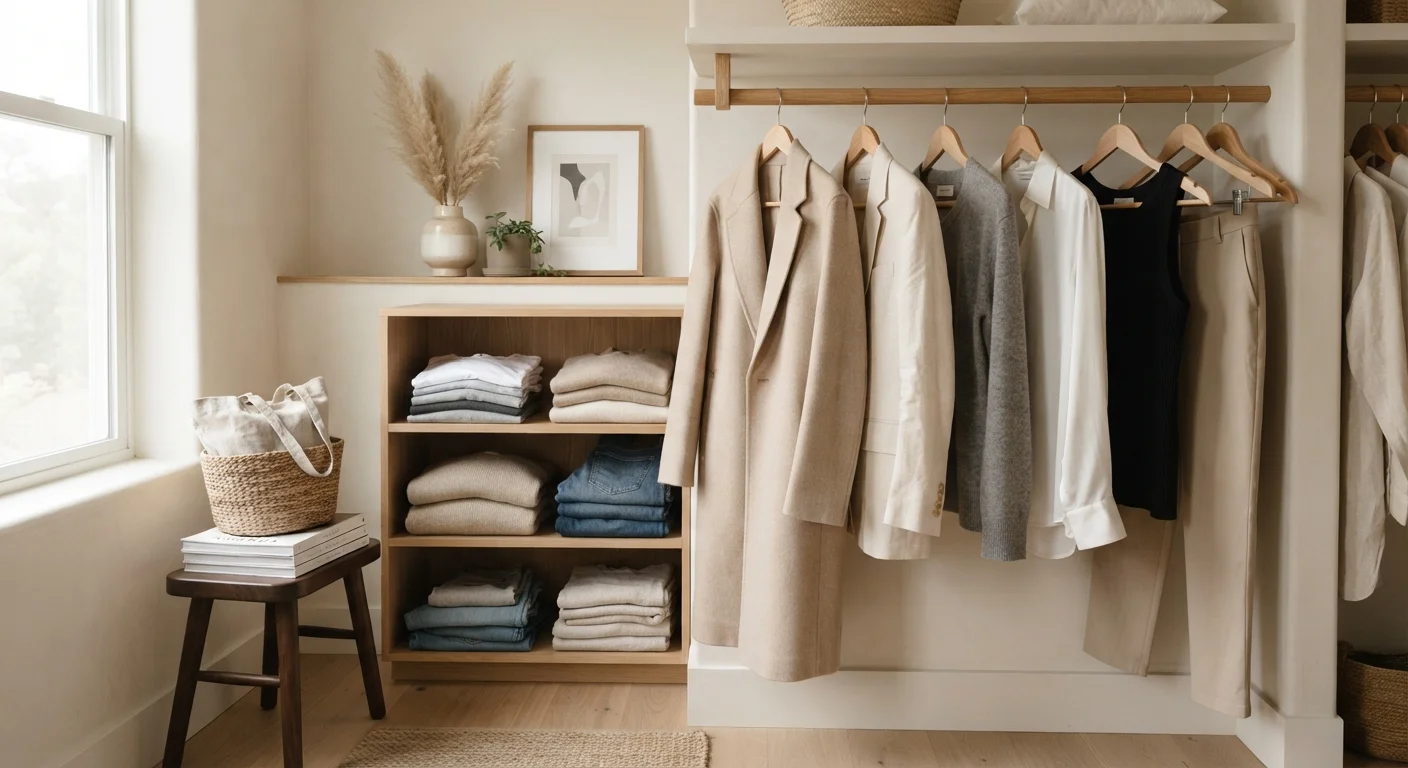
A capsule wardrobe is a small, intentionally chosen collection of clothing items that work well together, cover your everyday needs, and don't go out of style quickly. The goal is to own fewer pieces that you actually wear, rather than a full closet of items that sit untouched. Each piece is selected because it earns its place by pairing easily with others.
The concept is often attributed to London boutique owner Susie Faux, who coined the term in the 1970s. It was later popularized by fashion designer Donna Karan's 1985 'Seven Easy Pieces' collection.
The Core Idea Behind a Capsule Wardrobe
The premise of a capsule wardrobe is straightforward: own fewer clothing items, but make sure each one actually works for your life. Instead of accumulating pieces that rarely get worn, you build a smaller collection where almost everything pairs with almost everything else.
This isn't about deprivation. It's about ending the paradox of a packed closet with nothing to wear — a frustration explored in depth in our piece on why owning more clothes doesn't mean more outfits. The capsule approach solves this by asking a different question before every purchase: does this item work with what I already own?
The result is a wardrobe that functions more like a system than a collection. Each piece reinforces the others, and the whole becomes greater than the sum of its parts.
Start With What You Actually Wear
Before committing to any capsule wardrobe framework, spend two weeks paying attention to which items you naturally reach for. Those are your real capsule anchors. Building outward from proven favorites is more effective than following a generic checklist of 'essential' pieces.
What Makes a Piece "Capsule-Worthy"
Not every item in a capsule wardrobe needs to be neutral or classic — but most should meet a few practical tests. Ask whether a piece can be worn in at least three distinct combinations with what you already own. Consider whether it suits more than one occasion. Think about whether you'd still want to wear it in two or three years.
Certain clothing items tend to appear repeatedly in functional wardrobes precisely because they pass these tests naturally. Our article on the pieces that quietly anchor most functional wardrobes outlines what those tend to be and why they work across different style preferences.
Fit matters more in a capsule wardrobe than in a larger one. When you're working with fewer items, a piece that fits poorly or feels uncomfortable doesn't get a pass just because it technically covers a category.
How to Start Without Starting From Zero
One of the most common misconceptions about capsule wardrobes is that building one requires a full closet cleanout and a fresh set of purchases. In practice, most people already own several capsule-worthy pieces — they're just buried under items that don't earn their space.
The most useful first step is a closet audit: a structured review of what you own, what you actually wear, and what genuine gaps exist. This process often reveals that you need fewer new items than you assumed.
For those who are genuinely rebuilding, building a wardrobe from scratch on a tight budget offers a practical roadmap for prioritizing pieces without overspending.
~30%
Average clothing worn regularly
Research from various wardrobe studies suggests most people regularly wear only about 20–30% of the clothes they own, with the remainder used infrequently or not at all.
2.5x
More outfits from fewer, versatile pieces
Fashion educators and stylists broadly agree that a well-coordinated set of 30 items can generate more wearable combinations than an uncoordinated wardrobe of 80 or more pieces.
Seasonal Dressing Within a Capsule Framework
A common challenge with capsule wardrobes is navigating seasonal change without doubling your closet every few months. The solution lies in layering and overlap: choosing pieces that transition between seasons, and rotating a smaller set of weather-specific items in and out of storage.
This approach is covered practically in our guide to dressing for the season without buying an entirely new wardrobe. A capsule wardrobe doesn't mean you own the same twelve items year-round — it means your seasonal additions are just as intentional as your core pieces.
Capsule Wardrobes Look Different for Everyone
There's no single template that works universally. A capsule wardrobe for a parent of young children will look very different from one designed for someone who travels frequently for work. The underlying principle — intentional selection, high wearability, strong coordination — stays constant even when the specific pieces vary dramatically.
The minimalist philosophy behind a capsule wardrobe also applies beyond fashion. If you're curious how the same thinking translates to skincare, see our article on the minimalist skincare approach.