

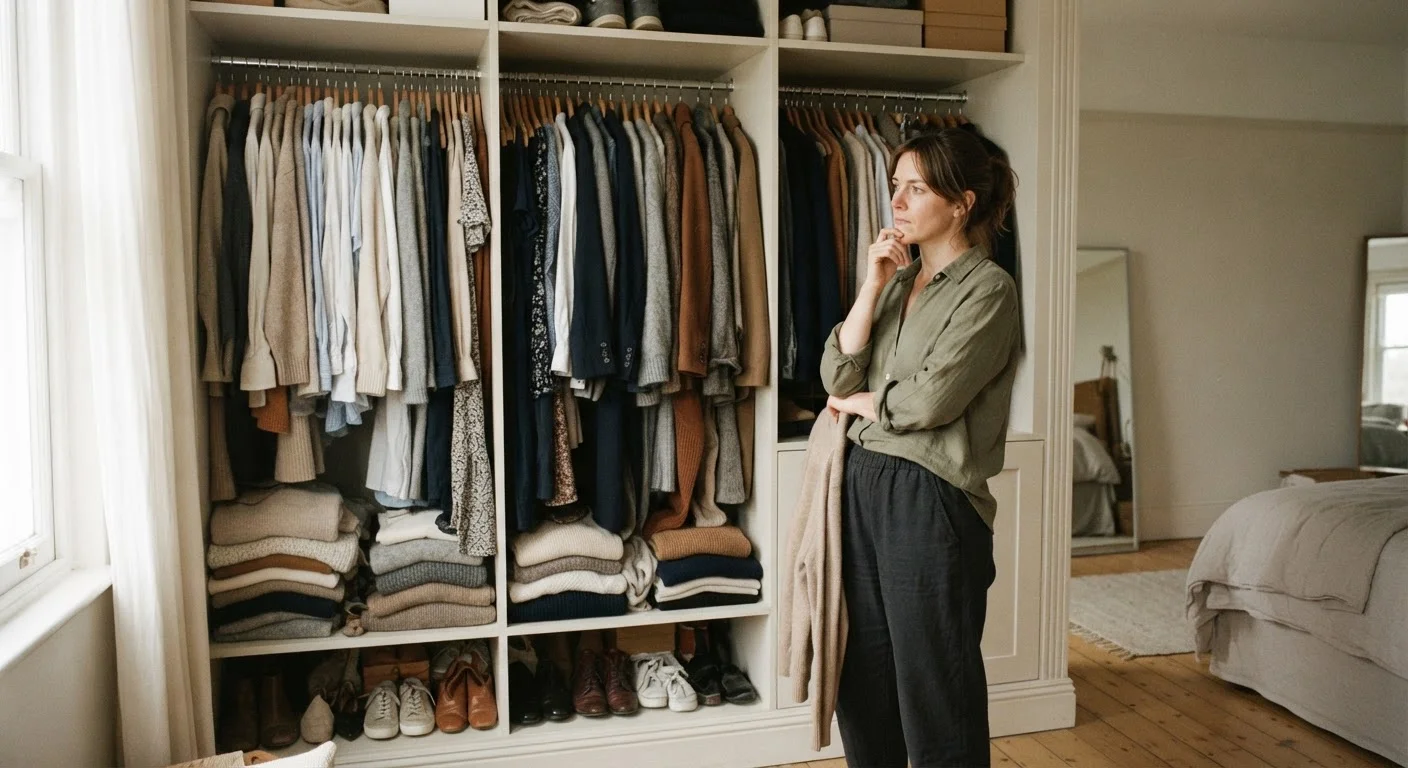
Key Takeaways
- A larger wardrobe does not automatically produce more outfit combinations.
- Isolated statement pieces often have nowhere to go without supporting basics.
- Color cohesion and consistent fit are the two most overlooked mix-and-match factors.
- Intentional purchasing decisions — not volume — determine wardrobe flexibility.
- Auditing what you already own before buying anything new is the most effective first step.
Versatile Piece Problem
The versatile piece problem describes the frustrating gap between owning many clothes and still feeling like you have nothing to wear. It happens when individual items in a wardrobe don't work together — even if each piece seemed appealing on its own. More clothing doesn't automatically mean more outfit combinations; it depends on how well pieces connect.
Stylists sometimes call this "wardrobe entropy" — the tendency for closets to accumulate items that resist combination, reducing the total number of usable outfits despite growing volume.
The Illusion of Abundance
It happens to most people at some point: you open a closet packed with clothing and still feel stuck. This isn't a shortage of clothes — it's a shortage of connections between them. The versatile piece problem isn't about quantity; it's about compatibility.
When shoppers focus on individual items — a striking jacket, a bold print dress, a statement accessory — they often overlook whether those pieces actually have partners in the existing wardrobe. Without supporting items that can anchor them in everyday outfits, statement pieces end up worn once, if at all.
Understanding this dynamic is the starting point for building a wardrobe that actually works, regardless of budget or closet size.
~20%
Clothes worn regularly from an average closet
Wardrobe utilization research and consumer behavior studies consistently suggest that most people regularly wear only about one-fifth of what they own.
85%
Shoppers who've felt they had nothing to wear
A widely cited consumer survey found the vast majority of people experience the 'nothing to wear' feeling despite owning ample clothing.
Why More Items Can Mean Fewer Outfits
It sounds counterintuitive, but adding more clothing to a disorganized wardrobe often makes the problem worse. Here's why:
- Incompatible color palettes: When items span many different color families, they resist combination. A wardrobe with a loose color logic — even a simple one — creates far more usable pairings. See our guide to color coordination for practical, non-intimidating principles.
- Fit inconsistency: Pieces that fit very differently — some oversized, some fitted, some cropped — are harder to layer and combine. Understanding fit over size is one of the most underrated wardrobe tools.
- Too many occasion-specific items: Clothes bought for one event or context rarely get worn again. A wardrobe heavy in occasion wear and light in everyday staples produces that familiar stuck feeling.
Adding a tenth statement piece to a wardrobe already full of them doesn't expand your options — it compounds the problem.
Test Versatility Before You Buy
When considering a new purchase, mentally run through three specific outfits you'd build with it using clothes you already own. If you can't get to three, the item may add volume without adding options. This simple check can prevent a lot of wardrobe clutter before it starts.
The Role of Anchor Pieces
Functional wardrobes tend to share a structural secret: they rely on what stylists describe as anchor pieces — items that connect easily with everything else. These aren't the most exciting clothes in the closet, but they're the ones that quietly make the rest of the wardrobe usable.
Think of a well-fitting pair of dark trousers that works with knitwear, button-downs, and casual tees. Or a lightweight cardigan that transitions from weekend to workwear. These pieces don't headline an outfit — they enable it.
If you're unsure what your anchors are, our article on the pieces that anchor functional wardrobes breaks down which types of items show up again and again across versatile wardrobes — not because they're trendy, but because they solve real styling problems.
“The goal of a wardrobe isn't to have something for every occasion — it's to have pieces that work together so naturally that getting dressed stops being a problem you have to solve every morning.”
— Tim Gunn, Fashion educator and co-host of 'Project Runway'
Solving It: Intention Over Volume
The fix for the versatile piece problem isn't a shopping trip — it's a mindset shift. Before adding anything new, the most effective move is to understand what you already own and where the real gaps are.
A structured closet audit helps identify items you never reach for, pieces missing a partner, and patterns in what you actually wear. This kind of audit regularly surfaces options people didn't realize they had.
When you do shop with intention, the guiding question shifts from "Do I like this?" to "What does this work with in my existing wardrobe?" If a new piece can pair with at least three things you already own, it earns its place. If it can only stand alone, it likely adds to the problem.
For those rebuilding from scratch — or working with a limited budget — building a wardrobe on a tight budget offers a practical sequence for prioritizing what to add first. And for managing what you already own across changing seasons, seasonal wardrobe strategies can help you get more mileage from current pieces without a full refresh.