

Key Takeaways
- Clothing size labels are not standardized and vary widely between brands and countries.
- Fit — how a garment sits on your body — matters far more than the number on the tag.
- Poor fit is the most common reason otherwise good clothes look unflattering.
- Simple tailoring adjustments can transform an ill-fitting piece into a wardrobe staple.
- Taking your own measurements removes the guesswork from shopping, especially online.
- Ignoring the size number and focusing on fit is a skill that improves with practice.
Fit vs. Size in Clothing
Clothing size is a number or letter on a tag that varies significantly between brands, countries, and even product lines within the same brand. Fit describes how a garment actually sits on your specific body — where the shoulders fall, how fabric drapes across the chest, and whether the waist hits at the right point. Size gets you in the door; fit determines whether the garment looks intentional or haphazard.
Sizing standards are not regulated uniformly across the US apparel industry, which is why the same person may wear a size 6 in one brand and a size 10 in another — a phenomenon often called 'vanity sizing' when brands adjust numbers downward over time.
Why the Number on the Tag Misleads Most Shoppers
Walk into five different stores, try on a size medium in each, and you may leave genuinely confused about what size you actually are. That confusion is not a personal failing — it is a structural feature of the US fashion industry. Clothing sizes have never been uniformly standardized across brands, and decades of independent size chart decisions have made the variation substantial.
What this means practically: the size label is a starting point for narrowing down options, not a reliable descriptor of how something will fit your body. Treating it as gospel leads to frustration in fitting rooms and regrettable online purchases that never get returned.
International Sizing Adds Another Layer
If you shop from international retailers or read size labels on imported garments, note that European, UK, Italian, and Asian sizing systems all differ from US conventions. A UK size 12 is roughly equivalent to a US size 8, for example. Always look for a measurement-based size chart rather than converting between regional size numbers, which introduces additional error.
The more useful habit is to think of size as a rough filter and fit as the actual decision-maker. This shift in framing is small but changes how you shop entirely.
What 'Fit' Actually Means — and How to Read It
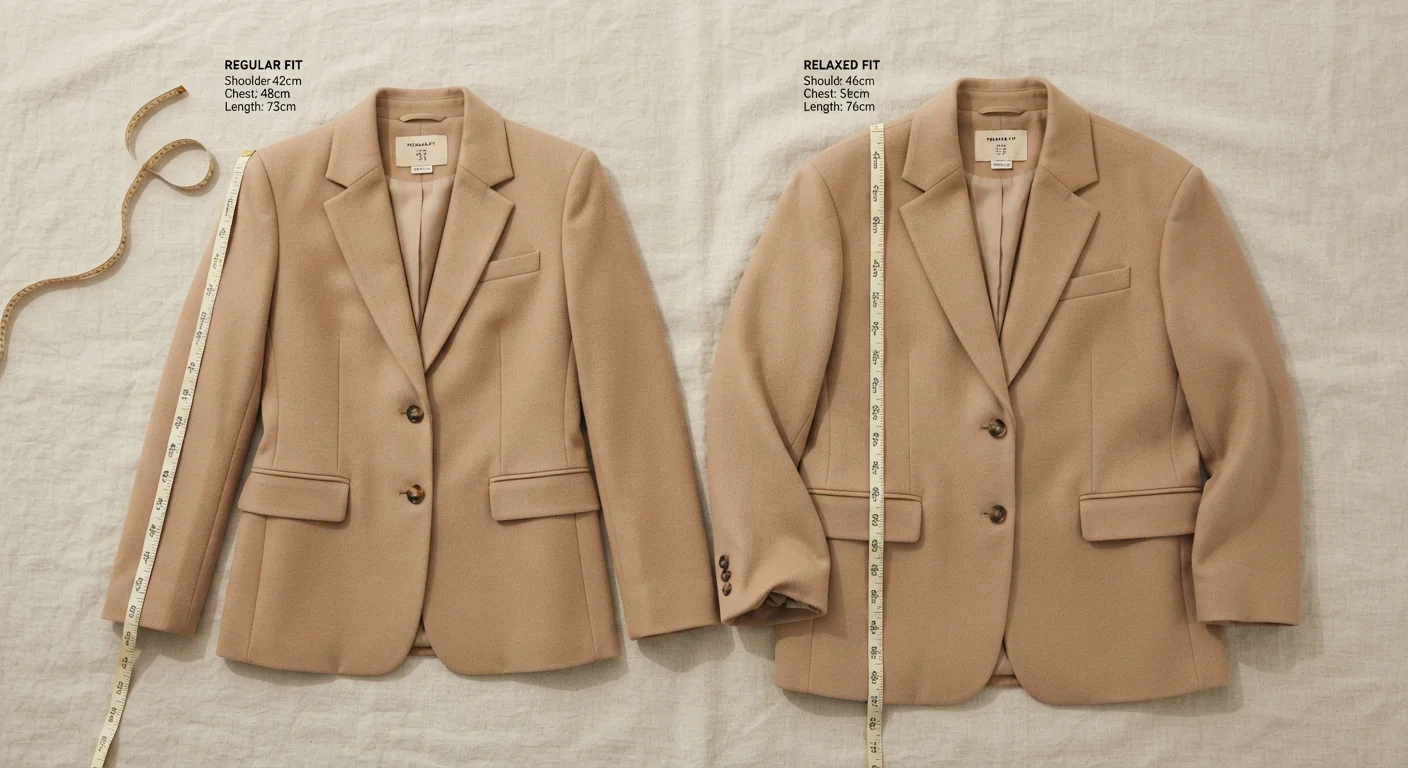
Fit refers to the relationship between a garment's construction and your body's specific dimensions. It is evaluated at several key checkpoints that, once you know them, become second nature to assess.
- Shoulder seam: On a structured top or jacket, this seam should land at the outermost point of your shoulder. If it droops toward your arm or pulls toward your neck, the fit is off in a way that is difficult to correct without significant tailoring.
- Chest and torso: There should be enough ease to move comfortably without fabric pulling across the widest points. Horizontal stress lines across the chest or back signal the garment is too small in this area.
- Waist and hip: For bottoms, these measurements determine whether a garment sits where it is designed to. Gaping at the waistband or pulling at the seat are fit signals worth noting.
- Length: Sleeve and hem length are among the easiest alterations a tailor can make — so less critical to get perfect off the rack, but still worth evaluating.
Try the Shoulder Test in Every Fitting Room
Before evaluating anything else on a structured top or jacket, check where the shoulder seam lands. It should sit right at the edge of your shoulder — not toward your neck, not sliding down your arm. If the shoulders fit, you can usually make everything else work. If they don't, move on regardless of how much you like the rest of the piece.
The Practical Case for Tailoring
One of the most underused tools in building a functional wardrobe is a basic relationship with a local tailor. Many people assume alterations are expensive or reserved for formal wear, but common adjustments — hemming pants, taking in a side seam, shortening a sleeve — are typically affordable and quick.
A well-fitting garment of modest quality will consistently look better than a poorly fitting garment of higher quality. This is not a style opinion; it is a structural reality of how fabric interacts with form. Investing in fit through tailoring often costs less than replacing a piece entirely.
No standard
US clothing size standardization across brands
The US has no mandatory federal standard governing how apparel brands define their size labels, leading to wide variation across the market.
~40%
Online clothing returns attributed to fit issues
Fit-related returns consistently rank among the leading reasons US consumers return apparel purchased online, according to industry surveys.
If you find yourself repeatedly buying pieces that look great on the hanger but feel off when worn, fit — rather than the item itself — is almost always the issue worth investigating. For guidance on which pieces tend to anchor versatile wardrobes, see the clothing pieces that anchor functional wardrobes.
Measuring Yourself: The Simplest Fix for Online Shopping
Online shopping removes the fitting room, so fit judgment has to happen before purchase. The most reliable way to do this is to know your own measurements and compare them directly against each brand's published size chart — not a generic one.
The measurements that matter most for most garments:
- Bust or chest: Measured at the fullest point, tape parallel to the floor.
- Waist: Measured at the narrowest part of your natural waist, usually above the navel.
- Hips: Measured at the fullest point of your hips and seat.
- Inseam: From the crotch seam to the ankle, measured along the inner leg.
Keep these numbers written somewhere accessible. When shopping, go directly to the brand's size chart — most publish measurement ranges per size, not just the size label. If your measurements fall between sizes, consider where ease matters most to you in that garment type. For more on dressing beyond rigid rules, see why body-type dressing rules are outdated.
Also worth knowing: garment care can affect fit over time. Shrinkage, stretching, and fabric distortion are real variables. Understanding care label symbols helps you maintain the fit you paid for.