

Key Takeaways
- Large-scale studies consistently link higher plant food intake to lower cardiovascular disease risk.
- Fiber from plant foods plays a central role in gut health, blood sugar regulation, and satiety.
- Plant-forward diets do not require going fully vegan — even moderate shifts in proportion show measurable benefits.
- Nutrient gaps (vitamin B12, iron, omega-3s) are manageable with informed food choices or supplementation.
- The quality of plant foods matters — ultra-processed plant-based products do not carry the same benefits as whole foods.
Plant-Forward Eating
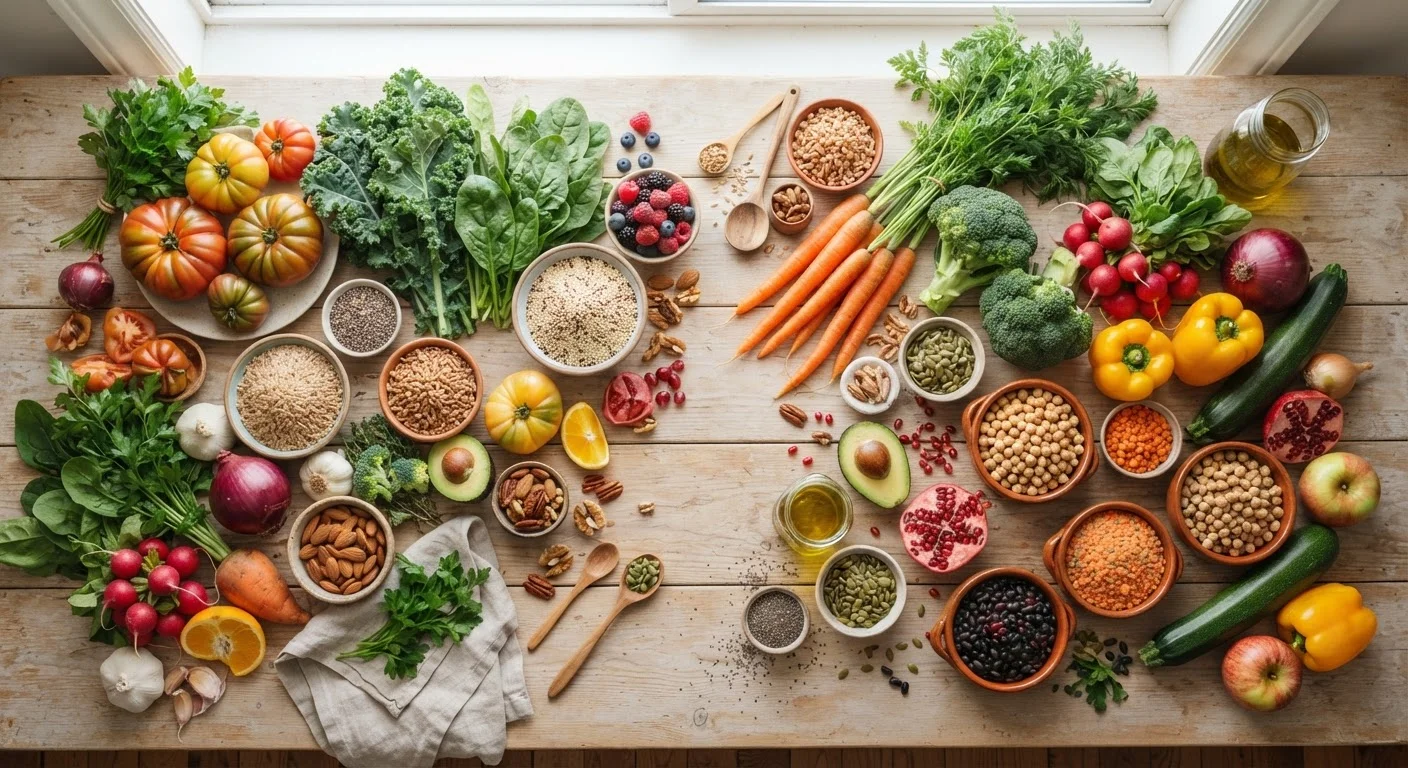
Plant-forward eating is a dietary pattern that makes vegetables, fruits, legumes, whole grains, nuts, and seeds the centerpiece of most meals. It does not require eliminating all animal products — rather, it shifts the proportion so plants dominate the plate. This approach is supported by a broad body of nutrition research linking higher plant food intake to reduced risk of several chronic diseases.
Nutritional epidemiology studies this pattern using cohort data and dietary indices such as the Plant-Based Diet Index (PDI), which scores diets by the proportion of plant versus animal foods consumed.
What the Large-Scale Research Actually Shows
Decades of nutritional epidemiology — from the PREDIMED trial to the Nurses' Health Study — have built a consistent picture: diets rich in whole plant foods are associated with lower rates of cardiovascular disease, type 2 diabetes, and certain cancers. These are not fringe findings. They emerge repeatedly across different populations, study designs, and dietary measurement tools.
A key distinction researchers make is between whole plant foods and ultra-processed products that happen to be plant-derived. The benefits in the literature are tied to vegetables, fruits, legumes, whole grains, nuts, and seeds — not to plant-branded packaged foods engineered for palatability. This matters because the commercial "plant-based" food market has expanded rapidly, and the two categories are not interchangeable.
~17g
Average daily fiber intake for US adults
Federal dietary guidelines recommend 25–38g per day depending on age and sex; most Americans consume roughly half that, according to USDA dietary survey data.
~20%
Lower cardiovascular disease risk linked to plant-rich diets
A large meta-analysis published in the Journal of the American Heart Association found that higher adherence to plant-based dietary patterns was associated with approximately 20% lower cardiovascular disease risk.
30+
Plant species per week linked to microbiome diversity
The American Gut Project — a large citizen science initiative — found that participants eating 30 or more different plant species weekly had significantly more diverse gut microbiomes than those eating fewer than 10.
It is also worth being honest about the limits of this research. Nutritional epidemiology relies heavily on observational data, which cannot always establish causation. People who eat more plants often differ in other lifestyle factors — physical activity, smoking rates, healthcare access — that independently influence health. Good researchers adjust for these confounders, but residual bias is never fully eliminated. The honest read of the evidence is strong association, not ironclad proof.
Fiber: The Nutrient Most Americans Under-Consume
If there is one mechanism that links plant-forward eating to health outcomes more consistently than any other, it is dietary fiber. The average American adult consumes roughly half the fiber recommended by federal dietary guidelines, and this gap has measurable consequences.
Fiber feeds the gut microbiome — the community of bacteria lining the digestive tract that influences inflammation, immune function, and even mood signaling. Soluble fiber (found in oats, beans, and apples) slows glucose absorption and can lower LDL cholesterol. Insoluble fiber (found in whole grains and many vegetables) supports bowel regularity and may reduce colorectal cancer risk, according to evidence reviewed by the World Cancer Research Fund.
A Simple Way to Increase Fiber Gradually
If you currently eat a low-fiber diet, increasing intake too quickly can cause temporary bloating and digestive discomfort. A practical approach is to add one extra serving of a fiber-rich plant food every few days and increase water intake alongside it. Your gut microbiome adapts over time, and most people find discomfort fades within a few weeks.
Understanding what each color of produce contributes is also useful. Our guide to phytonutrients and color diversity explains how different plant compounds serve distinct biological roles beyond basic fiber content.
Navigating Protein and Nutrient Gaps
One of the most common concerns about plant-forward eating is protein adequacy. Most whole plant foods provide protein, but with different amino acid profiles and bioavailability compared to animal sources. Legumes, soy, quinoa, and combinations of complementary plant proteins can meet daily needs for most healthy adults — though individual requirements vary.
For a detailed breakdown, our comparison of plant and animal protein quality covers amino acid completeness and bioavailability side by side.
Vitamin B12 Requires Special Attention
Vitamin B12 is produced by microorganisms and is not reliably present in plant foods. People who significantly reduce or eliminate animal products from their diet are at genuine risk of deficiency over time. Fortified foods (some plant milks and cereals) and supplements are the evidence-supported options. This is one area where consulting a healthcare provider or dietitian is particularly worthwhile, not optional.
Beyond protein, the nutrients most worth monitoring on a predominantly plant-based diet are vitamin B12 (found almost exclusively in animal foods), heme iron, long-chain omega-3 fatty acids (EPA and DHA), zinc, and vitamin D. None of these represent insurmountable barriers — but they do require awareness. A registered dietitian can help identify whether food sources alone are sufficient or whether supplementation is appropriate for a specific individual.
It is also worth noting that many of the same nutrients appear in conversations about other health outcomes. Research on dietary factors and hair health, for example, highlights iron and zinc — nutrients that require attention in plant-forward diets.
Translating the Evidence Into Daily Food Choices
Research on diet quality consistently shows that sustainable changes outperform dramatic overhauls. Adding a serving of legumes to an existing meal, swapping refined grains for whole grains, or building dinners around vegetables a few nights per week are shifts that compound over time without requiring a complete identity change around food.
Common myths about plant-forward eating — that it is inevitably expensive, time-consuming, or nutritionally risky — are worth examining critically. Our nutrition myth-busting overview addresses several of these directly using mainstream research.
For readers ready to put principles into practice, evidence-informed meal planning strategies offer a practical framework for making plant-forward choices that hold up through a realistic week, not just an optimistic Monday.
This article is for general informational and educational purposes only and does not constitute medical or nutritional advice. Individual dietary needs vary. Please consult a qualified healthcare professional or registered dietitian before making significant changes to your diet, particularly if you have a medical condition or specific health concern.