
Plant-Based Protein vs. Animal Protein: Comparing Quality, Completeness, and Context

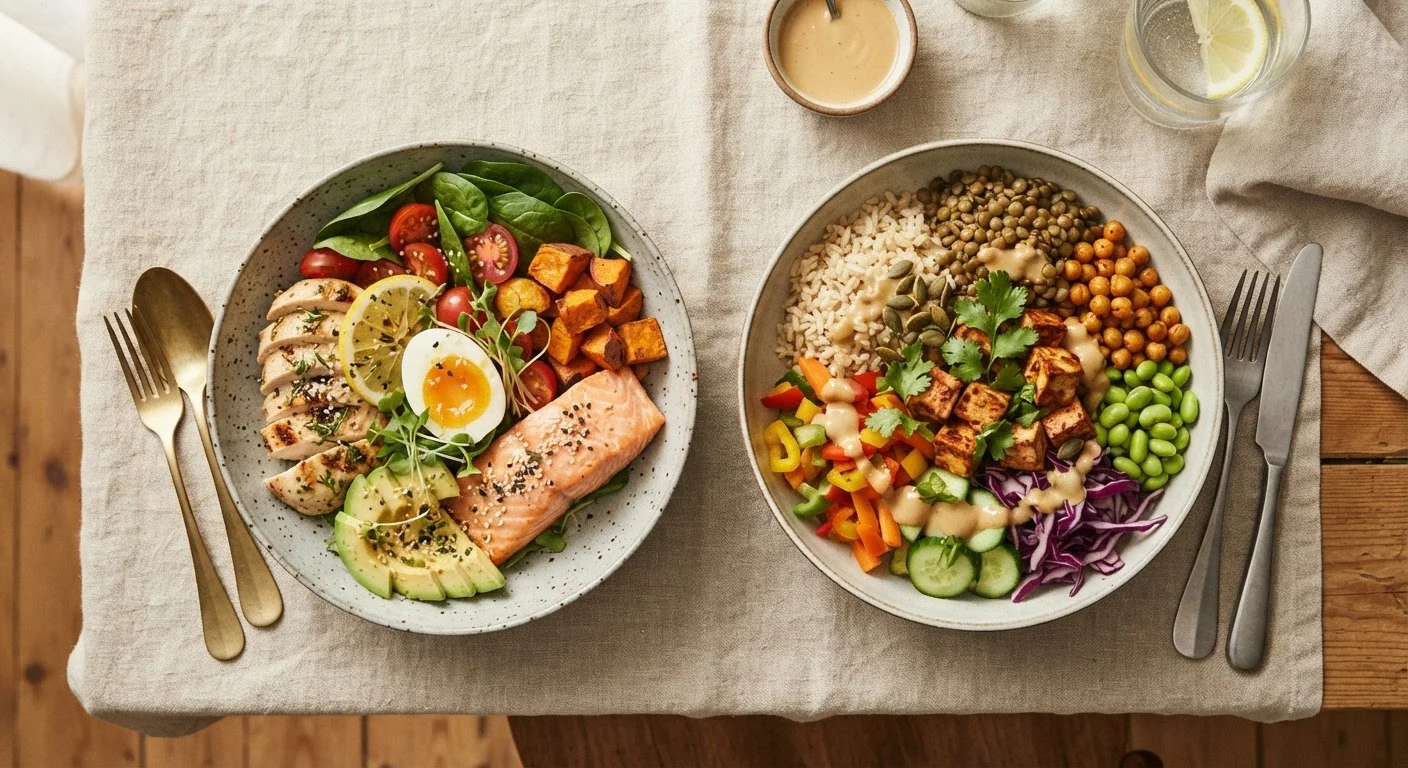
Key Takeaways
- Animal proteins are considered 'complete' because they contain all nine essential amino acids in adequate proportions.
- Most plant proteins are 'incomplete' individually, but varied plant diets can meet all essential amino acid needs.
- Bioavailability — how much protein your body actually absorbs — tends to be higher in animal sources than in most plants.
- Plant proteins typically come packaged with fiber, antioxidants, and phytonutrients absent in most animal foods.
- Dietary context, overall eating pattern, and individual health goals all matter more than any single protein source.
- Consulting a registered dietitian helps tailor protein choices to your specific nutritional needs and health status.
Option A
Animal Protein
The complete, highly bioavailable benchmark.
Best for: Individuals prioritizing maximum amino acid completeness and efficient absorption, including those with higher muscle-synthesis demands.
Option B
Plant-Based Protein
The versatile, nutrient-dense alternative.
Best for: Individuals seeking protein alongside fiber, phytonutrients, and a lower environmental footprint, with thoughtful food combining.
If your priority is maximizing muscle protein synthesis efficiency
Animal Protein
Animal sources score higher on leucine content and digestibility — two factors consistently linked to muscle protein synthesis in research settings.
If you want protein alongside gut-supportive fiber and phytonutrients
Plant-Based Protein
Legumes, whole grains, and seeds deliver protein together with fiber and plant compounds not found in animal foods, supporting digestive and cardiovascular health.
If you follow a vegetarian or vegan lifestyle
Plant-Based Protein
A well-planned, varied plant diet can meet all essential amino acid requirements without animal foods, particularly when soy, quinoa, or protein combinations are included.
If you are managing age-related muscle loss (sarcopenia)
Animal Protein
Higher leucine content and superior digestibility in animal proteins may support muscle maintenance — though a healthcare provider should guide individualized recommendations.
If you want to reduce your dietary environmental impact
Plant-Based Protein
Legumes and plant proteins generally require less land and water and produce fewer greenhouse gas emissions per gram of protein compared to most animal sources.
What 'Protein Quality' Actually Means
Protein quality is not a single measurement — it's a layered concept that combines amino acid completeness, digestibility, and bioavailability. Understanding each layer helps decode why nutrition scientists treat different protein sources differently.
All proteins are built from 20 amino acids. Nine of these are essential — meaning the body cannot synthesize them and must obtain them from food. A protein source is called complete when it supplies all nine essentials in proportions adequate for human needs. Animal proteins (meat, poultry, fish, eggs, dairy) are universally complete. Most plant proteins are not complete on their own — with notable exceptions including soy and quinoa.
The most widely used scientific metric for protein quality today is the DIAAS, introduced by the Food and Agriculture Organization of the United Nations. It accounts for both amino acid profile and how much of the protein the small intestine actually absorbs. Animal proteins typically score above 1.0 on DIAAS; many plant proteins score below 1.0, reflecting both lower digestibility and limiting amino acids.
| Criterion | Animal Protein | Plant-Based Protein |
|---|---|---|
| Amino acid completeness | Complete (all 9 essential amino acids) | Often incomplete; soy and quinoa are exceptions |
| Digestibility (DIAAS) | Typically scores above 1.0 | Often scores below 1.0; improves with processing |
| Leucine content | Higher; especially in dairy and meat | Lower in most sources |
| Fiber content | None | Present in whole food sources |
| Vitamin B12 | Naturally present | Absent unless fortified |
| Iron absorption | High (heme iron) | Lower (non-heme); enhanced by vitamin C |
| Phytonutrients | Minimal | Rich in antioxidants and plant compounds |
| Saturated fat | Higher in red and processed meats | Generally low; nuts are higher in total fat |
| Environmental footprint | Generally higher land and water use | Generally lower land and water use |
Bioavailability: Where the Gap Becomes Practical
Even when two foods list similar protein grams on a nutrition label, the amount your body can actually use may differ substantially. Bioavailability captures this real-world gap.
Animal proteins are generally digested and absorbed at rates of 90–99%, while many plant proteins fall in the 70–85% range, partly because of antinutrients — compounds such as phytates and tannins found in legumes and grains that can reduce mineral and protein absorption. Cooking, soaking, fermenting, and sprouting plant foods meaningfully reduce antinutrient activity and improve digestibility.
Leucine — the amino acid most directly associated with triggering muscle protein synthesis — is more abundant in animal sources, particularly dairy (whey) and meat. This is one reason sports nutrition research has historically favored animal proteins for muscle recovery outcomes. However, emerging evidence suggests that consuming larger portions of plant proteins, or blending complementary sources, can partially close this leucine gap.
For most healthy adults eating sufficient total protein, the bioavailability difference between a diverse plant diet and an animal-based diet is unlikely to be clinically significant. The gap matters more in contexts of very high protein demand or restricted total intake. See our guide to protein timing and sources for a fuller picture of how distribution throughout the day also affects protein utilization.
~20%
Digestibility gap between animal and plant proteins
Research summarized by the FAO suggests plant proteins are typically digested at 70–85% efficiency versus 90–99% for most animal proteins.
3–4×
More leucine in whey vs. most plant proteins per gram
Dairy-derived whey is among the richest dietary sources of leucine, the amino acid most directly linked to muscle protein synthesis signaling.
1 in 3
US adults who report reducing meat consumption
According to Gallup polling data, a growing share of American adults say they are actively trying to eat less meat, reflecting shifting dietary priorities.
Beyond Protein: What Comes With Each Source
Protein never travels alone. What accompanies it in a food matters for overall dietary health.
Animal proteins supply heme iron (highly absorbable), vitamin B12, zinc, and complete amino acid profiles. Fatty fish adds omega-3 fatty acids. The concern with some animal sources — particularly red and processed meats — is their association with saturated fat intake and, in the case of processed meats, added sodium and preservatives. Research from large cohort studies has linked high processed meat consumption to elevated cardiovascular risk, though whole food animal sources present a more varied picture. Understanding how processing affects food quality is relevant context here.
Plant proteins arrive packaged with dietary fiber, antioxidants, phytochemicals, and unsaturated fats — nutrients consistently associated with positive long-term health markers. Legumes in particular support gut microbiome diversity and cardiovascular health. The trade-off is that non-heme iron and zinc from plant foods are less readily absorbed than from animal sources, and vitamin B12 is essentially absent from unfortified plant foods.
Research on plant-forward eating patterns consistently points to benefits for heart health, metabolic markers, and longevity — suggesting the full nutritional context of plant foods adds value beyond any single protein metric.
A Note on Protein Combining
The idea that plant-based eaters must carefully combine complementary proteins at every single meal has been largely revised by nutrition science. Current evidence indicates that as long as a variety of plant protein sources are consumed throughout the day, essential amino acid needs can be met without precise meal-by-meal pairing. The overall daily dietary pattern matters far more than any individual meal's amino acid arithmetic.
Building a Practical Protein Strategy
The question most readers actually face is not which source is superior in the abstract, but how to build a protein intake that supports their health goals in everyday life.
For omnivores, a mixed approach — incorporating legumes, whole grains, and nuts alongside moderate amounts of lean animal protein — naturally balances amino acid completeness with fiber and phytonutrient intake. This aligns with eating patterns like the Mediterranean diet, which shows strong evidence for long-term health outcomes.
For plant-based eaters, the key is dietary variety rather than perfection at every meal. Pairing rice with beans, or hummus with whole grain bread, creates complementary amino acid profiles across the day. Soy foods (edamame, tofu, tempeh) stand out as complete plant proteins and are a practical anchor for plant-forward protein planning.
Regardless of approach, total daily protein intake within recommended ranges — and its distribution across meals — matters as much as source. Individuals with specific health conditions, athletes, older adults, or those managing chronic disease should seek personalized guidance from a registered dietitian rather than rely on general population norms.
This article provides general nutrition information and education only. It is not a substitute for advice from a qualified healthcare provider or registered dietitian. Individual nutritional needs vary — consult a professional before making significant changes to your diet.