

Key Takeaways
- Spreading protein across meals — not just eating it at dinner — supports better muscle protein synthesis throughout the day.
- Aiming for roughly 25–40 grams of protein per meal is a commonly studied range for stimulating muscle repair and growth.
- Both animal and plant proteins can meet daily needs when choices are varied and portions are adequate.
- Post-exercise protein intake within a few hours supports muscle recovery, though the 'anabolic window' is wider than once believed.
- Individual protein needs vary by age, activity level, and health status — consult a registered dietitian for personalized guidance.
Why Protein Distribution Matters as Much as Total Intake
Most Americans focus on hitting a daily protein number — and that's a reasonable starting point. But nutrition research increasingly points to how you spread that protein across the day as a significant variable in whether your body can use it efficiently.
Muscle protein synthesis — the process by which your body repairs and builds muscle tissue — isn't a continuous background process. It responds to meals containing sufficient protein, particularly the amino acid leucine, which acts as a metabolic trigger. Consuming most of your daily protein in a single large meal (a common pattern when dinner is the primary protein source) means the body can only act on so much at once. Research published in journals such as the Journal of Nutrition has explored how distributing protein more evenly across three or four meals may stimulate greater total muscle protein synthesis compared to skewing intake heavily toward one meal.
A practical target that appears consistently in the literature is roughly 25–40 grams of high-quality protein per meal for most healthy adults — though individual needs vary considerably based on body size, age, and activity level.
~30g
Per-meal protein to stimulate muscle synthesis
Commonly cited in muscle protein synthesis research as a per-meal target for healthy adults; individual needs vary based on body weight and age.
46–56g
USDA Recommended Dietary Allowance for protein (adult)
The USDA sets the adult RDA at 46g per day for women and 56g for men — a minimum baseline, not an optimal target for active individuals.
Timing: When Protein Lands in Your Day
The concept of a narrow "anabolic window" — the idea that you must consume protein within 30 minutes of exercise or miss meaningful gains — has been substantially revised by more recent research. Current evidence suggests the window for post-exercise protein intake is considerably wider, likely several hours, particularly when a protein-containing meal was eaten before exercise.
That said, timing still carries practical importance. For people doing resistance training or endurance exercise, consuming a protein-containing meal or snack within a few hours after a workout remains a sensible habit to support recovery. For older adults especially, where muscle protein synthesis rates are naturally reduced, prioritizing protein at breakfast — rather than saving it for dinner — may help counteract age-related muscle loss (sarcopenia).
If you practice intermittent fasting, compressing eating into a shorter window can make adequate protein distribution harder to achieve. Learn what the research supports about intermittent fasting — including the trade-offs for protein timing — before deciding whether it fits your goals.
Don't Skip Protein at Breakfast
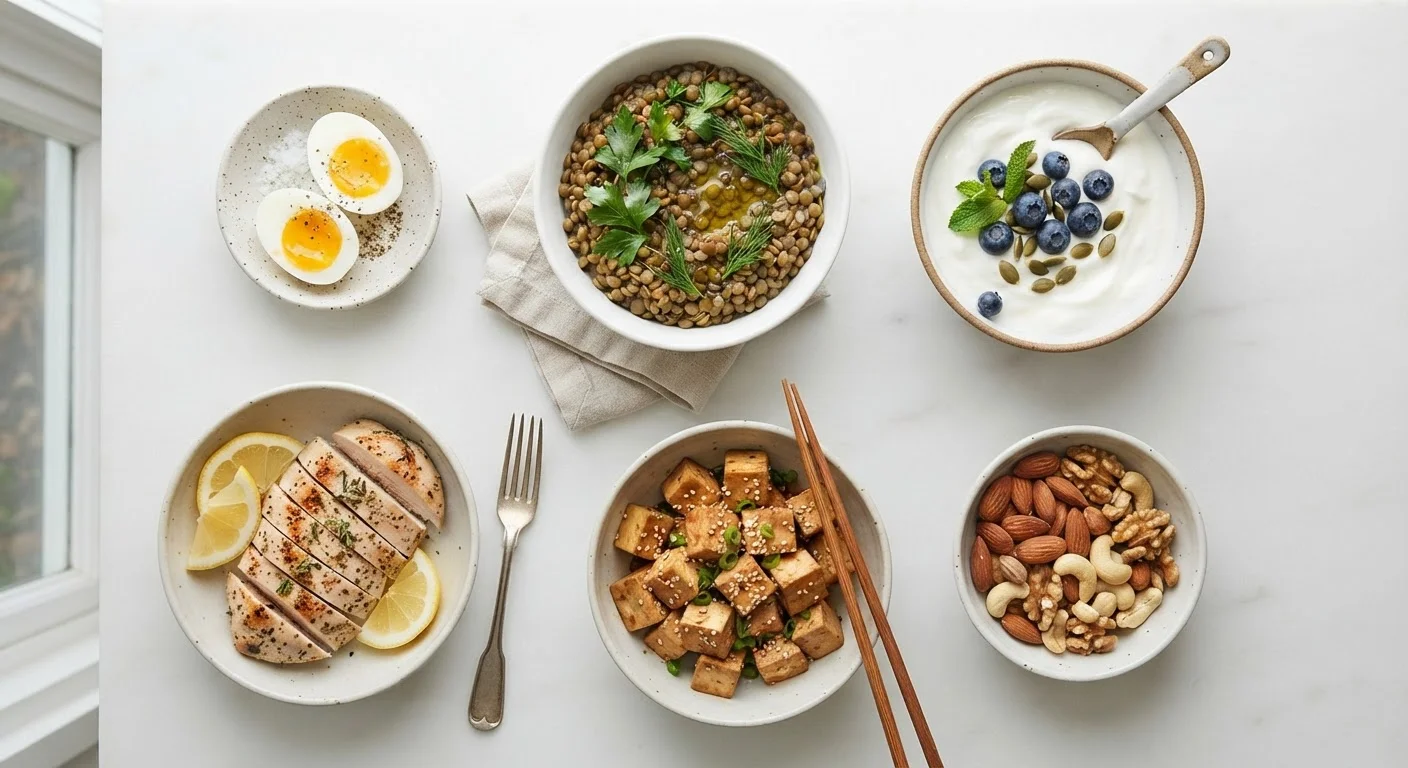
Breakfast is the easiest meal to shortchange on protein, particularly for people who rely on toast, pastries, or juice alone. Even a modest protein addition — eggs, nut butter, or yogurt — helps initiate muscle protein synthesis earlier in the day and may reduce overall hunger throughout the morning. Building this habit takes only minor meal planning adjustments.
Choosing Protein Sources That Work Together
Not all protein is equivalent in structure or how completely the body can absorb and use it. Animal-based proteins — eggs, dairy, poultry, fish, and meat — are considered complete proteins, meaning they contain all nine essential amino acids in proportions the body can readily use. Many plant proteins are lower in one or more essential amino acids, though combining varied plant sources across a day (beans with grains, for example) reliably covers the full spectrum.
A detailed comparison of plant-based and animal protein — including amino acid profiles and bioavailability — can help you understand what each source offers nutritionally. Neither category is categorically superior; both can fit into a health-supporting diet when portions and variety are thoughtful.
For those eating more plants overall, the evidence behind plant-forward eating offers useful context on long-term health outcomes linked to dietary patterns.
Anchor every meal around a meaningful protein source, not just the largest one of the day.
Research suggests that distributing protein across meals more evenly supports sustained muscle protein synthesis better than concentrating intake at dinner. Making protein a deliberate component of breakfast and lunch — not an afterthought — builds a stronger nutritional foundation throughout the day.
Vary your protein sources across animal and plant origins throughout the week.
Different protein sources deliver different amino acid profiles, micronutrients, and dietary fiber. Relying on a single source — even a high-quality one — narrows the nutritional breadth of your diet. Variety also reduces reliance on any single food category and supports long-term dietary sustainability.
Pair plant proteins strategically to ensure amino acid completeness across the day.
Most plant proteins are low in at least one essential amino acid. While strict food combining at every meal is unnecessary, including complementary sources — legumes, grains, nuts, and seeds — across your day reliably provides the full essential amino acid profile the body needs.
Time a protein-containing meal or snack within a few hours of resistance or endurance exercise.
Post-exercise muscle repair depends on amino acid availability. While the post-workout window is broader than early research suggested, consistently pairing exercise sessions with protein intake — before or after — supports better recovery outcomes over time.
Prioritize protein at breakfast, especially as you age.
Older adults experience a blunted muscle protein synthesis response, making adequate, well-timed protein intake more important. Breakfast is often the lowest-protein meal for most adults, making it a high-leverage opportunity to improve daily distribution.
Putting It Into Practice
Translating protein science into daily habits doesn't require overhauling your entire diet. Small, consistent shifts — adding an egg to breakfast, including legumes at lunch, choosing Greek yogurt as a snack — can meaningfully improve daily protein distribution without dramatic effort.
When shopping, reading a nutrition label accurately is a practical skill that helps you assess protein content and serving sizes across packaged foods without guesswork.
This article is for general informational purposes only and does not constitute medical or dietary advice. Individual nutritional needs vary. Consult a registered dietitian or qualified healthcare professional for guidance tailored to your health status, age, and goals.