

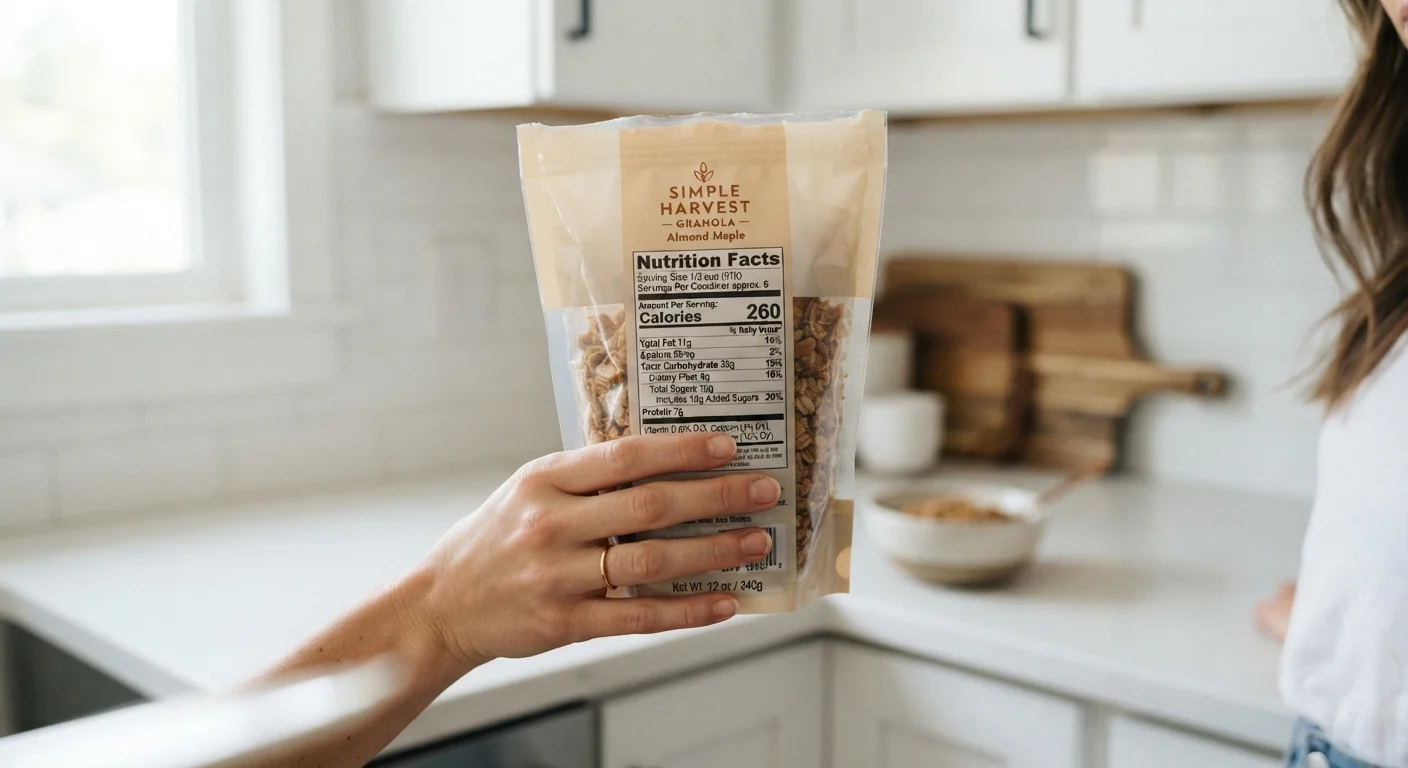
Key Takeaways
- Always check the serving size first — all other numbers on the label apply to that amount.
- The % Daily Value column tells you how much a nutrient contributes to a standard 2,000-calorie diet.
- Limit saturated fat, sodium, and added sugars; prioritize fiber, vitamins, and minerals.
- Ingredients are listed in descending order by weight, revealing what dominates the product.
- No single number defines a food's healthfulness — context and overall diet patterns matter most.
What you will need
Why Nutrition Labels Exist — and What They're Built On
The Nutrition Facts panel is a federally regulated format overseen by the U.S. Food and Drug Administration (FDA). Its current design, updated in 2016 and phased in through 2020, reflects decades of nutrition research and is designed to help consumers make informed purchasing decisions at a glance.
The label is not a verdict on whether a food is "good" or "bad." It is a standardized data snapshot. Reading it accurately means understanding what each section measures — and what it doesn't. Food choices happen in the context of an entire diet, not a single item.
What you will need
A Section-by-Section Walkthrough
Follow the label from top to bottom — that's roughly the order of importance the FDA intended.
Start with serving size and servings per container
This is the most critical number on the label. Every figure that follows — calories, grams of fat, milligrams of sodium — applies to one serving as defined here, not to the entire package.
If a bag of chips lists a serving size of 15 chips and the bag contains about 3 servings, eating the whole bag means tripling every number on the label. The FDA now requires serving sizes to reflect amounts people typically eat, making them more realistic than older labels.
Read the calorie count in context
Calories measure total energy per serving. The label's calorie figure is prominent by design, but it's a starting point rather than a complete picture of nutritional quality. A food can be calorie-dense and nutrient-rich (like nuts) or calorie-light and nutrient-poor (like plain rice cakes).
Use calories alongside the nutrient breakdown, not as a standalone judgment.
Review fats — total, saturated, and trans
Total fat includes all fat types. Drill into the sub-categories:
- Saturated fat: Current dietary guidelines recommend limiting this, as high intake is associated with elevated LDL cholesterol in research literature.
- Trans fat: Artificial trans fats (partially hydrogenated oils) have been largely removed from the US food supply by FDA action; naturally occurring trans fats from ruminant animals appear in small amounts in some dairy and meat products.
- Unsaturated fats (monounsaturated and polyunsaturated) are not always broken out but are generally considered more favorable; they make up the difference between total fat and saturated/trans fat.
Examine sodium
Sodium is listed in milligrams (mg). Most US adults consume more sodium than public health guidelines suggest as a general target. Packaged and restaurant foods contribute the majority of dietary sodium for most Americans.
Use the % Daily Value column (see Step 6) to gauge whether a serving is a small or large contribution to daily intake.
Decode total carbohydrates, dietary fiber, and added sugars
Total carbohydrates encompass dietary fiber, total sugars, and other carbohydrates. Breaking down the sub-lines is where the real information lives:
- Dietary fiber: Listed separately because it behaves differently in the body than digestible carbohydrates. Most Americans eat well below recommended amounts.
- Total sugars: Includes naturally occurring sugars (from fruit, dairy) and added sugars combined.
- Added sugars: Sugars and syrups added during processing — now required on labels by the FDA. This sub-line is key because naturally occurring and added sugars have different dietary implications.
Use the % Daily Value column as your quick guide
The right-hand column expresses each nutrient as a percentage of a reference daily intake, based on a 2,000-calorie diet. The FDA's general guidance:
- 5% DV or less = low in that nutrient
- 20% DV or more = high in that nutrient
Apply this in two directions: aim for higher % DV on fiber, vitamin D, calcium, iron, and potassium; aim for lower % DV on saturated fat, sodium, and added sugars. Your individual calorie needs may differ from 2,000, so treat % DV as a relative comparison tool rather than a personal prescription.
Scan the ingredient list
Ingredients are listed in descending order by weight — the first ingredient is present in the greatest amount. A long ingredient list isn't automatically a problem, but it is informative. Look at what the first three to five ingredients are: they make up the bulk of the product.
Watch for multiple names for the same ingredient (sugar appears as corn syrup, dextrose, maltose, evaporated cane juice, and many other names). Spotting them spread throughout the list can indicate a higher cumulative sugar content than any single entry suggests.
Putting It All Together at the Store
Once you understand each section individually, comparing products becomes straightforward. Use the % DV column as your quick-scan tool: nutrients you want more of (fiber, vitamin D, calcium, iron, potassium) should trend toward higher percentages; nutrients worth limiting (sodium, saturated fat, added sugars) should trend lower.
Use the % DV Column for Quick Comparisons
When choosing between two similar products, line up their % Daily Value columns rather than comparing raw gram or milligram figures. It's a faster, more standardized way to see meaningful differences. This works especially well for sodium, fiber, and added sugars.
The ingredient list adds crucial context the numbers can't capture. Whole, recognizable ingredients near the top of the list generally indicate less processing. For a deeper look at that distinction, see how ultra-processed foods differ from processed foods.
Fiber is one of the most actionable numbers on the label. Most Americans fall well short of recommended intake levels — learn which everyday foods deliver the most fiber and why it matters. Similarly, the vitamin and mineral section becomes more meaningful once you understand what each nutrient actually does; our no-jargon vitamin and mineral reference covers that in plain language.
If the carbohydrate numbers prompt questions about blood sugar, the glycemic index explainer and our guide to whole grains vs. refined grains offer useful context. For protein, protein timing, spreading, and sources explains how to think beyond just the gram count.
Front-of-Package Claims Are Marketing, Not Regulation
Terms like "natural," "wholesome," or "made with real fruit" on the front of a package are largely unregulated marketing language. The Nutrition Facts panel and ingredient list on the back or side are the standardized, FDA-regulated sources of truth. Always cross-check front-of-pack claims against the actual label data.
This article is for general informational and educational purposes only and does not constitute medical or dietary advice. Individual nutritional needs vary. Consult a registered dietitian or qualified healthcare professional for guidance tailored to your health situation.