

| Vitamin categories | Fat-soluble (A, D, E, K) and water-soluble (C, B-complex) |
| Most common US deficiency | Vitamin D (particularly in northern states and winter months) (CDC National Health and Nutrition Examination Survey (NHANES)) |
| Iron absorption tip | Pair plant-based iron sources with vitamin C to improve absorption |
| B12 risk group | People following vegan or strict vegetarian diets |
| Folate and pregnancy | Adequate folate (B9) before and during early pregnancy helps reduce neural tube defect risk (US Centers for Disease Control and Prevention (CDC)) |
| Minerals needed in largest amounts | Calcium, phosphorus, potassium, magnesium, sodium |
Why Micronutrients Matter
Carbohydrates, protein, and fat get most of the nutritional spotlight — but vitamins and minerals are the behind-the-scenes workers that keep nearly every body process running. They regulate energy metabolism, support immune function, maintain bone density, and enable nerve signaling, among dozens of other roles. Unlike macronutrients, your body needs them in relatively small amounts, yet falling short of even one can cause noticeable health effects over time.
This reference covers the major micronutrients most relevant to everyday American eating: what each one does, where to find it in food, and what signs of deficiency can look like. It is intended as general education — not a substitute for guidance from a registered dietitian or physician. If you suspect a deficiency, a healthcare provider can order appropriate lab tests and advise on next steps.
For a practical companion to this guide, see our breakdown of the Nutrition Facts label, which shows exactly how daily values for vitamins and minerals are reported on packaged foods.
| Vitamin categories | Fat-soluble (A, D, E, K) and water-soluble (C, B-complex) |
| Most common US deficiency | Vitamin D (particularly in northern states and winter months) (CDC National Health and Nutrition Examination Survey (NHANES)) |
| Iron absorption tip | Pair plant-based iron sources with vitamin C to improve absorption |
| B12 risk group | People following vegan or strict vegetarian diets |
| Folate and pregnancy | Adequate folate (B9) before and during early pregnancy helps reduce neural tube defect risk (US Centers for Disease Control and Prevention (CDC)) |
| Minerals needed in largest amounts | Calcium, phosphorus, potassium, magnesium, sodium |
Key Vitamins at a Glance
Vitamins fall into two categories: fat-soluble (A, D, E, K), which are stored in body fat and the liver, and water-soluble (C and the B vitamins), which are not stored in significant amounts and need regular dietary replenishment.
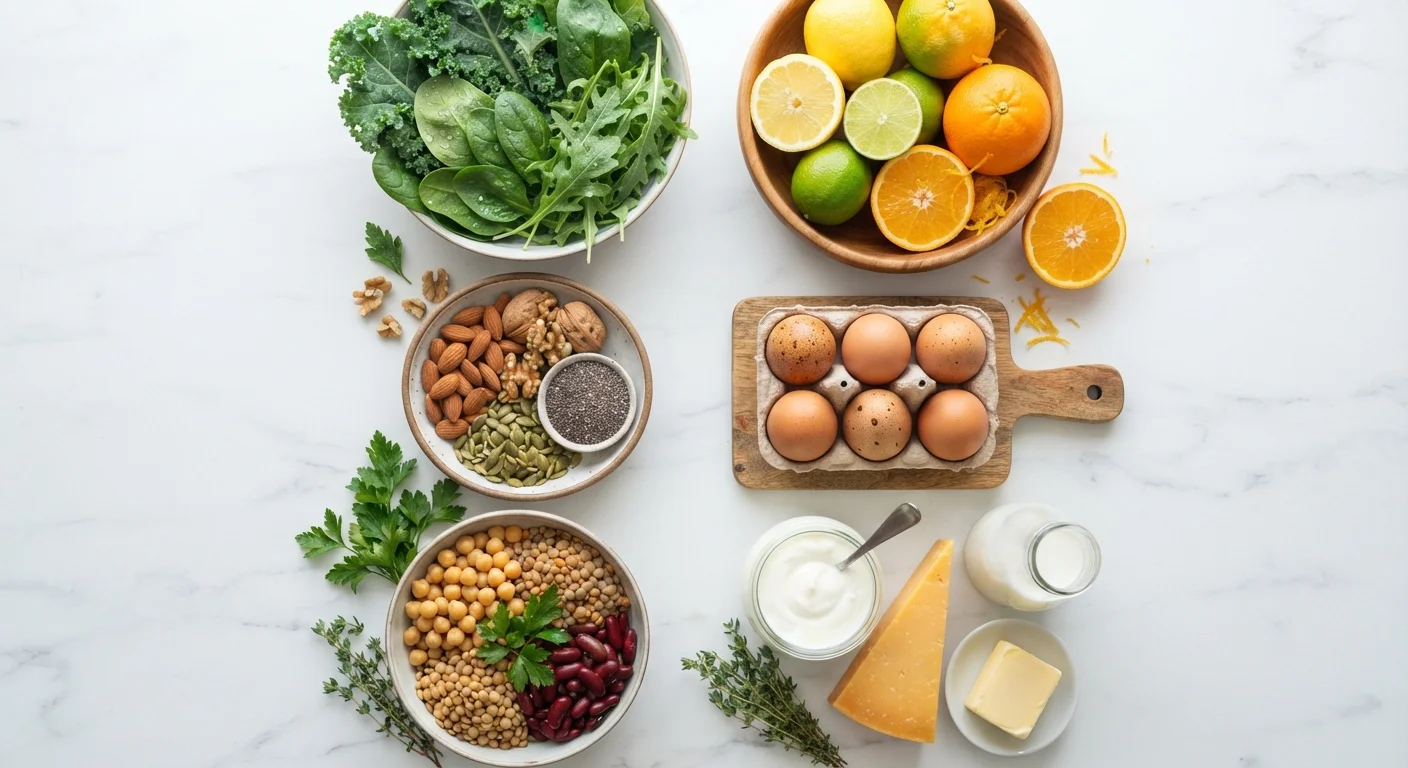
- Vitamin A — Supports vision (especially in low light), immune defense, and skin cell turnover. Found in liver, dairy, eggs, and as beta-carotene in orange and dark green produce such as sweet potatoes, carrots, and spinach. Deficiency signs include night blindness and dry skin.
- Vitamin D — Regulates calcium absorption for bone health and plays roles in immune and muscle function. Synthesized in skin from sunlight; dietary sources include fatty fish, fortified milk, and eggs. Deficiency is common in the US, particularly in northern latitudes and among people with limited sun exposure.
- Vitamin E — Acts as an antioxidant protecting cells from oxidative damage. Found in nuts, seeds, wheat germ, and vegetable oils. Isolated deficiency is uncommon in healthy adults eating a varied diet.
- Vitamin K — Essential for blood clotting and bone metabolism. Vitamin K1 comes primarily from leafy greens; K2 is found in fermented foods and some animal products.
- Vitamin C — Supports collagen synthesis, wound healing, and immune function; enhances iron absorption from plant foods. Found in citrus, bell peppers, strawberries, and broccoli. Deficiency (scurvy) is rare but still seen with very poor dietary variety.
- B Vitamins (B1, B2, B3, B5, B6, B7, B9, B12) — This family drives energy metabolism and supports nervous system health. B12 deserves special attention: it is found almost exclusively in animal products, making people following plant-based diets at higher risk for deficiency. Folate (B9) is critical during pregnancy for neural tube development — a point where consulting a healthcare provider about supplementation is especially important.
For more on how color-coded plant foods deliver distinct nutrient profiles, see our guide on what eating the rainbow actually means.
Fat-soluble vitamins
Vitamins A, D, E, and K, which dissolve in fat and are stored in the body's fatty tissue and liver. Because they accumulate, excessive intake from supplements over time can reach harmful levels.
Water-soluble vitamins
Vitamin C and the eight B vitamins, which dissolve in water and are not stored in significant amounts. Excess is generally excreted in urine, meaning regular dietary intake is needed.
Heme iron
A form of iron found only in animal-derived foods such as meat, poultry, and fish. It is absorbed by the body more efficiently than non-heme iron from plant sources.
Daily Value (DV)
A reference number used on US Nutrition Facts labels to show how much of a nutrient one serving provides relative to general daily needs. It is a population-level benchmark, not a personal target.
Antioxidant
A compound that neutralizes unstable molecules called free radicals, which can damage cells. Several vitamins — including C, E, and beta-carotene — have antioxidant properties.
Trace minerals
Minerals your body requires in very small amounts, such as iron, zinc, iodine, and selenium. 'Trace' refers to the quantity needed, not to their importance — deficiencies in trace minerals can have significant health effects.
Essential Minerals and Where to Find Them
Minerals are inorganic elements your body cannot produce. The major minerals — needed in larger amounts — include calcium, magnesium, potassium, sodium, and phosphorus. Trace minerals, required in smaller quantities, include iron, zinc, iodine, selenium, and manganese.
- Calcium — The most abundant mineral in the body, primarily in bones and teeth. Also regulates muscle contractions and nerve signals. Sources: dairy, fortified plant milks, sardines with bones, leafy greens such as bok choy and kale.
- Iron — Required for hemoglobin production, which carries oxygen in the blood. Heme iron (from meat, poultry, fish) is absorbed more readily than non-heme iron (from legumes, tofu, fortified cereals). Pairing non-heme sources with vitamin C improves absorption. Iron-deficiency anemia is one of the most common nutritional deficiencies worldwide.
- Magnesium — Involved in over 300 enzymatic reactions, including energy production and muscle relaxation. Found in whole grains, nuts, seeds, and leafy greens. Many Americans fall short of the recommended intake.
- Potassium — Helps regulate blood pressure and fluid balance, and supports heart rhythm. Rich sources include bananas, potatoes, beans, and avocados.
- Zinc — Supports immune response, wound healing, and taste and smell perception. Found in oysters, red meat, poultry, beans, and pumpkin seeds.
- Iodine — Needed for thyroid hormone production, which governs metabolism and development. Iodized salt and seafood are the primary dietary sources in the US.
- Selenium — Antioxidant mineral that supports thyroid function and immune health. Brazil nuts are an exceptionally concentrated source — even one or two per day can meet daily needs.
~42%
US adults with vitamin D insufficiency
According to NHANES data, vitamin D insufficiency affects a substantial share of the US adult population, with higher rates among older adults and those with darker skin tones.
~10%
US women of childbearing age with iron deficiency
The CDC estimates roughly 1 in 10 women aged 12–49 in the US has iron deficiency, making it the most prevalent nutritional deficiency in this group.
~50%
Americans falling short of magnesium intake recommendations
Dietary survey data consistently show roughly half of US adults consume less magnesium than the Estimated Average Requirement, largely due to low intake of whole grains and leafy vegetables.
If you are new to thinking about nutrient density in your daily meals, our article on eating well as an adult provides a grounded, non-restrictive starting point.
This article is for general informational and educational purposes only and is not medical or dietary advice. Speak with a qualified healthcare professional or registered dietitian before making significant changes to your diet or taking supplements.