

| Primary hair protein | Keratin (>90% of hair shaft composition) |
| Most studied nutritional cause of hair loss | Iron deficiency / low ferritin (Dermatology research consensus) |
| Biotin deficiency prevalence | Rare in typical Western diets |
| Hair growth rate (average) | Approximately 6 inches (15 cm) per year (American Academy of Dermatology) |
| Telogen (resting) phase duration | Approximately 2–3 months before shedding |
| Daily hair shedding considered normal | 50–100 strands per day (American Academy of Dermatology) |
Why Nutrition Matters for Hair Follicles
Hair follicles are among the most metabolically active structures in the body. Because they cycle through rapid growth, transition, and rest phases, they are sensitive to nutritional shortfalls — often one of the first places deficiency shows up visibly. That said, nutrition is just one factor. Genetics, hormones, medications, and scalp health all play significant roles. See how these systems interact in our overview of what your strands reveal about your body.
The research on diet and hair is promising but often limited by small study sizes, self-reported data, and the difficulty of isolating single nutrients. What the evidence does support clearly is this: correcting a genuine nutritional deficiency can improve hair shedding and quality, while supplementing nutrients you already have in adequate supply is unlikely to produce visible benefit and may carry risks.
| Primary hair protein | Keratin (>90% of hair shaft composition) |
| Most studied nutritional cause of hair loss | Iron deficiency / low ferritin (Dermatology research consensus) |
| Biotin deficiency prevalence | Rare in typical Western diets |
| Hair growth rate (average) | Approximately 6 inches (15 cm) per year (American Academy of Dermatology) |
| Telogen (resting) phase duration | Approximately 2–3 months before shedding |
| Daily hair shedding considered normal | 50–100 strands per day (American Academy of Dermatology) |
Key Nutrients and What the Evidence Says
Protein
Hair is made almost entirely of keratin, a structural protein. Inadequate total protein intake — seen in crash diets or severely restrictive eating patterns — is a well-documented cause of diffuse hair shedding, known as telogen effluvium. Most people eating a varied diet meet their protein needs without supplementing. For a broader view of evidence-based eating patterns, visit the Nutrition & Diet hub.
Iron
Iron deficiency is one of the most studied nutritional contributors to hair loss, particularly in women of reproductive age. Low ferritin (stored iron) has been associated with increased shedding in some research, though the relationship is still being investigated. Supplementation is appropriate only when a deficiency is confirmed by a blood test — excess iron has its own health risks.
Biotin (Vitamin B7)
Biotin deficiency is rare in people eating a typical diet, yet biotin supplements are heavily marketed for hair growth. Clinical evidence only supports biotin's role in hair health when an actual deficiency exists — a point worth noting before spending on high-dose products. Those taking certain medications should speak with a clinician before supplementing.
Zinc
Zinc supports the hair follicle repair cycle and protein synthesis. Deficiency — more common in people with absorption conditions or restricted diets — has been linked to hair loss. As with other minerals, excess zinc can interfere with copper absorption and may worsen hair health.
Vitamin D
Receptors for vitamin D are present in hair follicles, and low vitamin D levels have been observed in some studies of people with alopecia areata and telogen effluvium. However, evidence that supplementing vitamin D reverses hair loss in non-deficient individuals remains limited.
Telogen effluvium
A common, usually temporary form of diffuse hair shedding triggered by stress, illness, nutritional deficiency, or hormonal shifts. Hair typically re-enters the growth phase once the underlying cause is addressed.
Ferritin
A protein that stores iron in the body. Ferritin blood levels are used as a clinical marker to assess iron stores, and low ferritin has been associated with certain types of hair shedding.
Keratin
The structural protein that makes up the majority of the hair shaft. Adequate dietary protein is necessary for the body to synthesize keratin and support healthy hair growth.
Follicle growth cycle
The repeating biological cycle each hair follicle undergoes: anagen (active growth), catagen (transition), and telogen (resting/shedding). Nutritional and hormonal factors can shift follicles prematurely into the resting phase.
Biotin (Vitamin B7)
A water-soluble B vitamin involved in fatty acid synthesis and amino acid metabolism. Deficiency is rare but can affect hair and nail health; supplementation beyond correcting a deficiency has limited clinical support.
Alopecia areata
An autoimmune condition in which the immune system attacks hair follicles, causing patchy or diffuse hair loss. It is distinct from nutritional hair loss and requires separate clinical assessment.
A Whole-Diet Approach Over Single-Nutrient Thinking
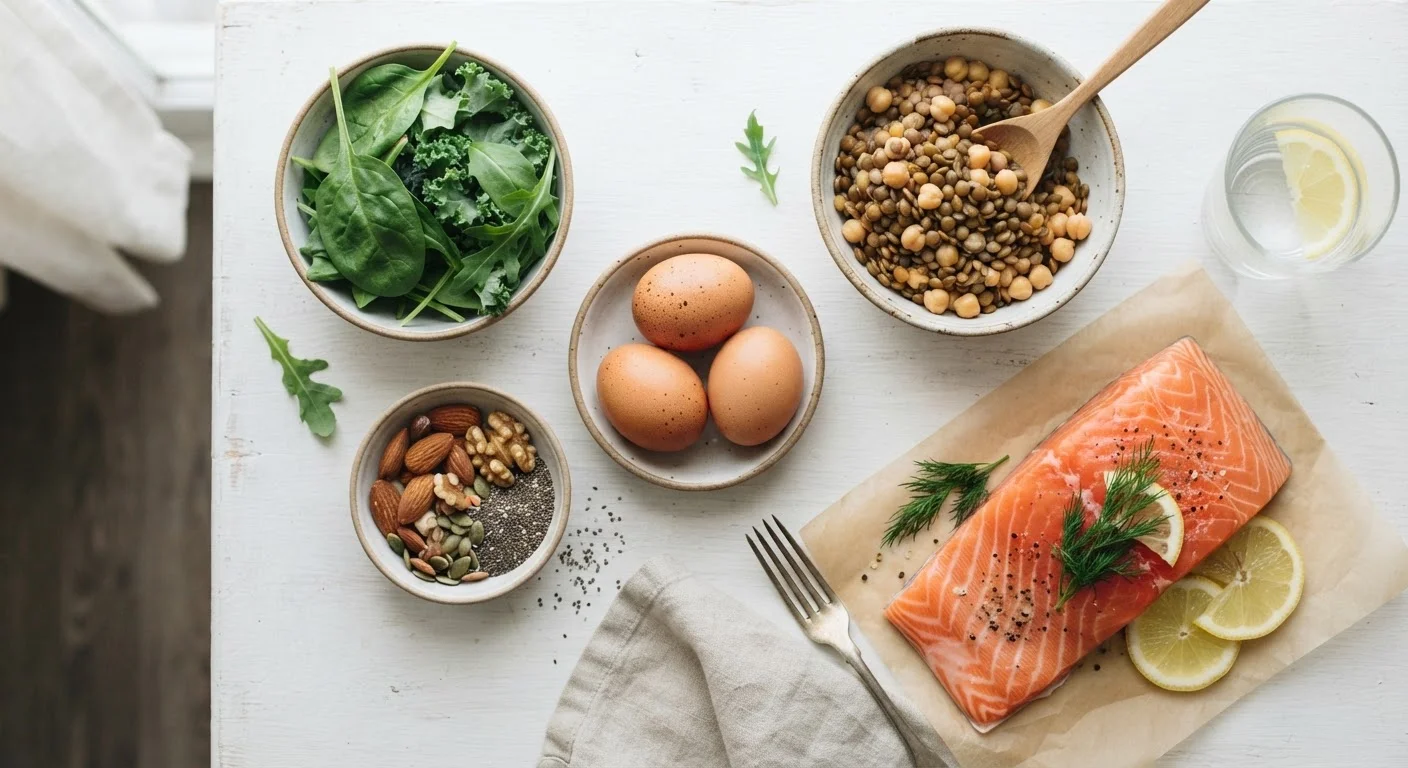
Focusing on individual nutrients can obscure a simpler truth: a varied, whole-food diet provides the full matrix of vitamins, minerals, and amino acids that follicles need. Leafy greens, legumes, eggs, nuts, seeds, and lean proteins collectively supply iron, zinc, B vitamins, and essential fatty acids without the risk of over-supplementation.
Lifestyle factors compound nutrition's effects. Hydration, sleep, and physical movement each influence scalp circulation and follicle function in ways no single supplement can replicate. Similarly, hormonal fluctuations — explored in our piece on hormones and hair across life stages — interact directly with how the body uses nutrients.
~50%
Women affected by noticeable hair loss by age 50
According to the American Academy of Dermatology, roughly half of women experience visible hair thinning by midlife, underscoring the multifactorial nature of the condition.
Rare
True biotin deficiency in US adults
Clinical biotin deficiency is uncommon among people consuming varied diets, making routine supplementation unnecessary for most individuals per nutrition researchers.
2–6 years
Active hair growth (anagen) phase duration
The length of the anagen phase is largely genetically determined, highlighting why nutrition alone cannot override the fundamental biology of hair growth.
For a comprehensive framework connecting all of these factors, the guide on hair care across your whole life is a useful starting point. And if you're curious how plant-forward eating fits in, what research says about plant-based diets provides relevant context.
This article is for general informational and educational purposes only and does not constitute medical advice. If you are experiencing significant hair loss or suspect a nutritional deficiency, please consult a qualified healthcare professional for evaluation and guidance.