

Key Takeaways
- Meal plans that account for real-life friction are far more likely to hold through the week.
- Batch-cooking versatile staples reduces daily decision fatigue and supports consistent nutrition.
- Flexible planning — building in one or two buffer meals — prevents complete plan abandonment.
- A plant-forward foundation tends to simplify prep while supporting long-term health outcomes.
- Small, repeatable weekly habits outperform elaborate one-off planning sessions.
Summary
18 items · 30–60 minutes of planning, 1–2 hours of weekly prep
Why Most Meal Plans Collapse by Midweek
The problem with most meal planning isn't motivation — it's architecture. Plans built around ambitious recipes, perfect schedules, and zero flexibility tend to crumble the moment life intervenes. A late meeting, an unexpected dinner invitation, or a depleted energy reserve on a Tuesday night can unravel an entire week of good intentions.
Research on habit formation consistently shows that sustainable behaviors are those with the lowest friction, not the most impressive ambitions. Applied to food, this means a meal plan should be a scaffold, not a rigid contract. When planning accounts for real-world disruption — long days, irregular hunger, or simply not wanting what you planned — adherence improves significantly.
This checklist is designed to help you build that kind of durable plan: one grounded in nutritional science, structured around your actual life, and flexible enough to survive a full seven days. It pairs naturally with a sustainable weekly workout schedule, since coordinating fueling with physical output is one of the most effective ways to support energy levels and recovery.
Overly Rigid Plans Often Backfire
Planning every meal down to exact portions and recipes can create an all-or-nothing mindset: one deviation feels like total failure. Nutrition science supports consistency over perfection — a plan you follow 80% of the time for months outperforms a perfect plan abandoned after five days. Build slack into your system intentionally.
What You'll Need Before You Start
Good planning requires a few basic tools and a clear picture of your week. Gather these before working through the checklist below.
Weekly planner or digital calendar
Map out your schedule before planning meals so you know exactly how much cooking time is realistically available each day.
Pantry inventory list
A running note of staples on hand prevents duplicate purchases and forms the foundation of each week's shopping list.
Reusable glass or BPA-free food containers
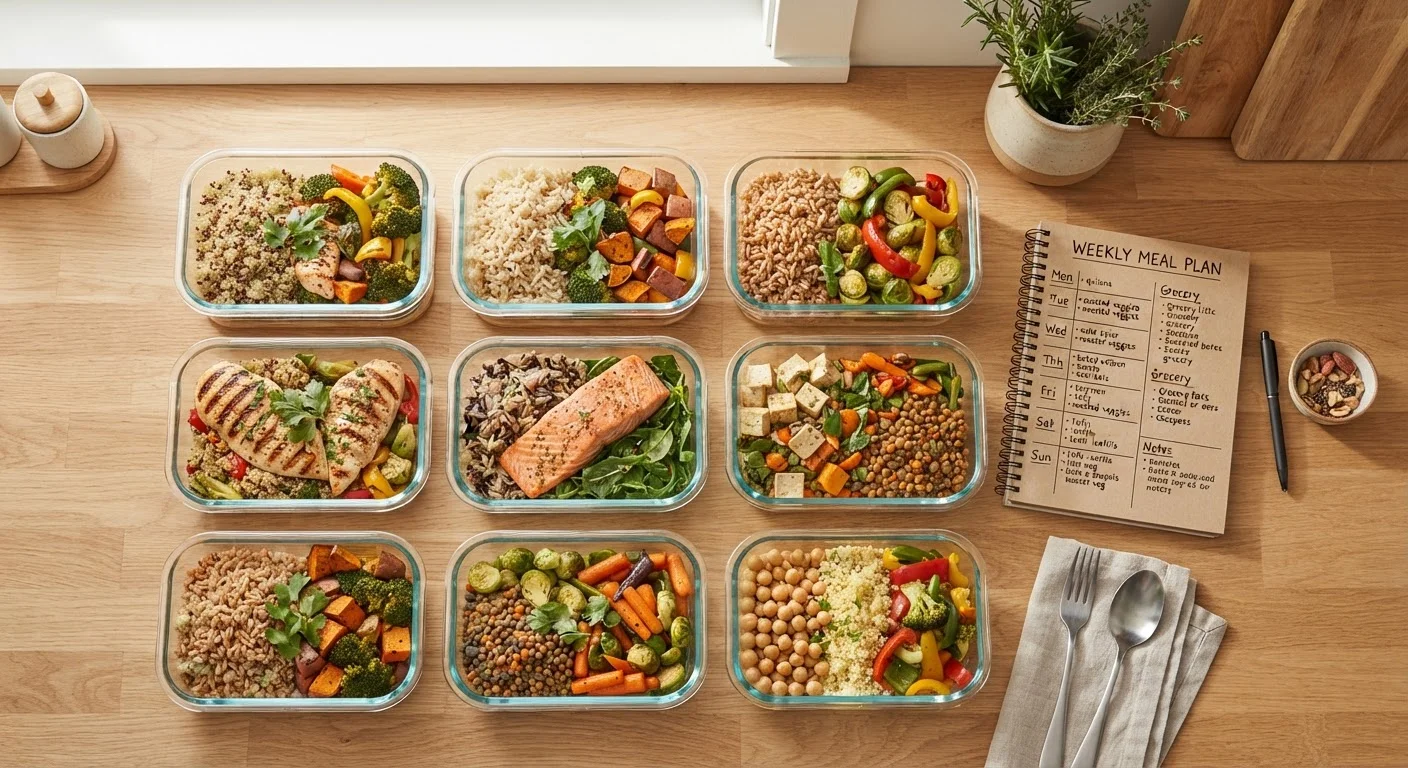
Airtight containers for batch-cooked grains, proteins, and vegetables keep prepped food fresh and accessible throughout the week.
Sheet pan and a large pot or slow cooker
These two pieces of equipment enable the most time-efficient cooking methods — roasting and batch simmering — that anchor a practical prep session.
Grocery delivery or curbside pickup service
Ordering from a prepared list reduces impulse purchases and saves the physical and mental energy of in-store shopping.
Nutrition tracking app (general use)
Useful for spot-checking that planned meals cover key nutrients like fiber, protein, and micronutrients — not required for every user.
The Weekly Meal Planning Checklist
Work through these groups in order — ideally on the same day each week to build the habit into your routine. Most people find a consistent 30–45 minutes on a Sunday is enough to cover all the planning steps, with a separate block of time for actual cooking prep.
Assess Your Week
Build a Flexible Meal Framework
Prep Day Execution
Midweek Check-In
Nutritional Needs Vary by Individual
The framework in this checklist is designed for generally healthy adults and reflects broad dietary guidance. People managing chronic conditions, food allergies, pregnancy, or specific health goals should consult a registered dietitian before making significant changes to their eating patterns. General meal planning principles are helpful tools, but they do not replace personalized professional guidance.
For a deeper look at how food choices connect to long-term health, the evidence behind eating more plants offers grounded perspective on what large-scale nutrition studies consistently show.
It's also worth noting that the same psychological patterns that derail financial plans tend to show up in eating habits — the reasons budgets fail in month two map closely onto why meal plans collapse midweek. Awareness of that pattern is itself a protective tool.
Making the Plan Stick Long-Term
A single great week of meal planning means little if the system doesn't repeat. The goal is to make each planning session slightly easier than the last — recycling meals that worked, refining shopping habits, and shrinking the overall cognitive load over time.
Think of it similarly to building a consistent wind-down routine: the value accumulates not from any single perfect execution, but from repetition that gradually makes the behavior feel automatic. Keep a short running list of meals your household reliably eats — these become your rotation anchors and reduce planning time week over week.
This article is for general informational and educational purposes only and is not a substitute for personalized nutrition or medical advice. Consult a registered dietitian or qualified healthcare professional for guidance tailored to your individual health needs and circumstances.