

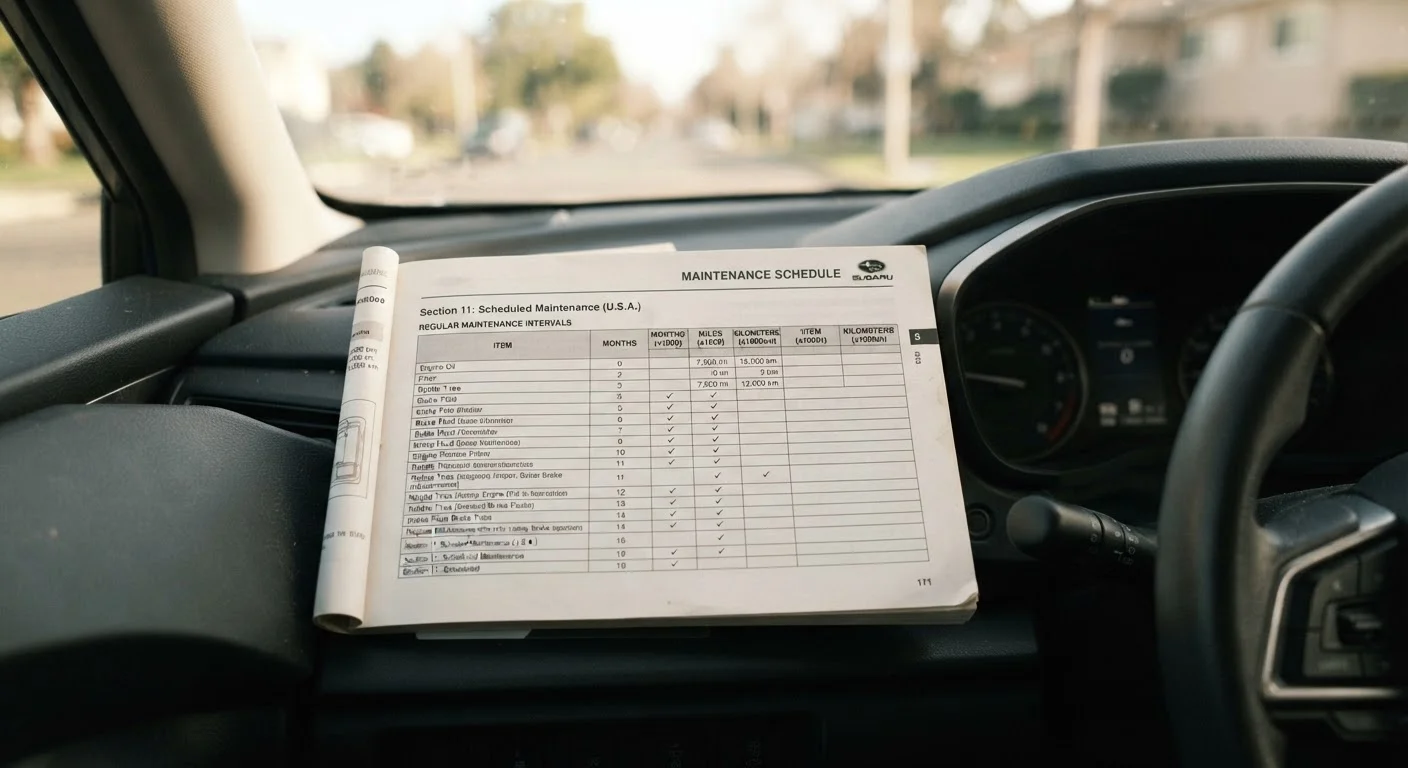
Key Takeaways
- Your owner's manual — not generic advice — is the authoritative source for your car's specific intervals.
- Maintenance schedules distinguish between 'normal' and 'severe' driving conditions, and many drivers qualify for the latter.
- Skipping scheduled services can void portions of your warranty and lead to compounding, expensive repairs.
- Modern vehicles with synthetic oil and advanced monitoring systems often have longer intervals than older models.
- Keeping a service log helps you stay on schedule and documents your car's history for resale or diagnosis.
Vehicle Maintenance Schedule
A vehicle maintenance schedule is a manufacturer-specified timeline of service tasks — such as oil changes, filter replacements, and fluid checks — that keep your car running safely and reliably. These intervals are expressed in miles driven, months elapsed, or both, whichever comes first. Following this schedule is one of the most effective ways to prevent costly breakdowns and extend the life of your vehicle.
Modern vehicles may use an oil life monitoring system (OLMS) that calculates change intervals based on engine conditions rather than fixed mileage, replacing the traditional every-3,000-mile rule for many drivers.
What a Maintenance Schedule Actually Is
Every vehicle sold in the United States comes with a manufacturer-issued maintenance schedule — a structured list of service tasks tied to specific mileage and time intervals. Think of it as a roadmap for keeping your car mechanically sound over its lifespan. It covers everything from routine oil changes to less obvious items like transmission fluid, coolant flushes, spark plugs, and timing belts.
These schedules exist because mechanical components degrade predictably under normal operating conditions. Engineers design maintenance windows based on testing data, allowing you to address wear before it becomes failure. The schedule isn't arbitrary — it reflects how your specific engine, drivetrain, and systems are engineered to perform.
The single most important thing to understand: your owner's manual is the definitive source. Generic service reminders at quick-lube shops or advice passed down from family members can be well-intentioned but may not match your vehicle's actual requirements. Oil type alone can significantly affect change intervals, and your manual accounts for this.
Breaking Down the Key Service Intervals
Most maintenance schedules organize tasks by mileage milestones — commonly every 5,000, 15,000, 30,000, 60,000, and 100,000 miles — though specific intervals vary by make and model. Here's what typically appears at each stage:
- Every 5,000–10,000 miles: Oil and oil filter change (interval depends on oil type and vehicle); tire rotation to promote even tread wear.
- Every 15,000–30,000 miles: Engine air filter and cabin air filter inspection or replacement; brake fluid check; battery inspection.
- Every 30,000–60,000 miles: Transmission fluid, coolant, and power steering fluid service; spark plug inspection; fuel filter replacement on applicable vehicles.
- Every 60,000–100,000 miles: Timing belt replacement (on interference engines, this is critical); serpentine belt inspection; differential and transfer case fluid on applicable drivetrains.
Each fluid in your vehicle serves a distinct protective role, and degraded fluid can cause damage that far exceeds the cost of a routine service.
~$100
Typical cost of a routine oil change
Routine oil changes are far less expensive than engine damage caused by neglected lubrication, which can run into thousands of dollars in repairs.
30,000–60,000 mi
Common timing belt replacement window
On interference engines, a snapped timing belt can cause catastrophic engine damage; replacement within the manufacturer's interval is critical.
3–5 years
Typical car battery lifespan
Battery performance degrades gradually; most manufacturers recommend inspection starting around three years of service.
Normal vs. Severe Driving: Which Category Are You In?
Most owner's manuals list two maintenance tracks: one for normal driving conditions and one for severe. Many drivers assume they fall into the normal category — but the definitions may surprise you.
Severe driving conditions typically include:
- Frequent trips shorter than five miles, especially in cold weather
- Prolonged idling or heavy stop-and-go traffic
- Towing a trailer or hauling heavy cargo regularly
- Driving in extreme heat, cold, dusty environments, or hilly terrain
If your daily commute involves a lot of short urban trips, you may be operating under severe conditions — which means shorter service intervals apply. Ignoring this distinction is one of the most common ways deferred maintenance costs drivers money down the road.
Check Both Columns in Your Manual
When you open your owner's manual to the maintenance schedule, look for the 'normal' and 'severe' condition columns side by side. If any severe-condition criteria apply to your driving habits, follow those shorter intervals. It's a small habit that can prevent significant wear over time.
Staying Organized and on Schedule
Understanding your maintenance schedule is only half the equation — tracking it consistently is what actually protects your vehicle. A simple logbook or digital record of each completed service, including the date, mileage, and work performed, helps you stay ahead of upcoming intervals and diagnose problems faster when something goes wrong.
A well-kept service record also adds documented value to your vehicle if you sell or trade it in. Prospective buyers and dealers treat maintenance history as a meaningful indicator of how a car was cared for.
For vehicles accumulating significant mileage, maintenance priorities can shift. High-mileage vehicles often benefit from more frequent fluid checks and closer attention to wear items that an original schedule may not fully address. And as seasons change, pairing your schedule with a seasonal maintenance check helps catch weather-related issues before they escalate.
This article is for general informational purposes only. For guidance specific to your vehicle, consult your owner's manual or a qualified mechanic.