

Key Takeaways
- A maintenance log helps you track service intervals accurately so nothing critical gets missed.
- Documented records can increase a vehicle's resale value by proving its care history to buyers.
- Spotting patterns in your log — like recurring fluid loss — can help diagnose problems early.
- Both digital apps and simple paper notebooks work well; consistency matters more than format.
- Recording odometer readings with every entry ties your service history directly to vehicle wear.
Why a Maintenance Log Is Worth the Effort
Most drivers rely on memory or dashboard warning lights to manage vehicle maintenance — a strategy that almost always leads to missed intervals, avoidable repairs, or unexpected costs. A written maintenance log shifts you from reactive to proactive ownership.
Whether you drive a new vehicle or a high-mileage car, a consistent record does three things well: it keeps you on schedule, makes it easier to identify emerging problems, and documents your vehicle's history for anyone who might buy it later. As explored in our car ownership costs hub, the financial consequences of deferred maintenance tend to compound over time — a well-kept log helps you stay ahead of that curve.
“A vehicle's service history is like a medical record — the more complete it is, the easier it is to spot something abnormal and act on it before it becomes serious.”
— Automotive Service Excellence (ASE), National certification body for professional automotive technicians
What to Record in Every Entry
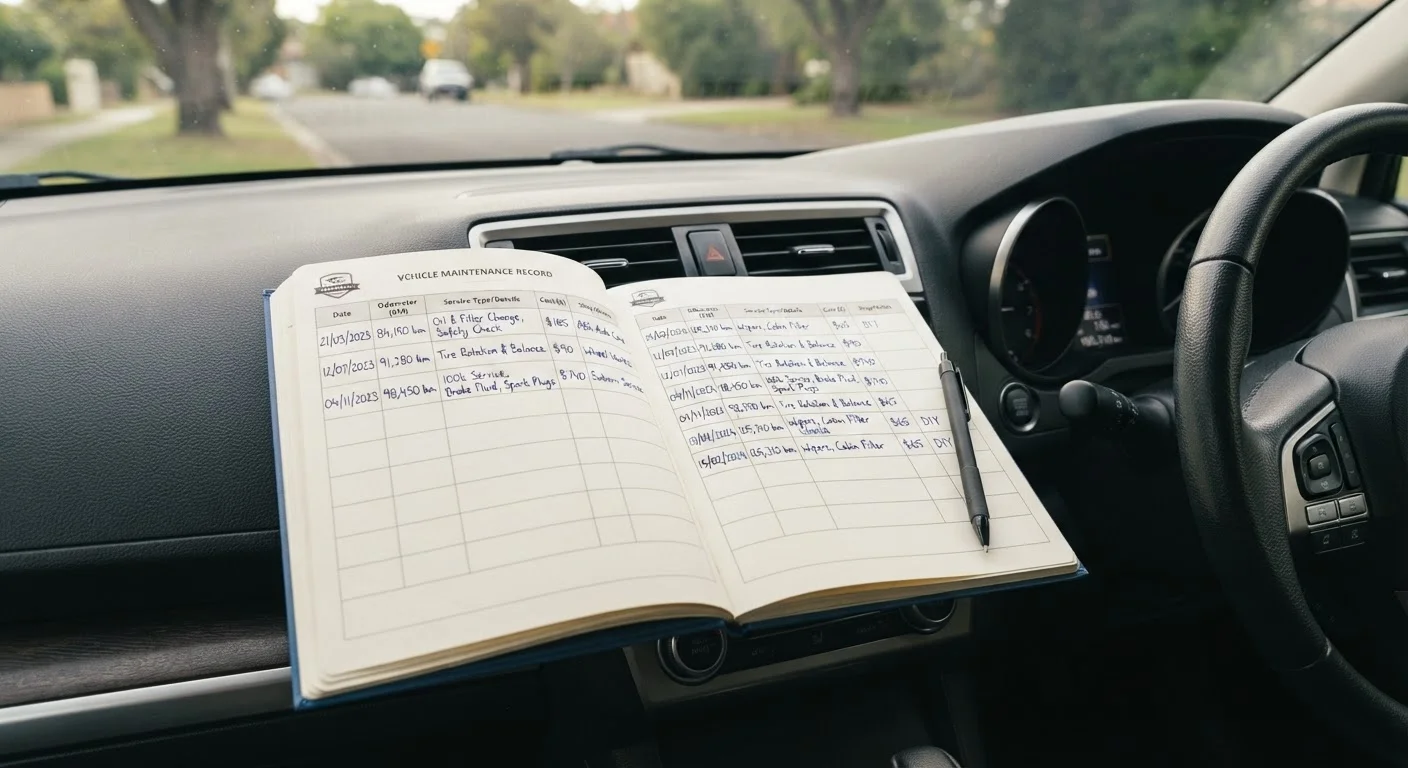
The most useful logs are consistent and specific. Each entry should capture the following data points:
- Date of service — the calendar date, not just the year
- Odometer reading — tying service to mileage is more accurate than tracking by time alone
- Service performed — oil change, brake inspection, tire rotation, filter replacement, etc.
- Parts or fluids used — brand and specification if relevant (e.g., 5W-30 synthetic oil)
- Who did the work — shop name and technician, or "DIY" if you did it yourself
- Cost — useful for budgeting and spotting price trends over time
- Next service due — the mileage or date when that same service should happen again
For repairs rather than routine maintenance, also note what symptom prompted the visit and what was found. This narrative context is invaluable when a related issue appears months later. See our guide to your car's maintenance schedule for help decoding what your owner's manual recommends and when.
Digital vs. Paper: Both Work
Dedicated apps like AUTOsist or MyCarFax allow photo attachments and automated reminders, while a simple spiral notebook in the glove box works just as well. The format matters far less than the habit. Choose whichever method you're most likely to stick with consistently.
Best Practices for Keeping Your Log Useful Over Time
Record every service event with the odometer reading, not just the date
Mileage-based tracking is more accurate than calendar-based tracking because driving patterns vary widely. Knowing a brake inspection occurred at 42,000 miles tells you far more than knowing it happened in March.
Log fluid top-offs and symptom notes, not just formal service visits
Small observations recorded over time reveal patterns — like oil that keeps running low — that would otherwise go unnoticed until they cause a breakdown.
Keep receipts paired with your written log entries
Receipts provide independent verification of the work performed and the parts used, which strengthens the log's credibility for resale and warranty claims.
Review your log before each seasonal maintenance check
Seasonal transitions are natural review points — checking your log before winter, for example, tells you whether the coolant was recently flushed or if tires were last rotated far enough back to warrant another.
Beyond the basics, a few habits keep a log genuinely useful rather than just a record of payments:
- Log entries immediately after service — memory degrades fast
- Record fluid top-offs between services, not just full changes
- Note unusual noises, warning lights, or handling changes even if no service was done yet — these become useful context for a mechanic later
- Review the log before every scheduled service to confirm what's actually due
If you own a vehicle with significant mileage, detailed records become even more critical. Our guide to keeping a high-mileage car on the road covers how maintenance needs shift as a vehicle ages and why documentation helps technicians prioritize the right checks.
How a Log Pays Off at Resale and Beyond
A complete, legible service history is a tangible asset when you sell or trade in a vehicle. Private buyers and dealerships alike view documented maintenance as evidence the vehicle was cared for — which can support a higher asking price and faster sale. It also reduces the buyer's uncertainty, one of the main reasons used-vehicle prices vary so widely.
Beyond resale, patterns in your log can surface problems before they become expensive. Frequent low oil levels between changes, for instance, might indicate a slow leak or internal consumption worth investigating. Without a log, these patterns are invisible until a warning light confirms the worst.
For a broader view of where maintenance fits into the full cost of vehicle ownership, see our article on maintenance costs that catch drivers off guard — many of those surprises are more predictable with good records in hand.
This article provides general vehicle maintenance guidance for informational purposes only. Consult a qualified mechanic for advice specific to your vehicle's make, model, and condition.