
Synthetic vs. Conventional Motor Oil: What the Difference Actually Means for Your Engine

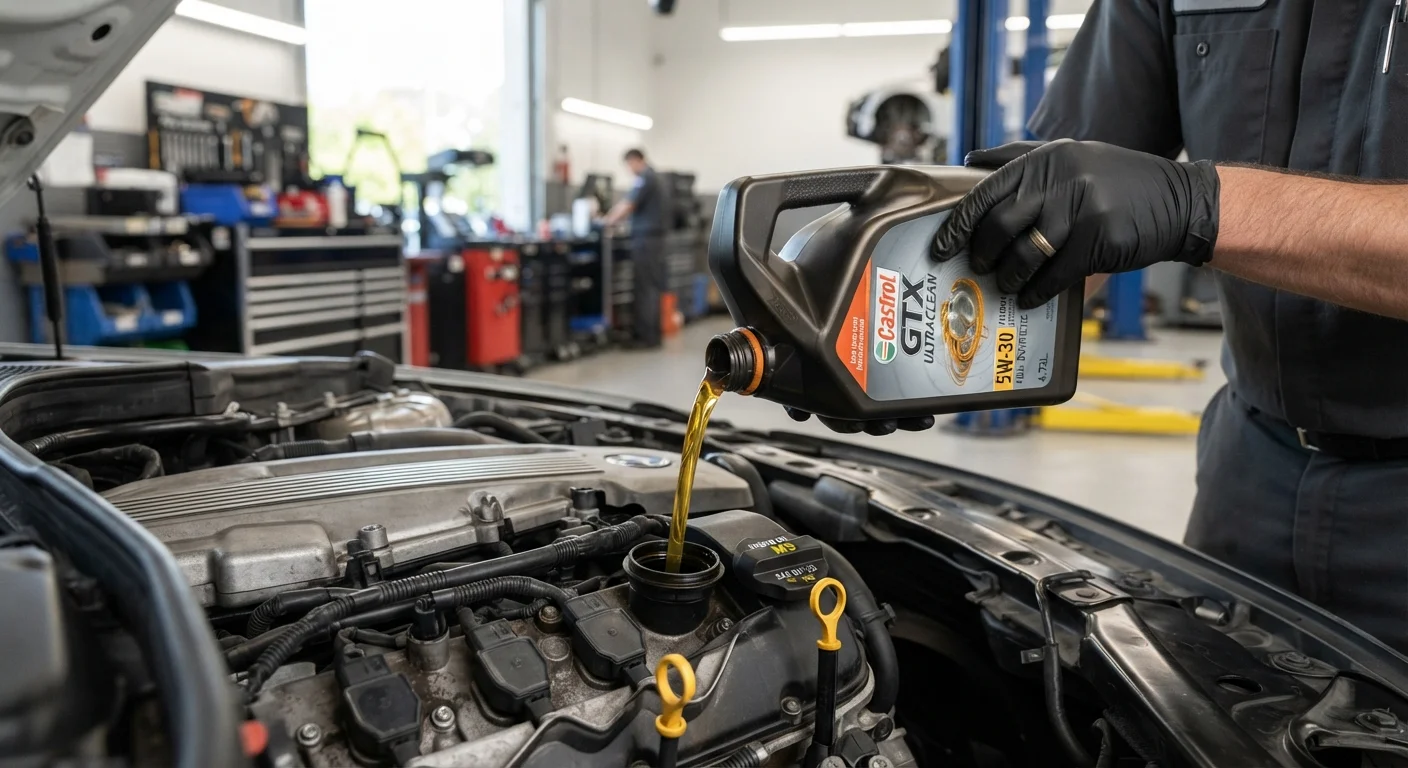
Key Takeaways
- Synthetic oil is chemically engineered for uniform molecules; conventional oil is refined directly from crude petroleum.
- Synthetic oil generally lasts longer between changes — often 7,500 to 15,000 miles versus 3,000 to 5,000 for conventional.
- Your owner's manual is the authoritative source for which oil type and viscosity your specific engine requires.
- Switching between oil types is generally safe, but always follow manufacturer specifications.
- Higher upfront cost of synthetic oil is often offset by fewer oil changes and potential engine protection benefits.
Option A
Synthetic Motor Oil
The engineered, high-performance formulation.
Best for: Best for modern engines, extreme temperatures, high-mileage vehicles, or drivers who want longer intervals between oil changes.
Option B
Conventional Motor Oil
The time-tested, petroleum-based standard.
Best for: Best for older engines with simple designs, low-mileage drivers, and vehicles whose manufacturers specify conventional oil.
If you drive a newer vehicle or a turbocharged engine
Synthetic Motor Oil
Modern engine tolerances and turbochargers run hotter and tighter — synthetic oil's molecular consistency handles those demands more reliably.
If your owner's manual specifies conventional oil and your engine is older
Conventional Motor Oil
Some older engines with worn seals may actually be better served by conventional oil's slightly thicker consistency. Always follow manufacturer guidance.
If you drive fewer than 7,500 miles per year
Conventional Motor Oil
Low-mileage drivers may not gain the full benefit of synthetic's extended-interval advantage, making conventional a cost-effective choice.
If you frequently drive in extreme heat, cold, or stop-and-go conditions
Synthetic Motor Oil
Synthetic oil maintains viscosity more consistently across wide temperature ranges and resists breakdown under thermal stress better than conventional formulas.
If you want to reduce long-term engine wear and extend oil change intervals
Synthetic Motor Oil
Synthetic oil's resistance to oxidation and sludge buildup means it stays effective longer, supporting cleaner engine internals over time.
How Each Oil Is Made — and Why It Matters
Motor oil's primary job is straightforward: lubricate moving metal parts, reduce friction, carry away heat, and keep contaminants suspended until the next oil change. Where synthetic and conventional oil diverge is in how they're produced and how consistently they perform that job.
Conventional motor oil starts as crude petroleum, which is extracted and then refined to remove impurities. That refining process is thorough, but it can't eliminate every inconsistency — crude oil contains a natural mix of molecule sizes and structures, and some of those variations remain in the finished product.
Synthetic motor oil is built differently. Rather than refined from crude, it's chemically synthesized — meaning its base molecules are engineered to be uniform in size and structure. Additives are then blended in precisely to target specific performance characteristics like heat resistance, cold-weather flow, and oxidation stability.
That molecular consistency is the core reason synthetic oil tends to perform more predictably across a broader range of conditions. It's also why it typically costs more at the point of purchase.
| Criterion | Synthetic Motor Oil | Conventional Motor Oil |
|---|---|---|
| Production method | Chemically engineered molecules | Refined from crude petroleum |
| Typical change interval | 7,500–15,000 miles | 3,000–5,000 miles |
| Performance in extremes | Better in heat and cold | More variable |
| Resistance to sludge | Higher resistance | Lower resistance |
| Cost per quart | Higher upfront | Lower upfront |
| Suited for older engines | Usually fine; check specs | May be preferred for some |
| Manufacturer requirement | Required by many modern engines | Specified for some older designs |
Oil Change Intervals: What the Numbers Really Mean
One of the most persistent myths in car maintenance is the universal 3,000-mile oil change rule. That figure made sense for older engines running conventional oil decades ago. For many modern vehicles — especially those factory-filled with synthetic — it's simply outdated.
Conventional oil generally degrades and loses protective properties somewhere between 3,000 and 5,000 miles under normal driving conditions. Synthetic oil, thanks to its more stable molecular structure, typically remains effective for 7,500 to 15,000 miles, depending on the specific formulation and your vehicle's requirements.
3,000
Miles — the outdated oil change rule
The 3,000-mile interval was appropriate for older engines and conventional oil; many modern vehicles with synthetic oil can safely go two to five times that distance per manufacturer specs.
~75%
New US vehicles recommending synthetic
Industry analysts estimate that a large majority of new passenger vehicles sold in the US are factory-filled with or require full synthetic motor oil, reflecting a broad industry shift.
That said, interval recommendations aren't universal. Driving patterns matter significantly. Short trips, extreme heat or cold, towing heavy loads, and high-RPM driving all accelerate oil breakdown — regardless of type. Your best guide remains the maintenance schedule outlined in your owner's manual. For a broader look at those intervals and what else they cover, see your car's maintenance schedule explained.
Many newer vehicles also include an oil life monitoring system that calculates change intervals based on actual driving data rather than mileage alone — a useful tool when used alongside manufacturer specifications.
Cost, Compatibility, and Common Questions
Synthetic oil typically costs two to four times more per quart than conventional. For many drivers, longer change intervals help narrow that cost gap over time — though the math depends on how many miles you drive annually and local service pricing. Motor oil is one piece of the broader picture of car ownership costs.
Always Check Your Owner's Manual First
Oil viscosity ratings (such as 5W-30 or 0W-20) and oil type specifications vary by engine design. Using the wrong viscosity — even a high-quality synthetic — can affect fuel economy and engine protection. Your owner's manual specifies exactly what your engine is designed to use, and that guidance takes precedence over general rules of thumb. If you no longer have your manual, most manufacturers make them available free on their websites.
Can you switch between synthetic and conventional? Generally, yes — modern oils and engine seals are compatible, and mixing types in an emergency won't cause immediate harm. However, for ongoing use, consistency with your manufacturer's specification is the right approach. If your vehicle specifies full synthetic, using conventional may not meet the engine's design requirements.
It's also worth noting that high-mileage oils — a category of their own — are available in both synthetic and conventional bases. These formulas include additives aimed at conditioning aging seals and reducing oil consumption, which can be relevant for vehicles with over 75,000 miles. Motor oil is just one of the critical fluids keeping your vehicle running; for a full overview, see fluids that keep your car running.
When in doubt about which oil your engine needs, the owner's manual is the definitive source — not the label on an oil bottle, not a service counter recommendation, and not a mileage rule inherited from a different era of automotive engineering.