

| Fluids covered | Engine oil, coolant, transmission fluid, brake fluid, power steering fluid, washer fluid |
| Recommended oil check frequency | Monthly, or before long trips (General industry guidance; verify interval in owner's manual) |
| Brake fluid boiling point concern | Moisture absorption reduces boiling point over time (Vehicle manufacturer service documentation) |
| Coolant check condition | Always check with engine cold to avoid pressure burns (Standard safety practice) |
| Sealed transmissions | Many modern vehicles have no transmission dipstick (Common in post-2010 vehicles; consult owner's manual) |
Why Vehicle Fluids Matter More Than Most Drivers Realize
Your car is essentially a network of controlled chemical and mechanical reactions — and fluids are what keep each system from destroying itself. Unlike a blown tire or a dead battery, low or degraded fluid rarely announces itself dramatically. Instead, it quietly allows heat to build, metal to grind, and components to wear until the damage is expensive or irreversible.
Understanding what each fluid does, where to find its reservoir, and what warning signs look like puts you in a far stronger position as a vehicle owner. This guide covers the six fluids that matter most. For a broader picture of what routine maintenance really costs, see our article on vehicle maintenance costs that catch drivers off guard.
| Fluids covered | Engine oil, coolant, transmission fluid, brake fluid, power steering fluid, washer fluid |
| Recommended oil check frequency | Monthly, or before long trips (General industry guidance; verify interval in owner's manual) |
| Brake fluid boiling point concern | Moisture absorption reduces boiling point over time (Vehicle manufacturer service documentation) |
| Coolant check condition | Always check with engine cold to avoid pressure burns (Standard safety practice) |
| Sealed transmissions | Many modern vehicles have no transmission dipstick (Common in post-2010 vehicles; consult owner's manual) |
The Six Essential Fluids — and What Happens When They Fail
1. Engine Oil
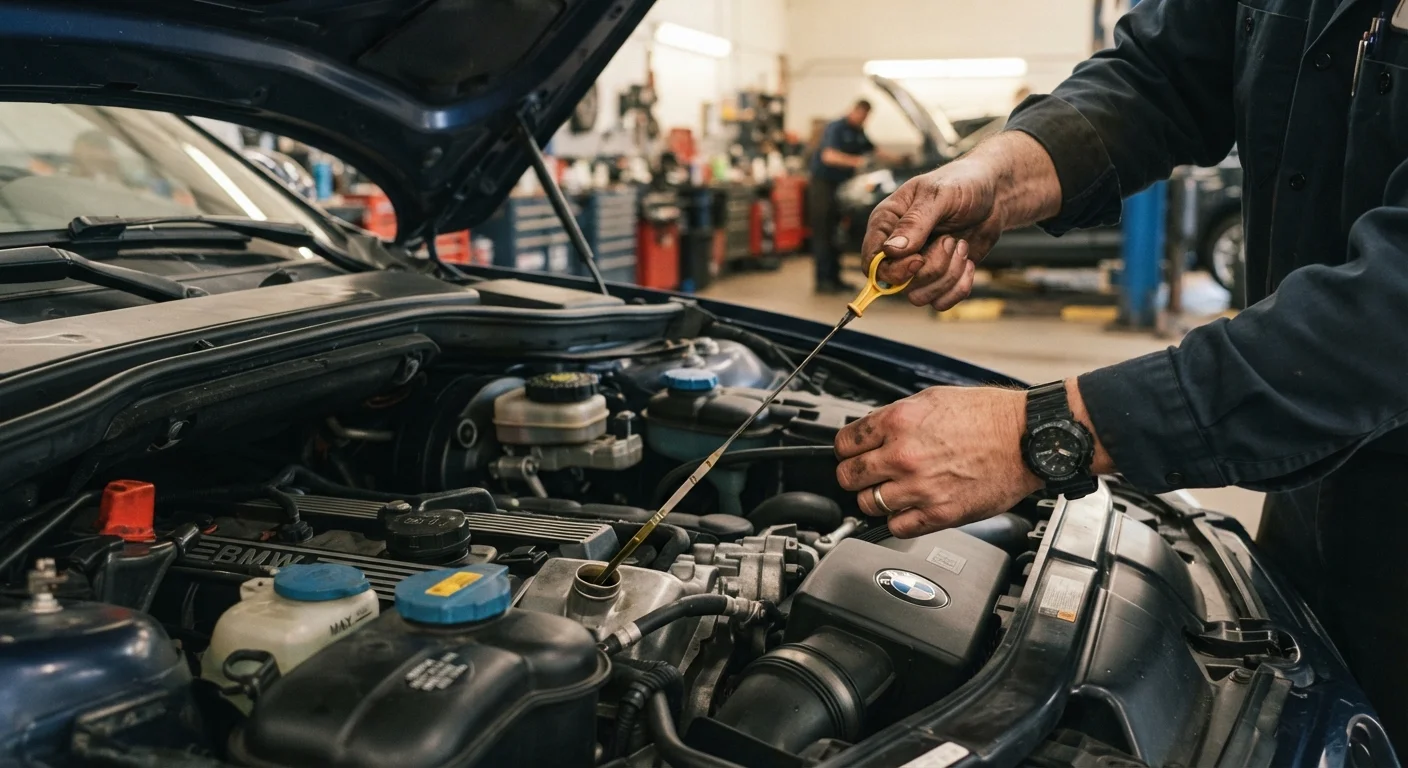
Engine oil lubricates moving metal parts, reduces friction-generated heat, and carries microscopic debris to the filter. When oil runs low, metal-on-metal contact accelerates wear rapidly. When oil degrades — breaking down from heat cycles and contamination — it loses viscosity and protective capability even if the level looks fine on the dipstick. Symptoms of low or dirty oil include a lit oil pressure warning light, a ticking or knocking sound at startup, or visibly dark, gritty oil on the dipstick. Check level monthly with the engine off and cool. See our comparison of synthetic vs. conventional motor oil to understand which type your vehicle may benefit from.
2. Coolant (Antifreeze)
Coolant circulates through the engine and radiator, absorbing combustion heat and preventing both overheating and freeze damage. Low coolant can cause the engine temperature gauge to spike; running an overheated engine even briefly can warp cylinder heads — a repair that often costs thousands. Check the coolant reservoir (a translucent plastic tank, usually labeled) when the engine is cold. The fluid should be between MIN and MAX marks and appear green, orange, or pink depending on type — never brown or rusty.
3. Transmission Fluid
Transmission fluid lubricates and cools the gears and clutch packs inside your transmission, and in automatic transmissions it also acts as hydraulic fluid. Low or burnt transmission fluid leads to sluggish or rough shifting, slipping gears, or delayed engagement when moving from park. Many modern vehicles have a sealed transmission with no dipstick — consult your owner's manual for inspection procedures or service intervals.
4. Brake Fluid
Brake fluid transmits the force of your foot on the pedal through the hydraulic braking system to the calipers and wheel cylinders. It is hygroscopic, meaning it absorbs moisture from the air over time, which lowers its boiling point and can cause a spongy pedal or reduced stopping power — particularly under repeated hard braking. If the brake warning light illuminates or the pedal feels soft, have the system inspected by a qualified mechanic promptly.
5. Power Steering Fluid
In vehicles with hydraulic power steering, this fluid powers the assist mechanism that makes turning the wheel easier. A whining or groaning noise when turning, especially at low speeds, is a classic sign of low fluid or a developing leak. Note: many newer vehicles use electric power steering and have no fluid reservoir at all.
6. Windshield Washer Fluid
The only fluid on this list with no mechanical consequence if it runs low — but it directly affects visibility. Plain water is not an adequate substitute in freezing temperatures and can crack the reservoir. Use a rated washer fluid for your climate.
Viscosity
A measure of a fluid's resistance to flow. Engine oil viscosity ratings (e.g., 5W-30) indicate how the oil behaves at cold startup and operating temperature. Using the wrong viscosity can reduce lubrication effectiveness.
Hygroscopic
A property describing a substance that absorbs moisture from its surrounding environment. Brake fluid is hygroscopic, which means water accumulates in it over time, lowering its boiling point and degrading braking performance.
Hydraulic system
A mechanical system that uses pressurized fluid to transmit force. Both braking and hydraulic power steering systems rely on fluid pressure to multiply and transfer force from the driver's input to the vehicle's components.
Coolant reservoir
A translucent plastic tank connected to the radiator that holds excess coolant and allows the system to expand and contract with temperature changes. It is the correct place to check coolant level — not the radiator cap on a hot engine.
Dipstick
A slender metal rod inserted into the engine oil sump (and sometimes the transmission) used to manually check fluid level and, for oil, to assess its color and condition.
For a structured schedule covering when each of these fluids should be inspected or replaced, our article on your car's maintenance schedule explains service intervals in plain language.
Reading the Warning Signs and Knowing When to Act
Dashboard warning lights are a last resort — many fluid problems show subtler symptoms first. A change in how your vehicle sounds, steers, stops, or shifts is often the earliest signal. Drivers who inspect fluid levels monthly, keep a record of top-ups, and note any rapid or unexplained drops are far more likely to catch a slow leak before it becomes a failure.
If a fluid is consistently low despite regular top-ups, the vehicle has a leak or an internal consumption issue — adding more fluid masks the problem but does not solve it. In those cases, a professional inspection is warranted. High-mileage vehicles in particular may show increased fluid consumption; our guide to keeping a high-mileage car on the road covers the additional attention older vehicles need.
~40%
Of roadside breakdowns linked to fluid or cooling issues
Industry estimates from roadside assistance providers suggest fluid-related failures are among the most common preventable breakdown causes.
2+ years
Typical brake fluid service interval
Many manufacturers recommend brake fluid replacement every two years regardless of mileage due to moisture accumulation over time.
Seasonal changes also affect how fluids perform — coolant concentration, for example, should be adequate for the lowest temperatures in your region. See our seasonal car maintenance checklist for a practical pre-season review. New drivers looking for a broader foundation can start with our first-time driver's guide to basic car care.