

Key Takeaways
- Checking five key fluids regularly is one of the simplest ways to protect your engine.
- Tire pressure and tread depth directly affect both safety and fuel economy.
- Dashboard warning lights have specific meanings — ignoring them often makes the problem worse.
- Your owner's manual is the single most authoritative source for your vehicle's maintenance intervals.
- Some maintenance tasks are genuinely DIY-friendly; others carry real risk if done incorrectly.
Start here
Why Basic Car Care Matters
Next
The Fluids You Should Know
Then
Tires, Battery, and Belts
When you're ready
Reading Warning Lights
Going further
When to DIY and When to Call a Mechanic
Why Basic Car Care Matters
Owning a car is a significant financial commitment, and how well you maintain it has a direct impact on both its lifespan and your safety. Neglected maintenance is one of the leading causes of breakdowns, and many of those breakdowns stem from issues that a simple monthly check could have caught early.
The good news: you don't need to be a mechanic to stay on top of your car's basic needs. A modest investment of time — perhaps 15 minutes a month — spent on checks you can do in your own driveway goes a long way. For a broader look at what these costs add up to over time, see the maintenance expenses that catch drivers off guard.
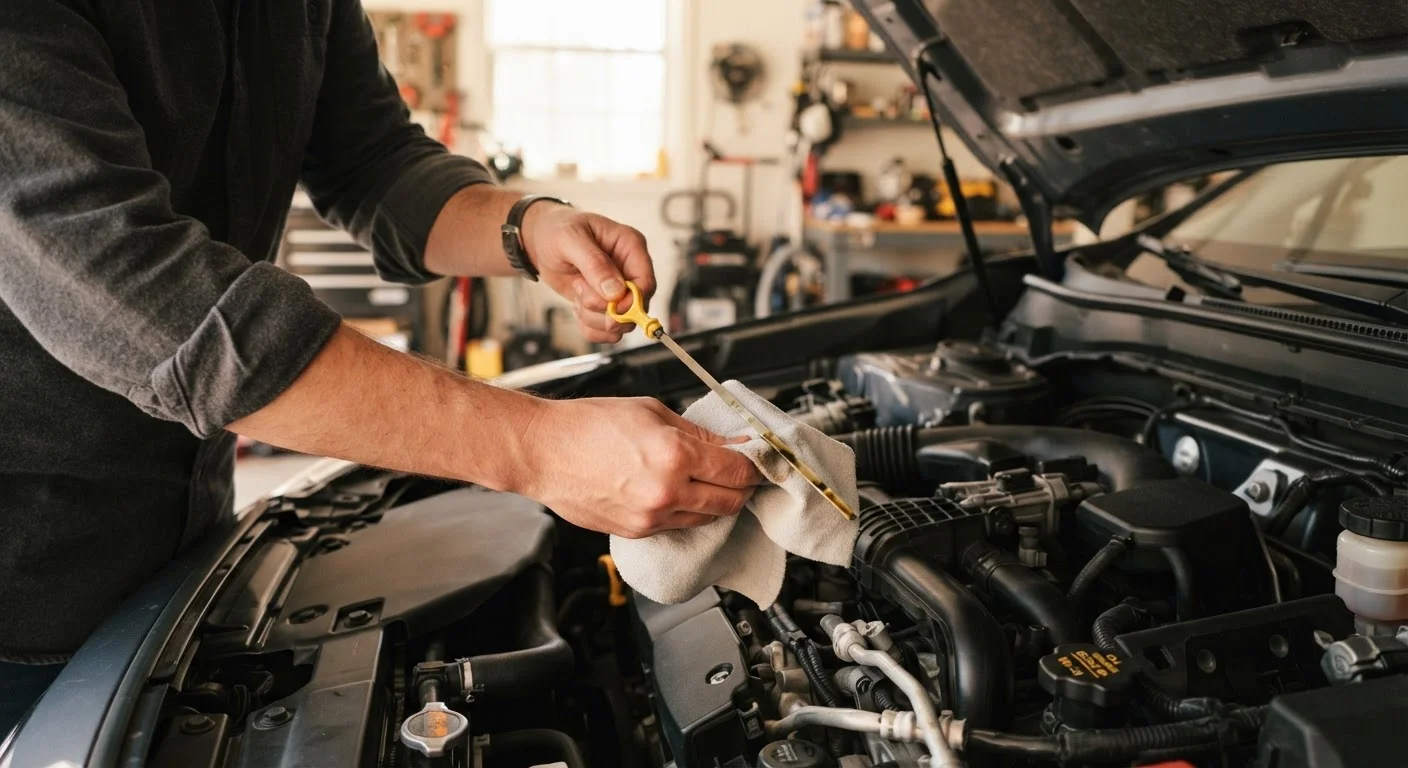
Dipstick
A long metal rod inserted into the engine that lets you check the oil level and condition without any tools beyond a clean rag.
Coolant
A fluid — also called antifreeze — that circulates through the engine to prevent it from overheating or freezing in cold temperatures.
TPMS
Tire Pressure Monitoring System — a built-in sensor system that alerts you via a dashboard light when one or more tires are significantly underinflated.
Serpentine belt
A single continuous belt that drives multiple engine accessories such as the alternator, power steering pump, and air conditioning compressor.
Tread depth
The measurement of the grooves on a tire's surface; adequate tread is essential for safe grip, especially on wet or slippery roads.
Owner's manual
The official booklet provided with your vehicle that details its specific maintenance schedules, fluid types, warning light meanings, and safe operating procedures.
The Fluids You Should Know
Your car relies on several fluids to operate safely. Each one serves a distinct purpose, and letting any of them run low or degrade can cause serious damage.
- Engine oil: Lubricates moving engine parts. Check the level monthly with the dipstick and watch for a dark, gritty appearance that signals it's overdue for a change.
- Coolant (antifreeze): Regulates engine temperature. The reservoir is usually translucent with min/max markings — never open it when the engine is hot.
- Brake fluid: Transmits the force from your brake pedal to your brakes. A low or dark brake fluid level warrants attention from a mechanic.
- Power steering fluid: Keeps steering responsive and smooth. Many newer vehicles use electric power steering and don't have this reservoir.
- Windshield washer fluid: The only fluid safe to top off yourself without any mechanical knowledge — use a premixed solution appropriate for your climate.
For guidance on how often each of these should be changed, your car's maintenance schedule explained breaks down the intervals in plain language.
Your Owner's Manual Is Your Best Tool
Every fluid specification, maintenance interval, and warning light definition in this article has a vehicle-specific version in your owner's manual. Before topping off any fluid, confirm the correct type for your car — using the wrong specification can cause damage. If you've misplaced your manual, most manufacturers offer a digital version on their official website.
Tires, Battery, and Belts
Three components are responsible for more breakdowns and safety incidents than almost anything else: tires, the battery, and drive belts.
Tires
Check tire pressure at least once a month using a tire gauge — the correct pressure is on the sticker inside your driver's door jamb. Also inspect tread depth using the penny test: insert a penny into a tread groove with Lincoln's head pointing down. If you can see the top of his head, the tread is too worn and the tire should be replaced. Uneven wear patterns can indicate alignment or suspension issues worth having checked.
Battery
Most batteries last three to five years. Watch for slow engine cranking, dimming interior lights, or a battery warning light. Car battery care: signs of wear and when to involve a mechanic covers testing and replacement in detail.
Belts and Hoses
The serpentine belt drives multiple engine accessories. Cracks, fraying, or glazing are signs it needs replacement — typically every 60,000 to 100,000 miles, though your owner's manual specifies the interval for your vehicle. Hoses should feel firm, not spongy or brittle.
Before seasons change, it's also worth running through a broader inspection. Seasonal car maintenance: what to check before each season changes provides a practical checklist.
Reading Warning Lights
Modern vehicles monitor dozens of systems and communicate problems through dashboard warning lights. Learning the most common ones prevents panic — and prevents ignoring something that genuinely needs attention.
Never Ignore a Flashing Warning Light
A steadily illuminated warning light usually means schedule a service appointment soon. A flashing or blinking light — particularly the check engine or temperature light — typically signals an active, potentially serious problem. Continuing to drive can turn a manageable repair into a much more expensive one, or create a safety hazard. When in doubt, pull over safely and consult a mechanic or roadside assistance.
| Light | What it means | Urgency |
|---|---|---|
| Check Engine | Engine or emissions system fault detected | Address soon; flashing means stop driving |
| Oil Pressure | Oil pressure is critically low | Stop the engine immediately |
| Battery | Charging system issue | Drive to a safe location; have it checked |
| Tire Pressure (TPMS) | One or more tires significantly under-inflated | Check pressure at your next safe stop |
| Temperature | Engine is overheating | Pull over safely; do not continue driving |
Your owner's manual is the definitive guide to every warning symbol specific to your vehicle. Keep it in your glove box.
When to DIY and When to Call a Mechanic
Part of smart car ownership is knowing where your capability ends. Some tasks are genuinely low-risk for beginners; others require tools, training, or both.
Reasonable for most beginners
- Checking and topping off fluids (except brake fluid)
- Checking and adjusting tire pressure
- Replacing windshield wiper blades
- Replacing cabin air filters (on most vehicles)
- Checking tread depth and visual tire inspection
Better left to a qualified mechanic
- Brake system work of any kind
- Suspension and steering repairs
- Timing belt or chain replacement
- Anything involving the fuel system
- Airbag or safety system components
DIY car maintenance vs. taking it to a shop offers a thoughtful framework for thinking through which jobs belong in each category. And as your confidence grows behind the wheel, pairing good maintenance habits with safe driving habits new drivers are never explicitly taught rounds out a strong foundation as a new driver.
This article is for general informational and educational purposes only. For specific maintenance guidance, always consult a qualified mechanic and your vehicle's owner's manual.