

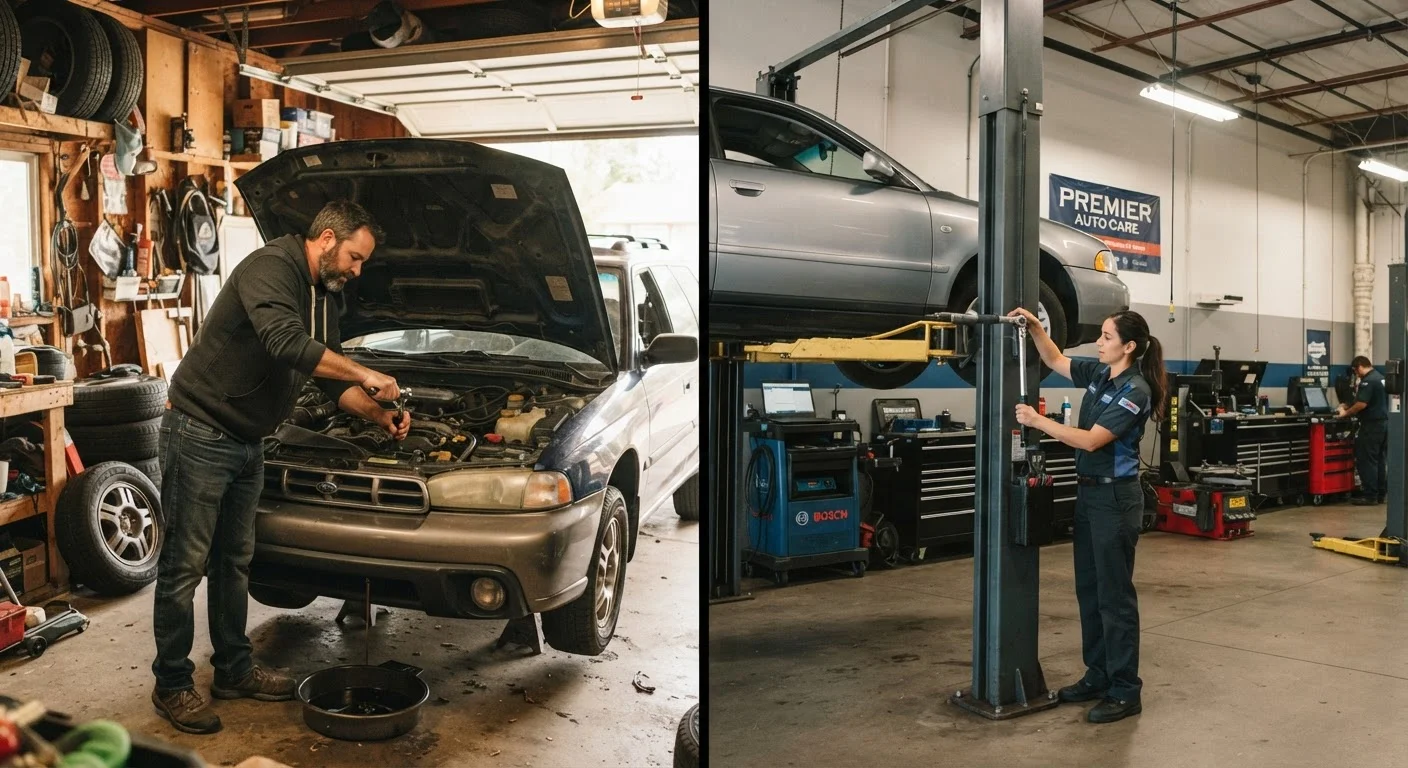
Key Takeaways
- Simple maintenance tasks like air filter swaps and wiper blade changes are safe, cost-effective DIY projects for most drivers.
- Jobs involving brakes, suspension, or advanced diagnostics carry safety implications and often belong in a professional shop.
- Your owner's manual is the single most reliable guide to what your specific vehicle needs and when.
- DIY savings can be offset by mistakes — incorrect repairs may create larger, costlier problems down the road.
- Understanding the difference between a task's skill ceiling and its consequence ceiling is key to deciding who does the work.
Our Verdict
DIY maintenance shines for straightforward, low-stakes tasks where the margin for error is slim and the tools required are affordable. Professional service is worth the cost for anything safety-critical, diagnostics-dependent, or warranty-sensitive. Most drivers benefit from a mixed approach — handling the easy wins themselves while trusting a qualified mechanic with complex or high-consequence work.
| Best for | Recommended |
|---|---|
| Drivers comfortable with basic tools who want to reduce routine costs | DIY maintenance for fluid checks, filters, and wiper blades |
| Anyone facing brake, suspension, or diagnostic issues | Professional shop service |
| Vehicles still under manufacturer or extended warranty | Professional shop service to protect coverage |
| High-mileage vehicle owners monitoring multiple systems | Mix of DIY monitoring and periodic professional inspection |
The Real Question Isn't Skill — It's Consequence
Most drivers frame the DIY-vs.-shop debate as a question of mechanical ability. In reality, the more important variable is consequence: what happens if something goes wrong? A misinstalled cabin air filter is a minor annoyance. An incorrectly bled brake system is a safety emergency. Before picking up a wrench, honestly assess not just whether you can do a job, but what's at stake if the result is imperfect.
That framing helps separate two distinct categories of work. The first category — low-consequence tasks with well-documented procedures — is genuinely DIY-friendly for most owners with basic tools and patience. The second category — jobs tied to safety systems, emissions compliance, or complex diagnostics — generally belongs with a qualified mechanic, regardless of your confidence level.
For a broader look at how maintenance fits into overall vehicle ownership expenses, see our guide on car ownership costs.
Jobs That Belong in the Driveway
Several maintenance tasks are well within reach for drivers who can follow instructions carefully and work safely:
- Engine and cabin air filter replacement: Usually involves removing a panel or housing, swapping the filter, and closing it back up. Most vehicles require no special tools.
- Wiper blade replacement: Low cost, no tools required, and incorrectly installed blades are immediately obvious and easily corrected.
- Checking and topping off fluids: Coolant, washer fluid, and power steering fluid reservoirs are marked and accessible. Always consult your owner's manual for the correct fluid specification before adding anything.
- Battery terminal cleaning: A corroded terminal connection can cause starting problems. Cleaning with a wire brush and battery terminal cleaner is straightforward, but always disconnect the negative cable first.
- Tire pressure checks and inflation: An inexpensive gauge and a portable inflator make this a two-minute task that meaningfully affects fuel economy and tire wear.
Your Owner's Manual Is Your Best Tool
Before attempting any maintenance task, check your owner's manual for the manufacturer's specified procedure, fluid type, and torque values. Generic online guides may not account for your specific model year's requirements. When in doubt, the manual — or a qualified mechanic — is the right reference.
For a full breakdown of what your specific vehicle requires and when, consult our article on your car's maintenance schedule.
When the Shop Earns Its Labor Rate
Other jobs carry a complexity or safety threshold that makes professional service the prudent choice:
- Brake system work: Pad and rotor replacement may appear straightforward, but brake systems require correct torque specifications, proper bedding-in, and — for hydraulic systems — safe fluid handling. Errors can go unnoticed until a critical moment.
- Suspension and steering components: Worn ball joints, tie rod ends, or struts affect vehicle control. Diagnosis often requires alignment equipment, and incorrect reassembly can create handling instability.
- Timing belt or chain service: Interference engines can suffer catastrophic internal damage if a timing belt is installed incorrectly. This is high-precision work with a very narrow margin for error.
- Check engine light diagnosis: A scan tool can retrieve a fault code, but interpreting it accurately — and tracing the root cause — often requires professional diagnostic equipment and experience. Replacing parts based on codes alone frequently misses the actual problem.
- Transmission service: Fluid type, fill level, and procedure vary significantly by vehicle and transmission type. Errors can reduce transmission life substantially.
Drivers of high-mileage vehicles should be especially attentive here — see our guide on keeping a high-mileage car on the road for tailored guidance.
| DIY Maintenance | Professional Shop Service | |
|---|---|---|
| Upfront cost | Parts cost only (plus any tool purchase) | Parts plus labor rate ($80–$150+/hr typical) |
| Skill requirement | Low to moderate for routine tasks | High for diagnostic and safety-critical work |
| Risk of error | Low for filters/fluids; higher for mechanical work | Low when using qualified, experienced technicians |
| Warranty implications | May affect coverage if done incorrectly | Preserves warranty when using approved parts/procedures |
| Equipment needed | Basic tools for simple jobs; specialized tools for others | Professional lifts, diagnostic equipment available |
| Time investment | Variable; can take longer without experience | Predictable turnaround for most standard services |
Hidden Costs on Both Sides
DIY maintenance isn't automatically cheaper. Factor in the cost of tools you don't already own, the correct fluid or part (purchased without a shop's trade pricing), and the real risk of a redo if something goes wrong. A professional deferred maintenance situation can cost multiples of the original service price.
On the shop side, labor rates vary widely by region and shop type — independent shops typically charge less per hour than dealership service centers, though dealerships may have manufacturer-trained technicians for brand-specific issues. Getting a written estimate before authorizing work is a reasonable and standard practice.
DIY Errors Can Void Warranties
Improperly performed maintenance can void portions of a manufacturer or extended warranty. If your vehicle is under any form of warranty coverage, verify what work you're permitted to perform yourself and what documentation is required before proceeding with DIY repairs.
New to vehicle ownership entirely? Our first-time driver's guide to basic car care is a useful starting point before tackling any DIY project.