

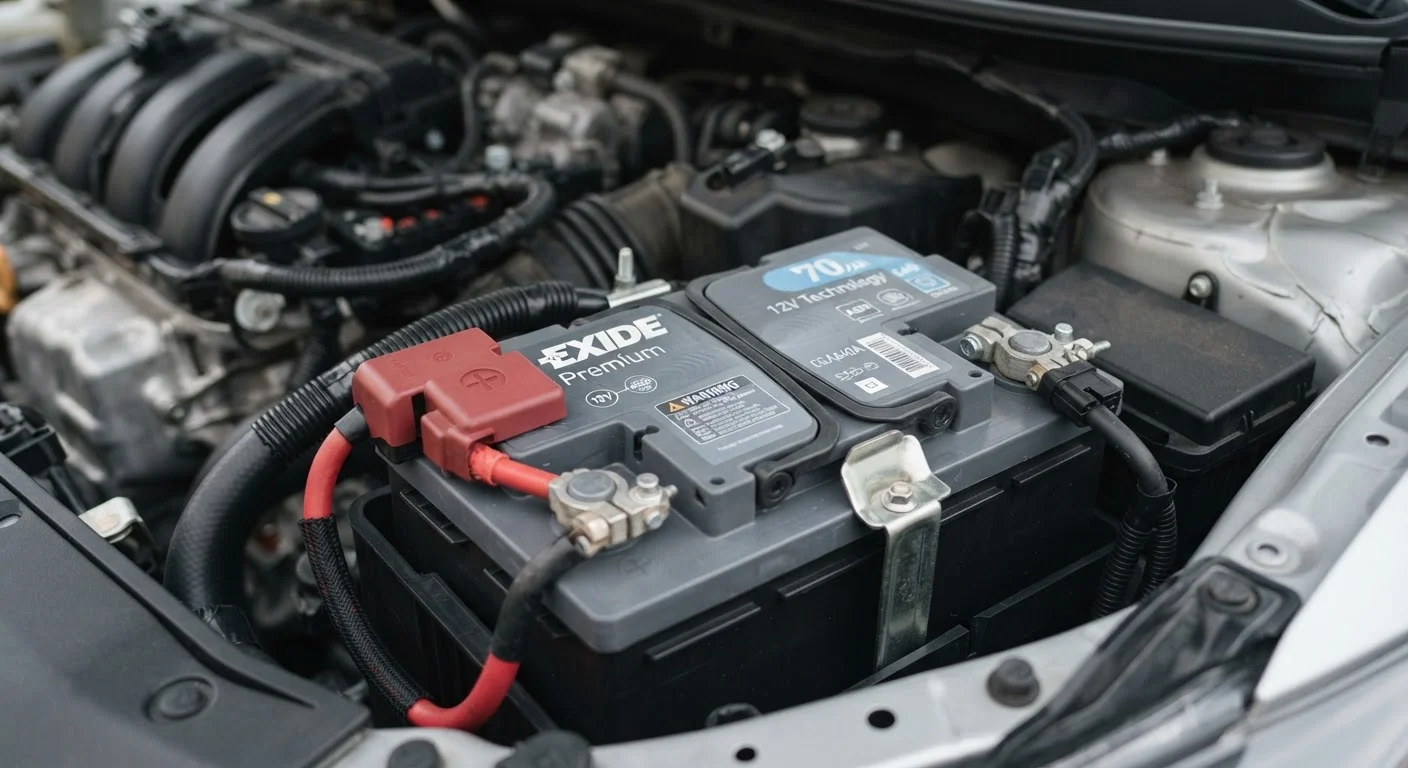
Key Takeaways
- Most car batteries last three to five years, with climate and driving habits affecting lifespan.
- Slow engine cranking, dimming lights, and a swollen case are early warning signs of battery decline.
- A multimeter or dedicated battery tester can give you a reliable at-home voltage reading.
- Corroded terminals can reduce performance without indicating a failed battery.
- Have a mechanic perform a load test before committing to replacement.
What you will need
How Car Batteries Degrade Over Time
A standard 12-volt lead-acid battery works by converting chemical energy into electrical current. Each charge and discharge cycle gradually degrades the internal lead plates, reducing the battery's capacity to hold a charge. Over time — typically three to five years — this degradation reaches a point where the battery can no longer reliably start the engine or sustain electrical loads.
Several factors accelerate this process:
- Extreme temperatures — both heat and deep cold stress battery chemistry. Hot climates speed up internal corrosion; cold weather reduces the battery's ability to deliver power on demand.
- Short trips — frequent short drives don't allow the alternator enough time to fully recharge the battery, leading to a chronic partial-charge state that shortens lifespan.
- Parasitic drain — electronics drawing power when the vehicle is off (alarms, infotainment systems, tracking devices) slowly deplete a battery left unused for days.
Understanding these factors helps you set realistic expectations and spot problems early. For a broader view of how battery care fits into overall vehicle upkeep, see your car's maintenance schedule explained.
Battery Age Matters More Than You Think
Automotive batteries typically have a useful life of three to five years, though extreme heat or frequent short trips can shorten this considerably. If your battery is approaching or past the four-year mark, proactive testing — even without obvious symptoms — is a sound habit. Many auto parts retailers offer free battery testing, which can be a useful data point before scheduling a mechanic visit.
What You'll Need
Before inspecting or testing your battery, gather the right tools and protective equipment. Working around a car battery carries real risks — acid burns and accidental shorts are preventable with the right preparation.
What you will need
Digital Multimeter
Measures battery voltage to give a baseline health reading at rest.
Battery Load Tester
Applies a simulated electrical load to assess how the battery performs under real conditions.
Terminal Cleaning Brush
Removes corrosion buildup from battery terminals and cable connectors.
Safety Glasses and Insulated Gloves
Protects eyes and hands from battery acid and electrical hazards during inspection.
Step-by-Step: Inspecting and Testing Your Battery
Follow these steps in order. Cleaning terminals before testing ensures your voltage readings reflect the battery's true condition rather than resistance caused by corrosion. If at any point you encounter a cracked case, leaking fluid, or a badly swollen battery, stop and contact a mechanic.
Swollen or Leaking Battery: Do Not DIY
A battery with a visibly bulging case, cracks, or leaking fluid presents a serious safety hazard and should not be tested or handled without proper equipment and training. Battery acid can cause chemical burns, and a severely damaged battery can, in rare cases, vent flammable gases. Have the vehicle inspected by a qualified mechanic and do not attempt to jump-start or charge a battery in this condition.
Visually inspect the battery
Open the hood and locate the battery. Look for these physical signs of wear:
- Swollen or bulging case — heat damage can cause the casing to bloat; this battery should be replaced promptly.
- Corrosion on terminals — a white, blue, or greenish powdery buildup around the positive and negative posts is common and does not always indicate battery failure.
- Cracks or leaking fluid — if you see wet residue or the casing is cracked, do not attempt to test or handle the battery without professional assistance.
Clean corroded terminals before testing
Corrosion increases resistance and can make a healthy battery appear weak. Before testing voltage, clean the terminals:
- Mix one tablespoon of baking soda with one cup of water.
- Apply the solution to corroded terminals with a small brush — it will fizz as it neutralizes the acid residue.
- Scrub the posts and cable clamps with a terminal brush until the metal is clean and bright.
- Rinse lightly with water and dry thoroughly before reconnecting or testing.
Test resting voltage with a multimeter
A resting voltage test (performed after the car has sat for at least an hour) tells you the battery's state of charge:
- Set your multimeter to DC voltage (20V range).
- Connect the red probe to the positive terminal and the black probe to the negative terminal.
- Read the display: 12.6V or above indicates a fully charged, healthy battery. 12.4V suggests a partial charge. Below 12.0V signals a significantly discharged or weakening battery.
A low resting voltage alone does not confirm a failed battery — it may simply need a full recharge first.
Observe cranking behavior and electrical symptoms
Complement your voltage reading with behavioral observations:
- Slow or labored engine cranking — the starter motor sounds sluggish, especially on cold mornings.
- Dimming headlights when the engine is idling or accessories are in use.
- Warning light — a battery-shaped icon on the dashboard may indicate a charging system fault, not just a weak battery.
- Electrical gremlins — intermittent issues with power windows, radio, or interior lights can signal low voltage.
Know when to bring in a mechanic
A multimeter gives useful data, but a professional load test is the gold standard for battery diagnosis. A mechanic or auto parts technician uses a load tester to draw current from the battery while monitoring voltage — mimicking actual starting conditions. This reveals whether the battery can still deliver adequate power under real-world demand.
Involve a mechanic when:
- The battery is three or more years old and symptoms are present.
- Resting voltage is consistently below 12.2V even after a full recharge.
- The dashboard battery warning light stays on after starting.
- Jump-starting is required more than once in a short period.
A mechanic should also check the alternator and charging system before replacement — a failing alternator can drain a new battery quickly. See our guide to unexpected maintenance costs to understand where battery and charging system work fits within the broader picture of vehicle ownership expenses.
Putting Battery Care in Context
A car battery rarely fails without warning — the signals are simply easy to overlook or attribute to other causes. Building battery inspection into your seasonal maintenance routine is one of the most cost-effective habits a driver can adopt. Seasonal maintenance checklists typically include battery checks for good reason: temperature swings are the single biggest environmental stressor on battery chemistry.
Dashboard Battery Light Is Not Just About the Battery
The battery warning light on your dashboard is connected to the entire charging system, including the alternator and voltage regulator. A lit warning light while driving — especially if accompanied by dimming gauges or electrical flickering — may indicate that the alternator has stopped charging. Pull over safely and have the vehicle inspected; driving with a failed alternator will eventually drain even a healthy battery completely.
For drivers managing older vehicles, battery health becomes even more critical. Our guide on keeping a high-mileage car on the road covers how electrical system vigilance fits into a broader reliability strategy. And if you're newer to vehicle ownership, a first-time driver's guide to basic car care offers a solid foundation for understanding what's under the hood.
Battery replacement is one of the more straightforward maintenance costs when planned for in advance — a point worth keeping in mind when budgeting for car ownership costs overall.