

Key Takeaways
- True wireless earbuds eliminate cables entirely but rely on battery power that depletes throughout the day.
- Call quality and audio latency can vary significantly depending on the Bluetooth codec and environment.
- Fit consistency is a common issue — ear tip size and earbud shape affect comfort and passive sound isolation.
- The convenience factor is real, but so are the risks of losing or misplacing the small earpieces.
- Active noise cancellation on earbuds typically performs narrower than on over-ear headphones.
No cables to manage or untangle
Completely wireless design removes the friction of cable management, making them ideal for workouts, commutes, and quick transitions between activities.
Highly portable charging case included
The compact case tops up earbud batteries on the go, typically providing two to four additional full charges without needing a wall outlet.
Increasingly capable active noise cancellation
Many mid-range and higher earbuds now include ANC that meaningfully reduces steady ambient noise like airplane cabin hum or office HVAC systems.
Lightweight and low-profile during wear
The absence of a headband or neckband means less physical weight and heat during extended outdoor use or exercise.
Broad device compatibility via Bluetooth
Most TWS earbuds connect to any Bluetooth-enabled device, with many supporting multi-point pairing to switch between two sources without re-pairing.
Battery life is finite and degrades over time
Earbud playback time commonly ranges from five to eight hours per charge. More critically, embedded lithium-ion cells lose capacity with each charge cycle and cannot be replaced in most models.
Call quality varies with environment and codec
Microphone placement on small earbuds is constrained by size, and wind or crowd noise can significantly impair voice clarity. Call performance depends heavily on which Bluetooth audio codec the device pair supports.
ANC depth is narrower than over-ear headphones
In-ear ANC works well on low-frequency droning noise but struggles more with mid-range sounds like voices. Over-ear headphones use larger drivers and earcup sealing to achieve broader noise isolation.
Fit is inconsistent across ear anatomies
Even with multiple tip sizes, some users cannot achieve a stable, comfortable seal — particularly during physical activity — which affects both sound quality and passive noise blocking.
High risk of loss or misplacement
The small individual earpiece form factor makes them easy to drop during removal and difficult to locate if misplaced, particularly the case when one bud falls in a bag or between surfaces.
Not user-repairable or upgradeable
Nearly all TWS earbuds are sealed units with no accessible components, meaning a hardware failure or depleted battery typically requires purchasing a replacement set rather than a repair.
Our Verdict
True wireless earbuds deliver genuine everyday convenience — no cables, compact form, and increasingly capable audio technology. But they ask for trade-offs in battery stamina, repairability, and performance consistency that traditional headphone formats handle better. Understanding those gaps before you commit helps you choose the right tool for how you actually listen.
Commuters, gym-goers, and anyone who prioritizes mobility and low-profile audio over extended listening sessions or audiophile-grade fidelity.
What Makes TWS Earbuds Different
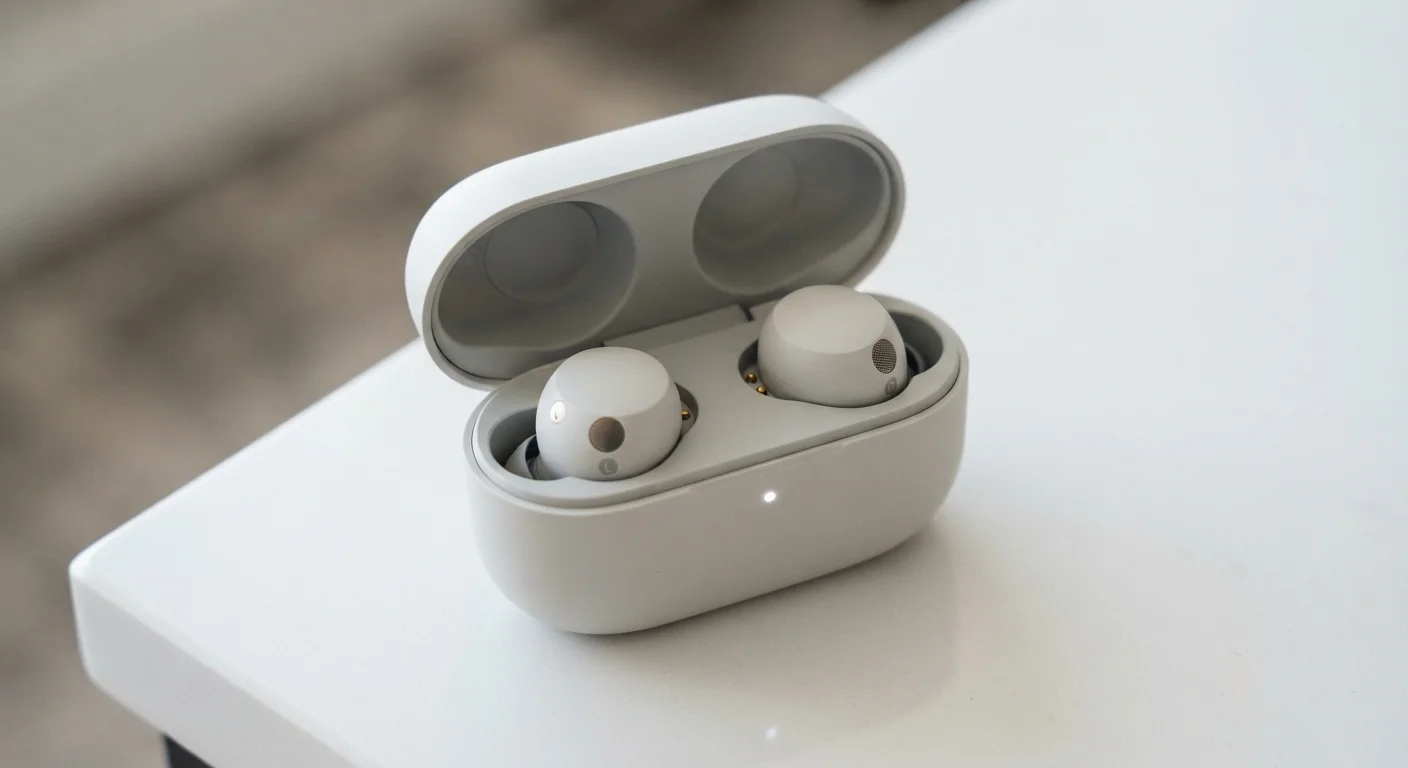
True wireless stereo (TWS) earbuds remove every physical connection — there's no wire between earpieces and no cable to a device. Each bud houses its own driver, battery, microphone, and Bluetooth radio in a shell small enough to sit inside your ear canal. The charging case serves as both protective storage and a battery bank that refills the earbuds between uses.
That design represents a meaningful engineering achievement, but it also forces engineers to make compromises in size, weight, and power that wired or even neckband-style headphones don't face. If you're newer to the category, the wearables and audio starting guide provides useful context on how earbuds fit within the broader wireless audio landscape.
The Real Advantages
Cord-free listening is genuinely liberating for active use. Earbuds stay put during workouts, commutes, and quick errands without a cable catching on clothing or pulling a device from a pocket.
No cables to manage or untangle
Completely wireless design removes the friction of cable management, making them ideal for workouts, commutes, and quick transitions between activities.
Highly portable charging case included
The compact case tops up earbud batteries on the go, typically providing two to four additional full charges without needing a wall outlet.
Increasingly capable active noise cancellation
Many mid-range and higher earbuds now include ANC that meaningfully reduces steady ambient noise like airplane cabin hum or office HVAC systems.
Lightweight and low-profile during wear
The absence of a headband or neckband means less physical weight and heat during extended outdoor use or exercise.
Broad device compatibility via Bluetooth
Most TWS earbuds connect to any Bluetooth-enabled device, with many supporting multi-point pairing to switch between two sources without re-pairing.
Beyond mobility, TWS earbuds have advanced rapidly in features. Many now include active noise cancellation (ANC), transparency modes that pipe in ambient sound, and onboard controls for media and calls — all in a package that fits in a jacket pocket. Pairing with smartphones and tablets is typically seamless, with many earbuds supporting quick-pair protocols that auto-connect within seconds of opening the case.
The Trade-Offs Worth Knowing
Every design advantage in a TWS earbud comes with a corresponding limitation. Knowing them in advance prevents buyer's remorse.
Battery life is finite and degrades over time
Earbud playback time commonly ranges from five to eight hours per charge. More critically, embedded lithium-ion cells lose capacity with each charge cycle and cannot be replaced in most models.
Call quality varies with environment and codec
Microphone placement on small earbuds is constrained by size, and wind or crowd noise can significantly impair voice clarity. Call performance depends heavily on which Bluetooth audio codec the device pair supports.
ANC depth is narrower than over-ear headphones
In-ear ANC works well on low-frequency droning noise but struggles more with mid-range sounds like voices. Over-ear headphones use larger drivers and earcup sealing to achieve broader noise isolation.
Fit is inconsistent across ear anatomies
Even with multiple tip sizes, some users cannot achieve a stable, comfortable seal — particularly during physical activity — which affects both sound quality and passive noise blocking.
High risk of loss or misplacement
The small individual earpiece form factor makes them easy to drop during removal and difficult to locate if misplaced, particularly the case when one bud falls in a bag or between surfaces.
Not user-repairable or upgradeable
Nearly all TWS earbuds are sealed units with no accessible components, meaning a hardware failure or depleted battery typically requires purchasing a replacement set rather than a repair.
Compared to over-ear or on-ear options, the physical differences are significant. The geometry of headphone fit and sound explains how earcup designs can deliver deeper bass response and longer-wear comfort that in-ear formats structurally struggle to match.
5–8 hrs
Typical earbud playback per charge
Most mainstream TWS earbuds offer between five and eight hours of playback at moderate volume before requiring a return to the case.
300–500
Approximate charge cycles before notable battery degradation
Lithium-ion batteries in consumer electronics generally show meaningful capacity decline after 300 to 500 full charge cycles under normal use conditions.
Fit, Loss, and Longevity
Fit is the most personal variable in the TWS equation. Most earbuds ship with small, medium, and large silicone ear tips, but ear canal anatomy varies considerably. A poor seal degrades both bass response and passive isolation — two things that marketing specs can't predict for your specific ears.
Testing Fit Before Committing
If possible, test earbuds in-store before purchasing or buy from a retailer with a clear return policy. Fit comfort can only be assessed through actual wear — product descriptions and reviews reflect other users' anatomy, not yours. Some manufacturers include foam ear tips in addition to silicone, which can improve seal for certain canal shapes.
Longevity is a less-discussed concern. The lithium-ion cells embedded in each earbud degrade with charge cycles — typically over 18 to 24 months of regular use, total playback time per charge will decrease noticeably. Unlike smartphones, most TWS earbuds are not user-serviceable, meaning battery degradation often means replacing the entire set rather than swapping a cell.
Loss is also a real risk. Individual earbuds are small, lightweight, and easy to drop or misplace. Some models offer device-finding features through companion apps, but coverage depends on other users of the same ecosystem being nearby.
Making an Informed Choice
Before settling on TWS earbuds, it helps to audit how you actually listen. If most of your listening happens at a desk or during long travel legs, a wired or over-ear option may serve you better. If mobility, sweat resistance, and minimal carry weight are priorities, the TWS trade-offs may be entirely worth accepting.
For those comparing wearable devices more broadly — say, considering whether audio gear or a health-tracking device makes more sense — the smartwatch vs. fitness tracker comparison addresses how different wearables serve different daily-life roles. The right choice depends on which problem you're actually trying to solve.