
A Driver's Quick Reference: Stopping Distances, Speed Limits, and Safe Gaps by Condition

| Average reaction time | ~1.5 seconds for alert drivers (Used widely in transportation safety research) |
| Reaction distance at 60 mph | ~132 feet before brakes apply (Based on 1.5-second reaction time) |
| Baseline following gap | 3 seconds (dry, clear conditions) (NHTSA and driver education guidance) |
| Ice stopping distance vs. dry | Up to 10× longer (General transportation safety estimates) |
| Speed limit authority | Set by individual US states and localities (Federal Highway Administration framework) |
Stopping Distance: The Two-Part Reality
Most drivers think of braking as a single action, but stopping a vehicle actually involves two distinct phases. Reaction distance is the ground covered between the moment you perceive a hazard and the moment your foot reaches the brake. Braking distance is the additional distance your vehicle travels once the brakes are fully applied. Together they form your total stopping distance.
| Average reaction time | ~1.5 seconds for alert drivers (Used widely in transportation safety research) |
| Reaction distance at 60 mph | ~132 feet before brakes apply (Based on 1.5-second reaction time) |
| Baseline following gap | 3 seconds (dry, clear conditions) (NHTSA and driver education guidance) |
| Ice stopping distance vs. dry | Up to 10× longer (General transportation safety estimates) |
| Speed limit authority | Set by individual US states and localities (Federal Highway Administration framework) |
At 60 mph on dry pavement, a typical passenger vehicle may require roughly 240–300 feet to come to a complete stop — that's longer than a football field. These figures are estimates based on general vehicle and tire performance; actual stopping distance varies with vehicle weight, brake condition, tire tread, and driver alertness. See our car maintenance hub for guidance on keeping brakes and tires in safe working order.
| Speed (mph) | Reaction Distance (avg.) | Braking Distance (dry) | Total (approx.) |
|---|---|---|---|
| 25 | ~28 ft | ~45 ft | ~73 ft |
| 40 | ~44 ft | ~118 ft | ~162 ft |
| 55 | ~61 ft | ~225 ft | ~286 ft |
| 70 | ~77 ft | ~388 ft | ~465 ft |
Note: Figures are representative estimates for a standard passenger car with good tires under ideal conditions. They are not guaranteed stopping specifications for any particular vehicle.
How Conditions Multiply Stopping Distance
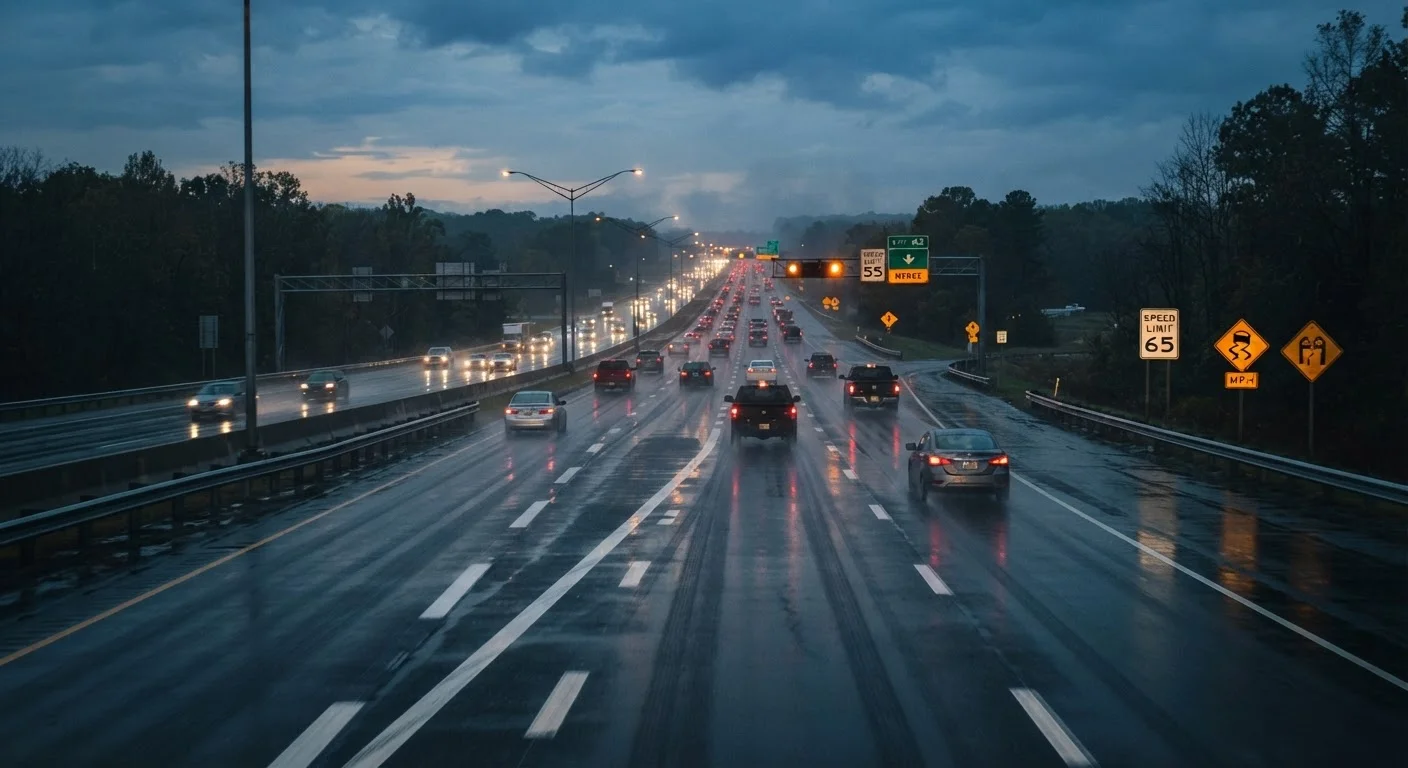
Wet, icy, or packed-snow surfaces dramatically reduce tire friction, extending both braking distance and the risk of skidding. The table below shows widely cited general multipliers — treat them as minimums, not precise guarantees.
Reaction distance
The distance a vehicle travels between the moment the driver perceives a hazard and the moment braking begins. This depends heavily on driver alertness, fatigue, and distraction level.
Braking distance
The distance a vehicle travels after the brakes are fully applied until the vehicle comes to a complete stop. It is influenced by speed, road surface, tire condition, and brake performance.
Total stopping distance
The sum of reaction distance and braking distance — the full space required for a vehicle to stop from the moment a hazard is detected.
Three-second rule
A time-based method for measuring following distance. A driver times how long after the vehicle ahead passes a fixed point until their own vehicle passes that same point — three seconds is the minimum under ideal conditions.
Posted speed limit
The maximum legally permitted speed on a given road segment under normal conditions, as displayed on roadside signs. Conditions may legally and practically require traveling slower.
Black ice
A thin, nearly transparent layer of ice on road surfaces that is extremely difficult to see. It dramatically reduces tire traction and greatly extends stopping distances compared to visible snow or slush.
| Surface Condition | Approximate Distance Multiplier vs. Dry |
|---|---|
| Dry pavement | 1× (baseline) |
| Wet pavement | 1.5–2× |
| Packed snow | 3–4× |
| Glare ice | 6–10× |
For a full picture of how to adapt your speed and technique in adverse weather, see our companion article on driving in rain, snow, ice, and fog.
US Speed Limit Contexts at a Glance
Speed limits in the US are set by individual states and localities. While specific numbers vary, the contexts below reflect common patterns across most jurisdictions — always defer to posted signage.
~300 ft
Typical stopping distance at 60 mph on dry pavement
General estimate for a standard passenger car with good brakes and tires under ideal conditions.
10×
Potential stopping distance increase on glare ice
Widely cited in road safety and driver education materials; actual values vary by vehicle and conditions.
3 sec
Minimum recommended following gap in ideal conditions
Endorsed by NHTSA and standard driver education curricula across the US.
- School zones: Typically 15–25 mph when children are present. Fines often double.
- Residential streets: Commonly 25–30 mph where not otherwise posted.
- Urban arterials: Often 35–45 mph on multi-lane city roads.
- Rural two-lane highways: Commonly 55 mph, though some states post higher limits.
- Interstate highways: Range widely — 55 mph in some urban corridors, up to 85 mph on certain Texas rural segments. Know the state you're driving in.
Speed limits reflect the maximum permissible speed under ideal conditions. Drivers are legally and practically expected to travel slower when conditions — weather, traffic, visibility — demand it. For insight into why drivers drift above posted limits without realizing it, see why drivers keep misjudging speed.
Following Gaps: The Right Space by Condition
The time-based following distance approach — rather than a fixed number of feet — is preferred by safety professionals because it scales automatically with speed. The baseline is the three-second rule: pick a fixed point ahead, and count at least three seconds from when the vehicle in front passes it to when your front bumper does. See what the three-second rule actually means for a deeper explanation.
Towing, Loaded Vehicles, and Longer Gaps
If you're pulling a trailer, hauling a heavy load, or driving a larger vehicle like a pickup or SUV at capacity, add at least two to three seconds to every gap recommendation in the table. Greater mass means longer stopping distances regardless of road condition. Check your vehicle's owner manual for towing-specific guidance and never exceed rated tow capacity.
| Condition | Recommended Minimum Gap |
|---|---|
| Dry, clear, good visibility | 3 seconds |
| Rain or light fog | 4–5 seconds |
| Heavy rain or dense fog | 6+ seconds |
| Snow or slush | 6–8 seconds |
| Ice or black ice | 10+ seconds |
| Towing a trailer or heavy load | Add 2–3 seconds to any baseline |
| Night driving, reduced visibility | 4+ seconds minimum |
For multi-lane driving scenarios — where gaps are constantly tested by merging traffic — the habits covered in merging, lane changes, and blind spots complement these fundamentals directly. Before any trip, a pre-trip vehicle safety walkthrough helps confirm your brakes and tires are in shape to meet these standards.