

Key Takeaways
- Properly adjusted mirrors can dramatically reduce — but not fully eliminate — your blind spots.
- Matching traffic speed before merging is safer than forcing a gap from a slow entry.
- Always signal early, check mirrors, then physically glance over your shoulder before changing lanes.
- Avoid lingering in other drivers' blind spots, especially beside large trucks.
- Consistent scanning habits — not just reacting to hazards — are what separate confident drivers from anxious ones.
Start here
Why Multi-Lane Roads Feel Intimidating
Next
Understanding and Eliminating Blind Spots
Then
How to Merge Safely and Confidently
Apply it
Executing a Safe Lane Change Step by Step
Build the habit
Habits That Make Multi-Lane Driving Easier Over Time
Why Multi-Lane Roads Feel Intimidating
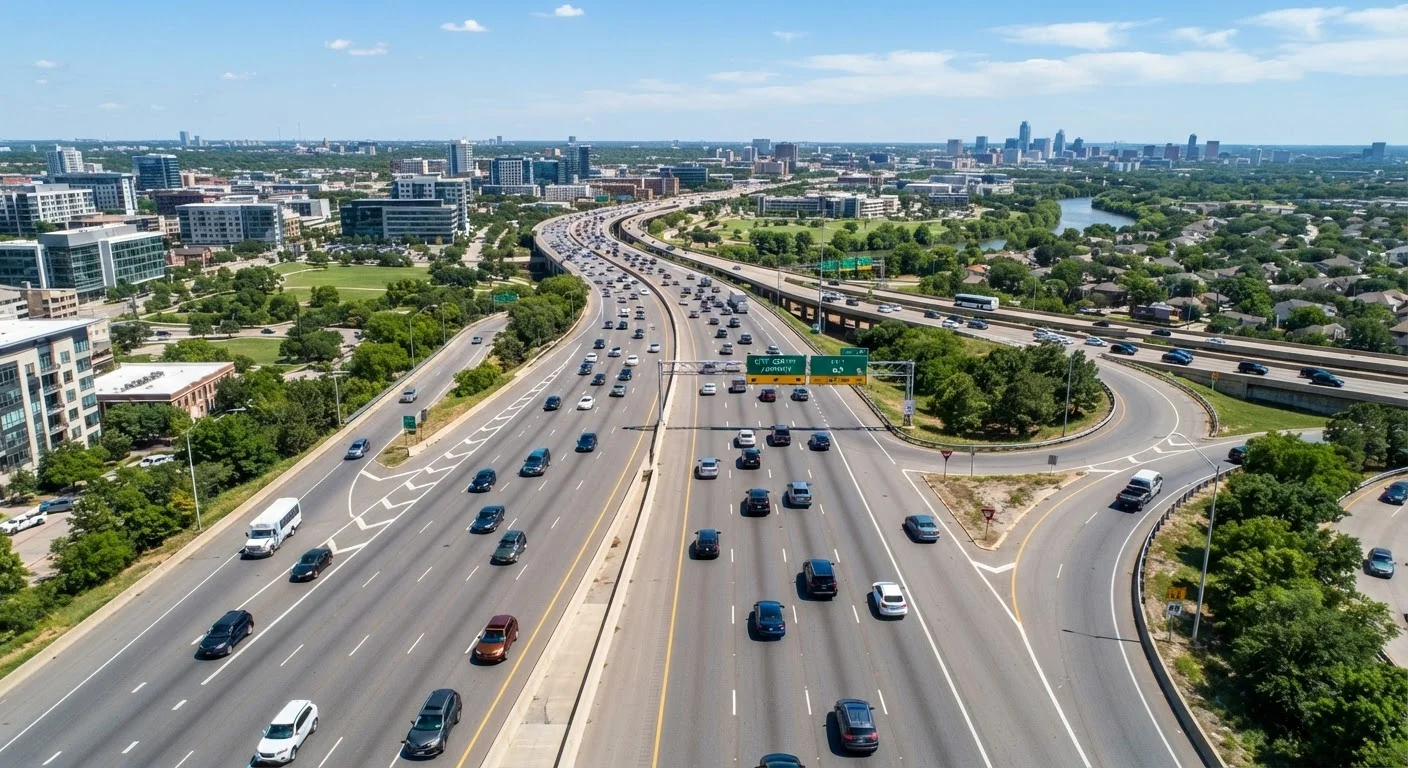
For many drivers — new and experienced alike — multi-lane roads trigger a particular brand of anxiety. There's more to track: faster speeds, vehicles approaching from multiple angles, and constant decisions about position and spacing. That cognitive load is real, and it's worth acknowledging rather than pushing through with white-knuckled guessing.
The good news is that the discomfort usually stems from unfamiliarity with a repeatable process, not from any fundamental inability to handle these roads. Merging, lane changes, and blind spot management each follow a predictable sequence. Once those sequences become habit, the mental load drops considerably.
Before any trip on a highway or busy arterial road, it also helps to start prepared. Our pre-trip vehicle safety walkthrough covers the mirror and seat checks that form the foundation of confident multi-lane driving.
Blind spot
An area around your vehicle that cannot be seen in your mirrors without turning your head. Every car has them, typically in the rear-quarter zones behind each shoulder.
Merge
The act of transitioning from an on-ramp or ending lane into active traffic flow on a main road or highway, ideally at matching speed.
Following gap
The time or distance cushion between your vehicle and the one ahead (or behind) in any lane. A larger gap gives you more time to react to sudden changes.
Signal
Your vehicle's turn indicator, used to communicate an intended lane change or turn to surrounding drivers. Legally required before any lane change in the US.
Shoulder check
A brief glance over your shoulder into the blind spot zone before changing lanes. It confirms what mirrors cannot show.
Traffic flow
The overall speed and movement pattern of vehicles on a road at any given moment. Matching it reduces speed differentials that can cause collisions.
Understanding and Eliminating Blind Spots
A blind spot is any area around your vehicle that your mirrors don't cover and that you can't see without physically turning your head. Every vehicle has them — typically in the rear-quarter zones just behind the driver's and passenger's shoulders.
Mirror Adjustment Matters More Than Most Drivers Realize
The most common mistake is setting side mirrors to show too much of your own car. A better method: lean your head against the driver's window and angle the left mirror outward so just a sliver of your vehicle is visible. Repeat on the right from the center console position. This wider field of view overlaps with your rearview mirror and shrinks — though does not eliminate — your blind zones.
The Physical Check Is Non-Negotiable
Even perfectly adjusted mirrors leave gaps. Before any lane change, a brief over-the-shoulder glance into your blind spot zone is essential. This takes about one second and should become automatic. Drivers who skip this step are relying on incomplete information.
Don't Rely on Mirrors Alone
Even with mirrors optimally adjusted, every vehicle has blind zones that mirrors cannot cover. Skipping the shoulder check — even once — means making a lane change on incomplete information. This is one of the most common causes of sideswipe collisions on highways. Make the over-the-shoulder glance a non-negotiable part of every lane change, every time.
Large trucks and SUVs have significantly larger blind spots. If you're driving beside a semi-truck and can't see the driver's mirrors, assume the driver cannot see you — create distance and exit that zone promptly.
How to Merge Safely and Confidently
Merging onto a highway from an on-ramp is one of the most anxiety-producing moments for newer drivers. The core principle is straightforward: match the speed of traffic before you arrive at the merge point, not after.
The Merge Sequence
- Accelerate on the ramp to approximate highway speed while scanning the target lane for a gap.
- Signal early — at least three to five seconds before your intended merge point.
- Identify your gap: look for a space roughly four or more car lengths in the lane you're entering.
- Check mirrors and blind spot with a shoulder glance, then smoothly steer into the gap.
- Cancel your signal and match the flow of surrounding traffic.
If no gap exists and the ramp is ending, it's acceptable to slow briefly — but stopping on an active on-ramp is dangerous. Most drivers on the highway will adjust if you signal clearly. In some states, traffic on a highway is legally required to yield or move over when it's safe to do so. Know your local rules.
Use the Whole Ramp
On-ramps are engineered to give you room to reach highway speed before merging — use the full length available. Accelerating early and gradually is safer than flooring it at the last moment. If traffic is unusually heavy and no gap exists, it's better to slow near the end and wait briefly than to force your way in.
Executing a Safe Lane Change Step by Step
A lane change on a multi-lane road follows the same basic logic as merging, with one key difference: you're initiating the move, not being funneled by road geometry. That means the decision — and the responsibility — rests entirely with you.
The Lane Change Sequence
- Decide early. Give yourself plenty of distance before needing to be in the target lane. Last-second changes are where crashes happen.
- Signal. Activate your turn signal at least three seconds before moving. This alerts drivers behind and beside you.
- Check your mirrors. Glance at your rearview, then the side mirror on the target side. Assess the gap and the closing speed of approaching vehicles.
- Check your blind spot. A quick shoulder glance confirms what mirrors can't show.
- Move smoothly. Steer gradually — not abruptly — into the target lane.
- Cancel your signal. Once established in the lane, turn off the indicator.
Change only one lane at a time. Moving across two lanes in a single motion dramatically reduces your ability to monitor all surrounding vehicles. For more on managing following gaps and safe spacing at speed, see our stopping distances and safe gaps reference.
Habits That Make Multi-Lane Driving Easier Over Time
Confidence on multi-lane roads doesn't come from a single practice session — it develops through consistent habits applied every time you drive.
Scan Constantly, Not Just When Something Looks Wrong
Experienced drivers perform a regular visual sweep: mirrors every five to eight seconds, traffic ahead, and peripheral awareness of neighboring lanes. This proactive scanning means you're never caught off-guard by a vehicle that suddenly appears in your zone.
Stay Out of Other Drivers' Blind Spots
When traveling beside another vehicle, either pull ahead or fall back so you're in their mirror's field of view. Lingering beside a car — especially a large truck — for extended periods significantly raises your risk of being hit during their lane change.
Use the Right Lane as Your Default
On multi-lane highways, the left lane is generally intended for passing or faster traffic. Driving in the right lane whenever you're not actively overtaking someone reduces your exposure to aggressive lane changes and gives you more options when merging traffic enters from on-ramps.
Multi-lane roads present additional challenges when visibility drops. Our guide on driving in rain, snow, ice, and fog explains how to adapt your lane management approach in poor conditions. And if tension from aggressive drivers ever becomes a factor, our article on recognizing and responding to road rage offers practical strategies for staying calm.
NHTSA Safe Driving Resources
The National Highway Traffic Safety Administration publishes research-backed guidance on safe driving behaviors, crash statistics, and defensive driving techniques — useful for deepening your understanding beyond the basics.
State DMV Driver's Handbook
Your state's official driver's manual contains the specific lane change, merging, and signaling laws that apply where you drive. Reviewing it periodically keeps you aligned with local rules.
Defensive Driving Course Finder
Many states and insurance providers recognize approved defensive driving courses. Completing one can reinforce multi-lane skills in a structured, low-pressure environment.