

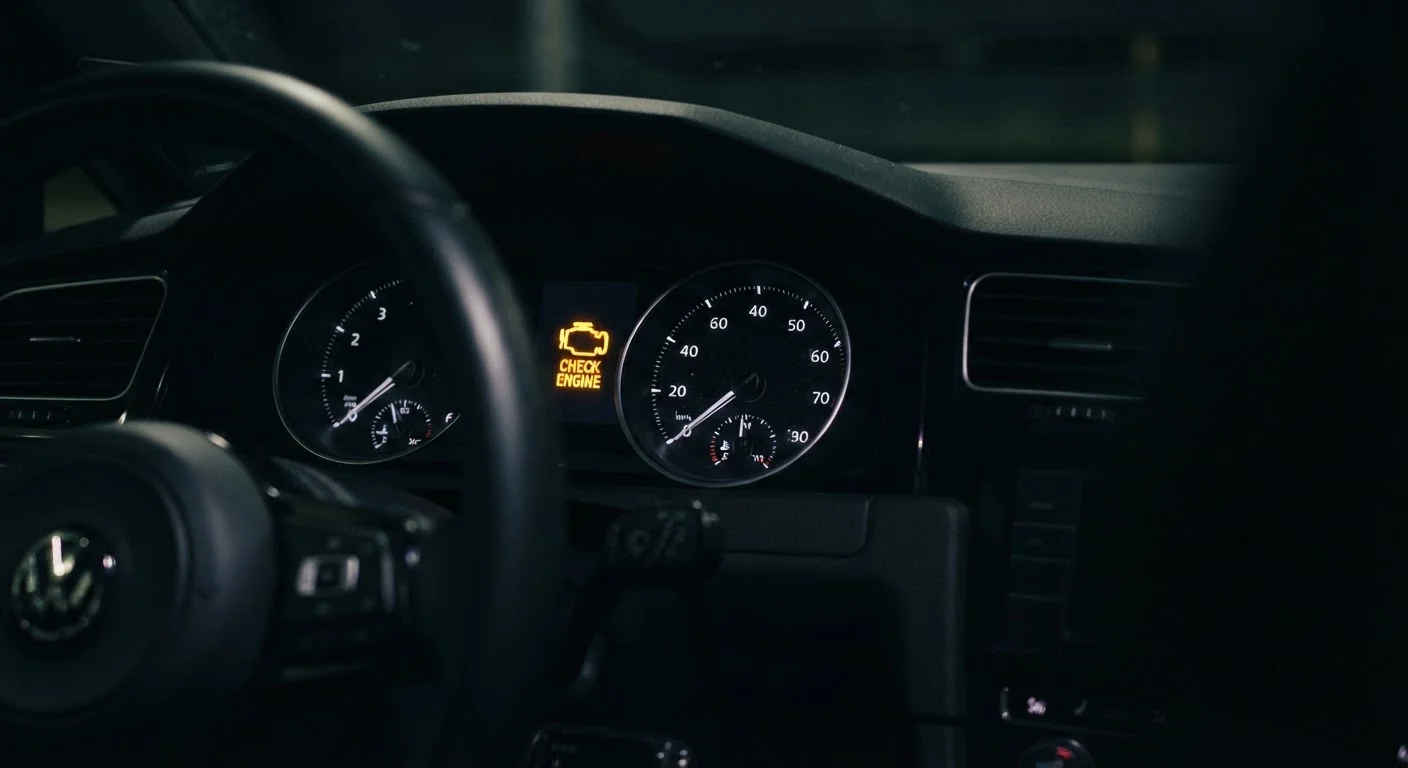
Key Takeaways
- A steady check engine light often indicates a minor issue that doesn't require immediate roadside stopping.
- A flashing check engine light signals a more serious problem and warrants prompt attention from a mechanic.
- An OBD-II scanner can read fault codes and give you crucial context before visiting a shop.
- Ignoring the light entirely — even when steady — can turn small problems into costly repairs over time.
- Your owner's manual and a qualified mechanic are the best resources for interpreting warning lights accurately.
What the Check Engine Light Actually Is
The check engine light — formally called the Malfunction Indicator Lamp (MIL) — is part of your vehicle's onboard diagnostics system, known as OBD-II (standardized across most US-market vehicles since 1996). When a sensor detects a reading outside its expected range, it stores a diagnostic trouble code (DTC) and triggers the light. That's it. The light itself tells you something tripped a sensor — not what it was, how serious it is, or whether you're in danger.
This distinction matters enormously. The same dashboard lamp can illuminate because of a loose gas cap or a failing catalytic converter. Understanding what you're actually looking at — and what questions to ask — is the starting point for handling it calmly and correctly. See our first-time driver's guide to basic car care for a broader look at essential warning lights and what they mean.
Steady vs. Flashing: The Difference That Matters Most
Not all check engine lights behave the same way, and the distinction is critical:
- Steady light: Indicates a stored fault that needs attention but is generally not an immediate emergency. You typically have time to drive safely to a shop and schedule a diagnostic.
- Flashing light: Signals an active, often severe misfire that can damage your catalytic converter within minutes of continued driving. Pull over safely, reduce speed, and have the vehicle towed or inspected as soon as possible.
A flashing light is one of the few dashboard warnings that genuinely warrants treating as urgent. A steady light, by contrast, is your car's way of saying "something needs your attention soon" — not "pull over immediately."
When to Treat It as Urgent
If your check engine light is flashing rather than steady, reduce your speed and load immediately and seek prompt mechanical attention. A flashing light typically signals an active engine misfire that can cause rapid catalytic converter damage within a short period of continued driving. Also treat the light as urgent if it appears alongside other warning lights, or if you notice symptoms like smoke, strong fuel odor, or severe power loss.
Before any long trip, it's worth running through a pre-road-trip inspection that includes checking for any active warning lights.
Common Myths — and What's Actually True
Misinformation about the check engine light is widespread — passed along in parking lots and comment sections alike. Here are the most common misconceptions, corrected with accurate context.
Myth
If the check engine light comes on, you need to pull over and stop driving immediately.
Fact
A steady check engine light rarely requires an immediate stop — a flashing light is the exception, not the rule.
Many drivers are conditioned to treat any warning light as a crisis. In reality, a steady MIL means the system has logged a fault code during a recent drive cycle. Unless you notice accompanying symptoms — rough running, loss of power, smoke, or unusual smells — it's generally safe to drive to a shop within the next day or two. The key is to monitor how the car feels and not ignore the light indefinitely.
Myth
The check engine light means your engine is about to fail.
Fact
The light covers hundreds of possible fault codes, many of which have nothing to do with imminent engine failure.
DTCs span everything from emissions system issues and sensor faults to minor fuel system irregularities. A loose gas cap, a faulty oxygen sensor, or an evaporative emission system leak are among the most common triggers — none of which threaten your engine's immediate survival. Assuming the worst before reading the code leads to unnecessary anxiety and sometimes unnecessary repair spending.
Myth
Clearing the code yourself fixes the underlying problem.
Fact
Clearing a code removes the stored record but does nothing to address what caused it — the light will return if the root issue persists.
Some drivers use an OBD-II scanner to erase the code and hope the light stays off. If the underlying fault is still present, the system will re-detect it and re-illuminate the light, usually within one or two drive cycles. Worse, clearing codes before an emissions inspection can cause a temporary test failure because the system's readiness monitors need time to complete their checks after a reset.
Myth
Premium or top-tier gasoline will prevent check engine lights related to fuel quality.
Fact
Most check engine lights related to fuel systems are caused by sensor faults, evaporative leaks, or cap issues — not fuel grade.
While using the manufacturer-recommended fuel grade is good practice, switching to premium gas will not resolve a stored fault code or prevent the MIL from illuminating. Codes related to fuel trim or lean/rich conditions typically point to sensors, injectors, or vacuum leaks — not the octane rating of the fuel. Follow your owner's manual for fuel grade recommendations and address fault codes through proper diagnosis.
Myth
If the car seems to be driving fine, you can ignore the check engine light indefinitely.
Fact
A vehicle can feel normal while a fault silently worsens, and ignoring the light can lead to more extensive — and expensive — damage over time.
Some faults affect components that degrade gradually, such as oxygen sensors or catalytic converters. A misfiring cylinder, for example, may not be immediately noticeable to the driver but can pump unburned fuel into the catalytic converter, eventually destroying it — a repair that can cost significantly more than addressing the original misfire. Treating a steady light as "low priority" rather than "no priority" is the right framing.
~10%
Check engine lights caused by a loose gas cap
Industry technicians commonly cite loose or faulty gas caps as one of the most frequent OBD-II triggers, often representing around 10% of MIL activations.
400+
Possible OBD-II fault codes
The OBD-II standard encompasses hundreds of standardized trouble codes covering engine, transmission, emissions, and fuel systems across all compliant vehicles.
How to Respond Wisely
When the light comes on steady, a practical first step is to check your gas cap. Remove it, inspect the seal, and retighten until you hear it click. A loose or cracked cap is among the most frequent causes of the MIL triggering — and the easiest fix. If the light doesn't clear within a day or two of driving, the next step is reading the fault code.
Inexpensive OBD-II scanners are widely available, and many auto parts retailers offer free code reading as a service. The code won't diagnose the problem definitively, but it narrows the field considerably. Armed with a code, you can research typical causes and have a more informed conversation with your mechanic.
Keeping up with your vehicle's scheduled maintenance reduces the frequency of unexpected warning lights overall. Our guide to understanding your car's maintenance schedule explains how to read your owner's manual intervals and why they matter. Drivers of older, high-mileage vehicles should pay particular attention — see our guidance on keeping a high-mileage car on the road.
Don't Skip the Diagnostic Code
Driving indefinitely with an unread check engine light means you're missing information your car is actively providing. Reading the fault code — whether through a personal OBD-II scanner or a free reading at an auto parts retailer — takes minutes and gives you the context needed to make a smart decision. Without the code, you're guessing; with it, you're informed.
This article is for general informational purposes only. Always consult a qualified mechanic for diagnosis and repair decisions specific to your vehicle.