

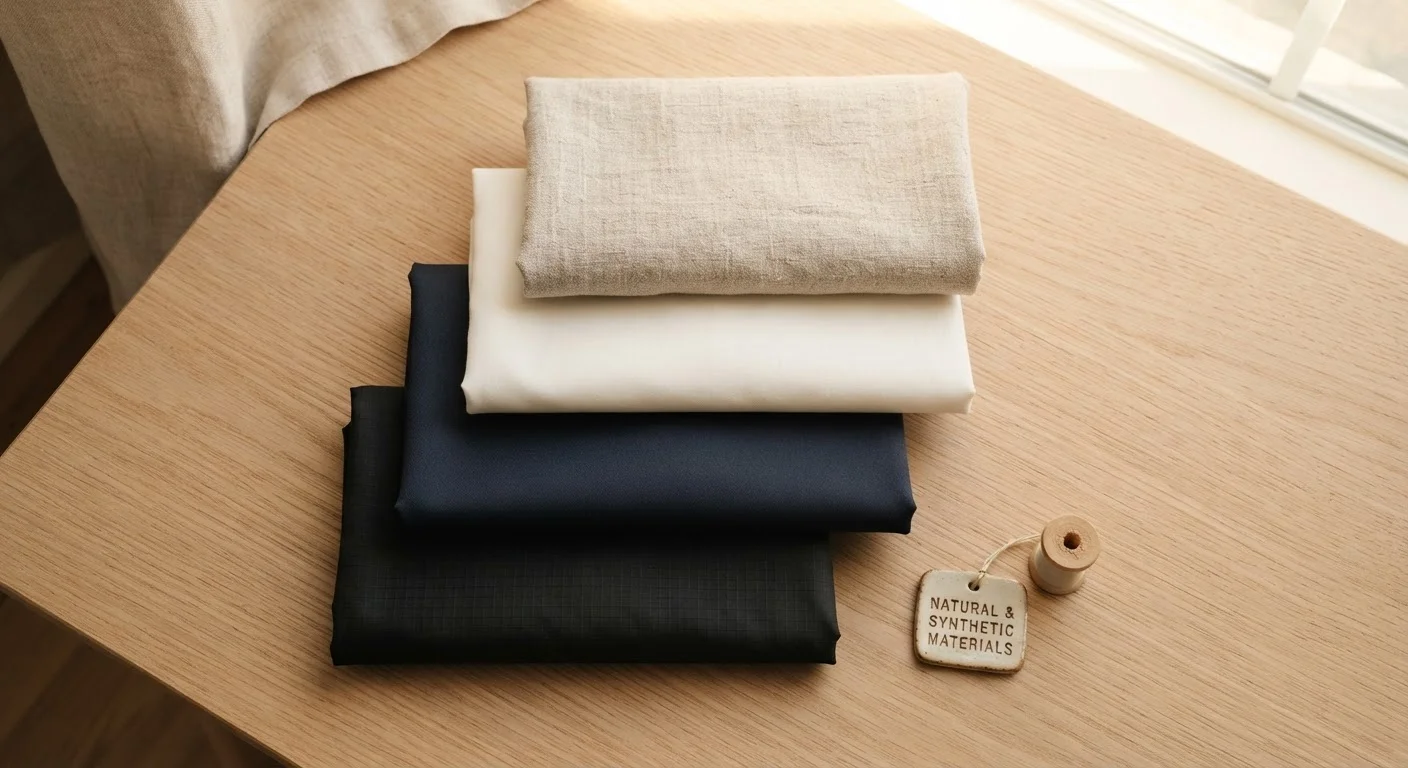
Key Takeaways
- Natural fabrics like cotton and linen tend to breathe better but wrinkle more easily than synthetics.
- Synthetics such as polyester and nylon are generally more durable and resistant to shrinking.
- Fabric choice affects not just comfort but also care requirements and long-term garment lifespan.
- Blended fabrics combine properties of both, often offering a practical middle ground.
- Neither fabric type is universally superior — context, climate, and use case all matter.
Option A
Natural Fabrics
The breathable, time-tested choice for comfort and skin-friendliness.
Best for: Everyday wear, warm climates, and people who prioritize comfort and breathability over wrinkle resistance.
Option B
Synthetic Fabrics
The durable, low-maintenance option built for performance and longevity.
Best for: Activewear, travel wardrobes, and anyone who wants clothing that holds its shape with minimal care effort.
If you run hot or live in a warm, humid climate
Natural Fabrics
Cotton, linen, and bamboo allow air circulation and absorb moisture from the skin more effectively than most synthetics, making them more comfortable in heat.
If you travel frequently and need low-maintenance clothing
Synthetic Fabrics
Polyester and nylon resist wrinkles, dry quickly, and hold their shape well — practical advantages when you're packing light or moving between climates.
If you have sensitive skin or allergies
Natural Fabrics
Natural fibers, particularly organic cotton, are generally less likely to cause irritation, though individual sensitivities vary — always check fabric content and dyes.
If durability and shape retention are your top priorities
Synthetic Fabrics
Synthetics typically resist pilling, fading, and stretching longer than natural counterparts, making them a solid choice for high-wear items like activewear or workwear.
If you want a balance of comfort and easy care
Natural Fabrics
Fabric blends — such as cotton-polyester — split the difference, but if choosing pure types, natural fabrics in heavier weaves can be both durable and comfortable.
What Sets Natural and Synthetic Fabrics Apart
At their core, the distinction is about origin. Natural fabrics — cotton, linen, wool, silk, and bamboo-derived fibers — come from plant or animal sources and have been woven into clothing for centuries. Synthetic fabrics — polyester, nylon, acrylic, spandex — are manufactured from petrochemical compounds, engineered for specific performance properties.
That difference in origin shapes nearly everything about how each fabric behaves: how it feels against skin, how it responds to heat and moisture, and how long it lasts through repeated wear and washing. Understanding these properties helps you make more intentional choices for your wardrobe — whether you're building versatile basics or investing in pieces meant to last. See our guide to functional wardrobe anchors for ideas on building a reliable clothing foundation.
| Criterion | Natural Fabrics | Synthetic Fabrics |
|---|---|---|
| Origin | Plant or animal sources | Petrochemical manufacturing |
| Breathability | Generally high | Varies; engineered types can wick well |
| Wrinkle resistance | Low to moderate | High |
| Moisture absorption | High (cotton, linen, wool) | Low; some wick moisture away |
| Shrink risk | Moderate to high with heat | Low |
| Durability | Moderate; varies by weave | Generally high |
| Odor retention | Low | Can retain odors over time |
| Care requirements | Often more delicate | Typically machine-washable |
| Biodegradability | Yes | No |
| Microplastic shedding | No | Yes, during washing |
Comfort, Breathability, and Skin Feel
Natural fabrics have a well-earned reputation for comfort. Cotton absorbs moisture and allows air to circulate, making it a dependable option for everyday wear and warmer conditions. Linen is even more breathable and becomes softer with each wash, though it wrinkles readily. Wool regulates temperature across a wide range, keeping wearers warm in cool air and less overheated than expected in mild warmth. Silk offers a smooth, low-friction feel that some people with sensitive skin find more tolerable.
Synthetics, by contrast, vary widely. Standard polyester can feel less breathable and may trap heat during vigorous activity, though moisture-wicking performance fabrics — engineered versions of polyester and nylon — are specifically designed to pull sweat away from the skin. Spandex adds stretch but is typically blended rather than used alone. For people managing skin sensitivities, fabric content and dye processes often matter more than the fiber category alone — consult a dermatologist if you're experiencing consistent irritation from clothing.
~35%
Global fiber production share: cotton
According to Textile Exchange's Preferred Fiber & Materials Market Report, cotton remains one of the most widely used natural fibers worldwide.
~54%
Global fiber production share: synthetics
Textile Exchange data indicates synthetic fibers, led by polyester, account for the majority of global fiber output as of recent years.
700,000+
Microplastic fibers shed per wash cycle
Research published in environmental science journals has estimated that a single synthetic garment can shed hundreds of thousands of microfibers per wash.
Care, Durability, and Longevity
How you care for a garment often determines how long it stays wearable. Natural fabrics tend to have more demanding care requirements: cotton can shrink in high heat, wool may felt if agitated, and linen needs gentle handling to avoid permanent creasing. Silk typically requires hand-washing or dry cleaning. These aren't reasons to avoid natural fibers — just reasons to read the care label and follow it consistently.
Synthetics are generally more forgiving. Polyester and nylon resist shrinkage, maintain their shape through machine washing, and dry faster than most natural fabrics. This makes them easier to care for at scale, which is one reason they're prevalent in activewear and workwear. That said, synthetics are more prone to pilling over time and can hold onto odors in ways that natural fabrics typically don't. For a deeper look at how laundering habits affect garment life, see why clothes lose their shape.
A Note on Fabric Blends
Many garments today are neither purely natural nor purely synthetic — they're blends. A cotton-polyester mix, for instance, typically combines the breathability of cotton with the wrinkle resistance of polyester. Blends can offer practical advantages but may also complicate recycling and end-of-life disposal. Always check the fabric content label, usually found inside the garment, to understand what you're actually wearing and caring for.
Environmental and Practical Considerations
The environmental picture for both fabric types is complicated. Natural fibers are biodegradable, but their production can be resource-intensive — conventional cotton cultivation, for example, is associated with high water and pesticide use. Organic and recycled variants exist across both categories and often carry lower environmental footprints, though claims vary and should be evaluated critically.
Synthetics are derived from non-renewable petroleum, and synthetic garments shed microplastic fibers during washing — a concern that researchers continue to study. Recycled polyester made from post-consumer plastic bottles offers a partial offset, though it doesn't eliminate microplastic shedding entirely. For a fuller discussion of how fabric and manufacturing choices connect to broader fashion trade-offs, the fast fashion vs. slow fashion comparison is worth reading alongside this guide.
Practically speaking, fabric choice also intersects with seasonal dressing. Natural fabrics generally perform better in summer heat, while synthetic fleeces and treated wool blends are workhorses in colder months. Our seasonal wardrobe guide covers how to stretch your existing pieces across shifting temperatures without buying an entire new closet each time.