

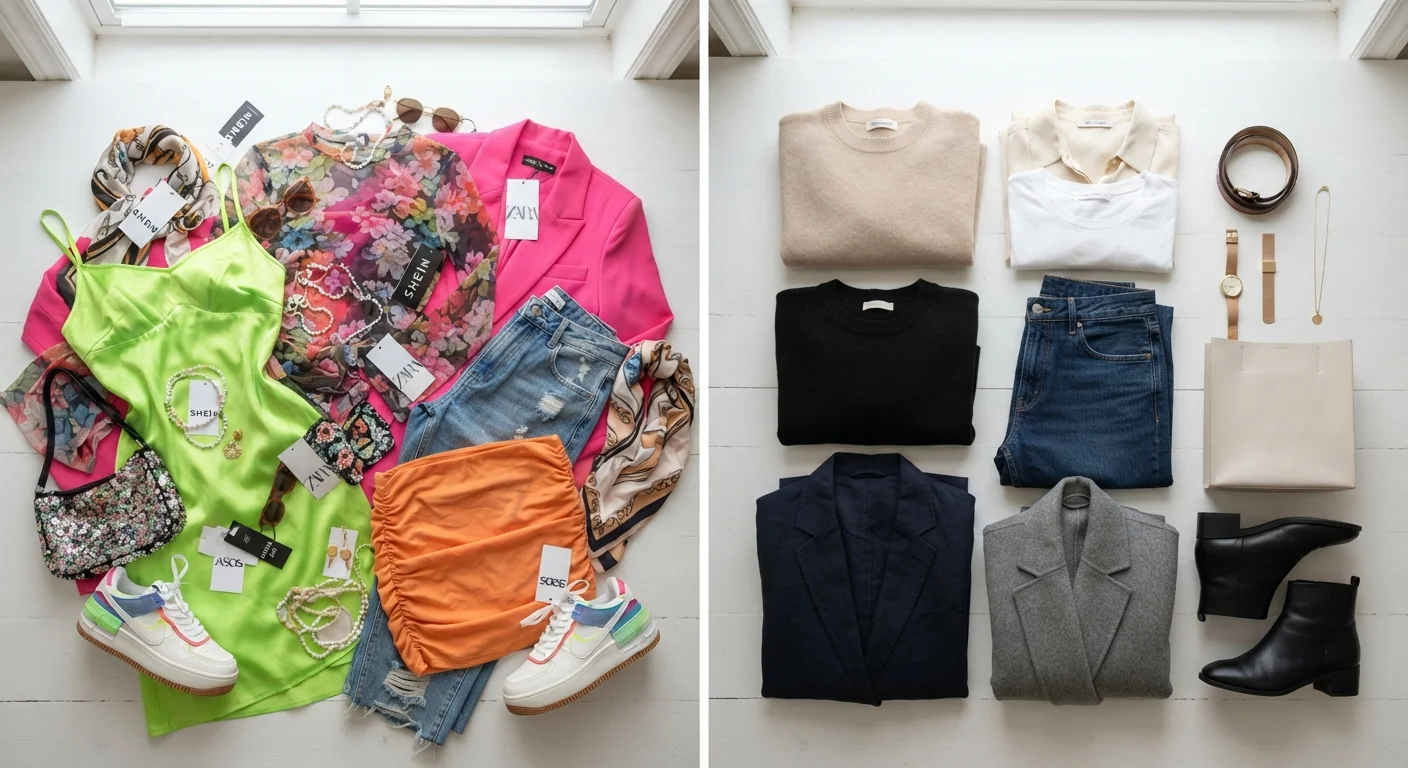
Key Takeaways
- Fast fashion offers lower upfront costs but often results in shorter garment lifespans and higher long-term spending.
- Slow fashion prioritizes construction quality and material durability, typically at a higher initial price point.
- Environmental impact differs significantly between the two approaches in terms of waste, water use, and carbon emissions.
- A hybrid approach — mixing strategic slow fashion investments with selective fast fashion purchases — works for many budgets.
- Fabric choice and garment construction are key indicators of longevity regardless of which approach you favor.
Our Verdict
Neither fast nor slow fashion is universally superior — the right balance depends on your budget, lifestyle, and values. Fast fashion fills immediate, trend-driven needs at lower cost, while slow fashion rewards those who can invest upfront in pieces built to last. Most consumers benefit from a thoughtful mix of both.
| Best for | Recommended |
|---|---|
| Those with tight budgets who need wardrobe flexibility | Fast Fashion (used selectively) |
| Those building a long-term capsule wardrobe | Slow Fashion |
| Readers who want to reduce clothing waste and environmental footprint | Slow Fashion |
| Those navigating seasonal trend updates on a limited spend | Fast Fashion (for trend pieces) + Slow Fashion (for staples) |
What Do These Terms Actually Mean?
Fast fashion refers to a retail model built on rapid production cycles — translating runway trends into affordable garments quickly, often within weeks. It prioritizes volume, variety, and low price points. Slow fashion is a counter-movement emphasizing quality craftsmanship, ethical labor practices, durable materials, and a smaller but longer-lasting wardrobe.
Neither term is a brand label — they describe approaches to how clothes are made, sold, and consumed. Understanding where each model excels (and where it falls short) helps you make smarter decisions for your specific situation. For a deeper look at how fabric choice affects durability and comfort, see our guide to natural fabrics vs. synthetics.
Cost: Upfront Price vs. Cost Per Wear
Fast fashion's obvious advantage is accessibility. A trendy top for $15 is genuinely useful if you need something for a single event or want to test a style without commitment. However, garments produced under fast fashion models often use lower-grade materials and simplified construction, meaning they may show wear — pilling, stretching, fading — within months of regular use.
Slow fashion items carry a higher sticker price, but the relevant metric is cost per wear: dividing the purchase price by the number of times you actually wear it. A $120 wool sweater worn 80 times over five years costs $1.50 per wear. A $25 sweater worn 10 times before unraveling costs $2.50 per wear. The math often favors quality — though only if you'll genuinely wear the item that many times.
Apply Cost-Per-Wear Thinking Selectively
You don't have to overhaul your entire wardrobe to benefit from slow fashion principles. Start by identifying two or three items you wear constantly — a go-to jacket, an everyday bag, a reliable pair of trousers — and direct more of your budget there. Reserve fast fashion for items with a genuinely short intended lifespan, like a seasonal trend piece or a one-time event outfit.
Budget constraints are real, and slow fashion is not accessible at every income level. A practical middle ground: apply slow fashion thinking (durability, versatility, cost per wear) to the purchases you can afford to invest in, and use fast fashion selectively for trend-driven pieces you know you'll wear short-term. Also worth reading: how to transition your wardrobe between seasons without buying everything new.
Environmental and Ethical Considerations
The clothing industry is among the world's more resource-intensive sectors. Fast fashion's high-volume, low-cost model is frequently associated with significant textile waste, water consumption during dyeing and processing, and supply chain labor practices that vary widely by manufacturer. Garments designed for short lifecycles contribute meaningfully to landfill volume.
Slow fashion typically involves longer production runs, more durable materials, and — in many cases — greater supply chain transparency. However, "slow fashion" is not a regulated term, and marketing claims about sustainability or ethics should be evaluated critically rather than taken at face value. If environmental impact is a priority for you, consider also exploring secondhand clothing as an alternative, which sidesteps new production entirely.
| Fast Fashion | Slow Fashion | |
|---|---|---|
| Upfront cost | Low to very low | Moderate to high |
| Garment lifespan | Typically shorter (months to 1–2 years) | Typically longer (several years or more) |
| Cost per wear (potential) | Higher if worn infrequently | Lower when worn consistently |
| Trend responsiveness | Very high — new styles weekly | Low — focuses on classics and timeless cuts |
| Environmental footprint | Generally higher due to volume and waste | Generally lower, varies by brand |
| Labor transparency | Often limited | Often greater, though not guaranteed |
| Accessibility by budget | High — widely affordable | Lower — requires upfront investment |
Making a Decision That Works for Your Life
There's no single correct answer, and framing this as an all-or-nothing choice rarely serves real people with real budgets. A practical approach is to categorize your wardrobe needs: identify the items you wear most frequently (everyday basics, workwear staples) as candidates for higher-quality investment, and reserve fast fashion for trend experiments, seasonal accessories, or items with inherently short use cycles like occasion wear.
Understanding fit over size also plays a role here — a well-fitting garment at any price point will serve you better and get worn more often than something that doesn't work on your frame. Ultimately, the most sustainable and cost-effective wardrobe is one you actually use, whatever combination of approaches gets you there.
~92M tons
Textile waste generated globally per year
The United Nations Environment Programme estimates the fashion industry produces approximately 92 million tons of textile waste annually.
~1,500 liters
Water to produce one cotton T-shirt
According to the World Resources Institute, producing a single cotton T-shirt requires roughly 1,500 liters of water, illustrating the industry's significant resource demands.