

| Number of main dress code tiers | 6 widely recognized (casual through black tie) |
| Most misunderstood code | Smart casual — due to overlapping interpretations |
| Key variable at every tier | Fit — a well-fitting outfit reads more intentional regardless of price |
| Black tie alternative | Dark formal suit or formal cocktail dress when "black tie optional" is noted |
| Jeans in business casual | Acceptable only if dark, well-fitted, and without distressing |
Why Dress Codes Are So Confusing (And How to Read Them)
Dress codes are designed to communicate a general expectation, not a precise uniform. That intentional vagueness is why two people reading "smart casual" can arrive at completely different outfits. The key is understanding what each label is actually signaling — formality level, context, and the degree of flexibility the host or setting allows.
Think of dress codes as a spectrum rather than rigid categories. Each label sits at a point between fully relaxed and fully formal. Once you calibrate your interpretation to that spectrum, the ambiguity becomes manageable.
| Number of main dress code tiers | 6 widely recognized (casual through black tie) |
| Most misunderstood code | Smart casual — due to overlapping interpretations |
| Key variable at every tier | Fit — a well-fitting outfit reads more intentional regardless of price |
| Black tie alternative | Dark formal suit or formal cocktail dress when "black tie optional" is noted |
| Jeans in business casual | Acceptable only if dark, well-fitted, and without distressing |
The Core Dress Code Tiers, Defined
Casual
Casual means no expectations beyond basic neatness. Clean jeans, t-shirts, sneakers, and everyday knits all belong here. This is most weekend social settings, informal gatherings, and relaxed workplaces that explicitly permit it. "Casual" does not mean unkempt — fit and cleanliness still matter.
Smart Casual
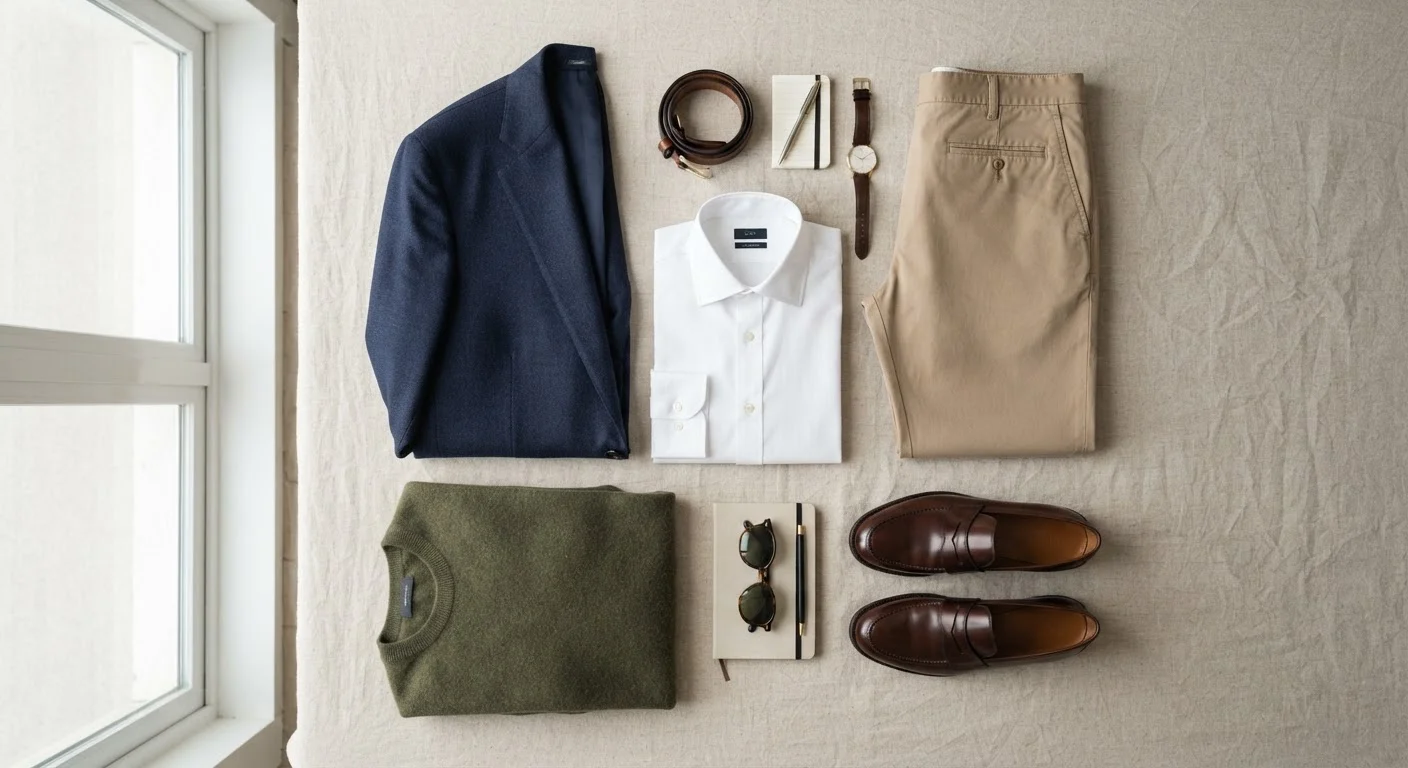
Smart casual raises the bar slightly: the goal is a pulled-together look that isn't formal. Think dark trousers or chinos paired with a neat blouse or collared shirt, clean leather or suede shoes, and minimal distressed or athletic pieces. Blazers are welcome but optional. This is a common code for restaurant dinners, gallery openings, and casual networking events.
Business Casual
Business casual is a workplace-adjacent code that skips the suit but retains professionalism. Slacks or tailored trousers, button-down shirts, blouses, loafers, or low block-heeled shoes are standard. Jeans are a gray area — dark, well-fitted jeans without distressing are often acceptable; light-wash or ripped styles typically are not. When in doubt, err toward more structured pieces. For deeper wardrobe building, see the pieces that quietly anchor most functional wardrobes.
Business Formal / Business Professional
A full matched suit — or a blazer and coordinating trousers or skirt — anchors this tier. Dress shoes, polished accessories, and conservative color palettes define the standard. This code appears in client-facing corporate environments, formal interviews, and professional ceremonies.
Cocktail Attire
Cocktail attire signals a festive but not black-tie occasion: knee-length or midi dresses, tailored jumpsuits, or a sharp suit with a tie. Elevated fabrics like silk, velvet, or structured crepe read appropriately here. Athletic or overly casual textures do not.
Black Tie
Black tie is the most prescriptive widely-used code. Traditional expectations call for a floor-length gown or formal separates, or a tuxedo with a bow tie. Deviating significantly from convention risks standing out in a way that may feel uncomfortable. If the invitation says "black tie optional," a dark formal suit or formal cocktail dress is an accepted alternative.
Dress code
A set of expectations — sometimes explicit, sometimes implied — about the style and formality of clothing appropriate for a specific setting or event.
Smart casual
A mid-tier dress code that blends relaxed and polished elements. Neat, coordinated outfits that avoid athletic or heavily casual pieces are the target.
Business casual
A workplace-aligned code that calls for professional but not strictly formal clothing. Structured trousers, blouses, and loafers typify the look.
Black tie
A formal dress code traditionally requiring tuxedos or floor-length formal gowns. It is the most prescriptive of the common social dress codes.
Cocktail attire
A semi-formal code for evening social events, typically calling for knee-length or midi dresses, dressy separates, or a suit with a tie.
Formality spectrum
The conceptual range from fully casual to fully formal along which all dress codes can be positioned, helping interpret ambiguous labels by context and setting.
Practical Strategies for Dressing to Code
When an invitation lists a dress code, read the full context: the venue, time of day, and event type all inform how strictly to interpret it. A rooftop cocktail hour skews slightly more relaxed than a hotel ballroom event with the same label.
Fabric choice matters as much as silhouette. Structured fabrics — wool, cotton twill, ponte knit — inherently read as more formal than jersey or linen blends. Understanding how materials behave can help you upgrade or dress down an outfit without buying new pieces. Natural fabrics vs. synthetics breaks down exactly how different materials look and wear in practice.
Fit is the universal equalizer. A well-fitting outfit at any code tier looks more intentional and put-together than an ill-fitting one — regardless of price point. Tailoring a few foundational pieces pays dividends across dress code situations. And if you're working from a limited wardrobe, seasonal dressing strategies can help you adapt what you already own.
When the Dress Code Is Unclear
If an invitation omits a dress code, it's completely appropriate to ask the host or event coordinator directly. Defaulting to smart casual is generally a safe, versatile choice for most social events. For workplace settings, observing what colleagues wear on similar occasions — or checking with HR — removes the guesswork.