

Key Takeaways
- Starting with five foundational products is more effective than building a large, unstructured collection.
- Skin prep — moisturizer and SPF — directly affects how long makeup wears and how it looks.
- Application order matters: skincare first, then coverage, then color, then setting.
- Inexpensive tools like a damp sponge can deliver results comparable to pricier alternatives.
- Mistakes are part of learning — consistency builds skill faster than perfection.
Start here
Why a Routine Beats Random Products
Next
Skin Prep: The Step That Changes Everything
Then
The Core Five: What Every Beginner Needs
Apply it
Applying Makeup in the Right Order
Refine
Tools, Habits, and What to Skip First
Why a Routine Beats Random Products
Most people don't struggle with makeup because they lack talent — they struggle because they have a drawer full of products and no clear framework for using them. A routine solves this. It turns a chaotic collection into a repeatable sequence that gets faster and more intuitive over time.
Think of a makeup routine the same way you'd approach any new skill. Building consistency from zero matters more than starting with the most sophisticated tools. Five products used confidently every morning will always outperform fifteen products applied without a plan.
Before you buy anything, decide what your goal is. Are you aiming for a polished "no-makeup" look, or do you want to experiment with color and expression? Both are valid — but the answer shapes which products you actually need.
Tinted moisturizer
A lightweight product that combines hydration with a sheer hint of color. It evens out skin tone without the heavier coverage of a traditional foundation.
Setting powder
A finely milled powder pressed or dusted over makeup to absorb oil, reduce shine, and help products stay in place longer.
Blending sponge
A soft, egg-shaped foam tool used damp to apply and blend liquid or cream makeup into the skin for a seamless finish.
Primer
A product applied between skincare and makeup to help foundation adhere, smooth texture, and extend how long the look lasts.
Coverage
The degree to which a foundation or concealer masks skin imperfections. Ranges from sheer (barely-there) to full (fully opaque).
Skin Prep: The Step That Changes Everything
Makeup applied to dry, unprepped skin tends to look patchy, settle into fine lines, and fade faster. A brief skincare step before you reach for any product makes an outsized difference in the final result.
At minimum, apply a moisturizer suited to your skin type and allow it to absorb for a few minutes before moving on. If you go outdoors, a moisturizer with SPF built in covers both steps efficiently. Our morning skincare routine guide walks through each step and the order that makes them work together.
If your skin tends to be oily in the T-zone or dry around the cheeks, you don't need two separate moisturizers — a lightweight, balanced formula applied with a focus on drier areas usually suffices. Makeup will sit more evenly when your skin surface is consistent.
Give Moisturizer Time to Absorb
Applying foundation immediately after moisturizer often leads to pilling — where product rolls up into small balls on the skin. Wait two to three minutes after your skincare step before reaching for any makeup. This brief pause makes blending noticeably smoother.
The Core Five: What Every Beginner Needs
You don't need a full vanity's worth of products to look put-together. These five categories cover the essentials without creating decision fatigue:
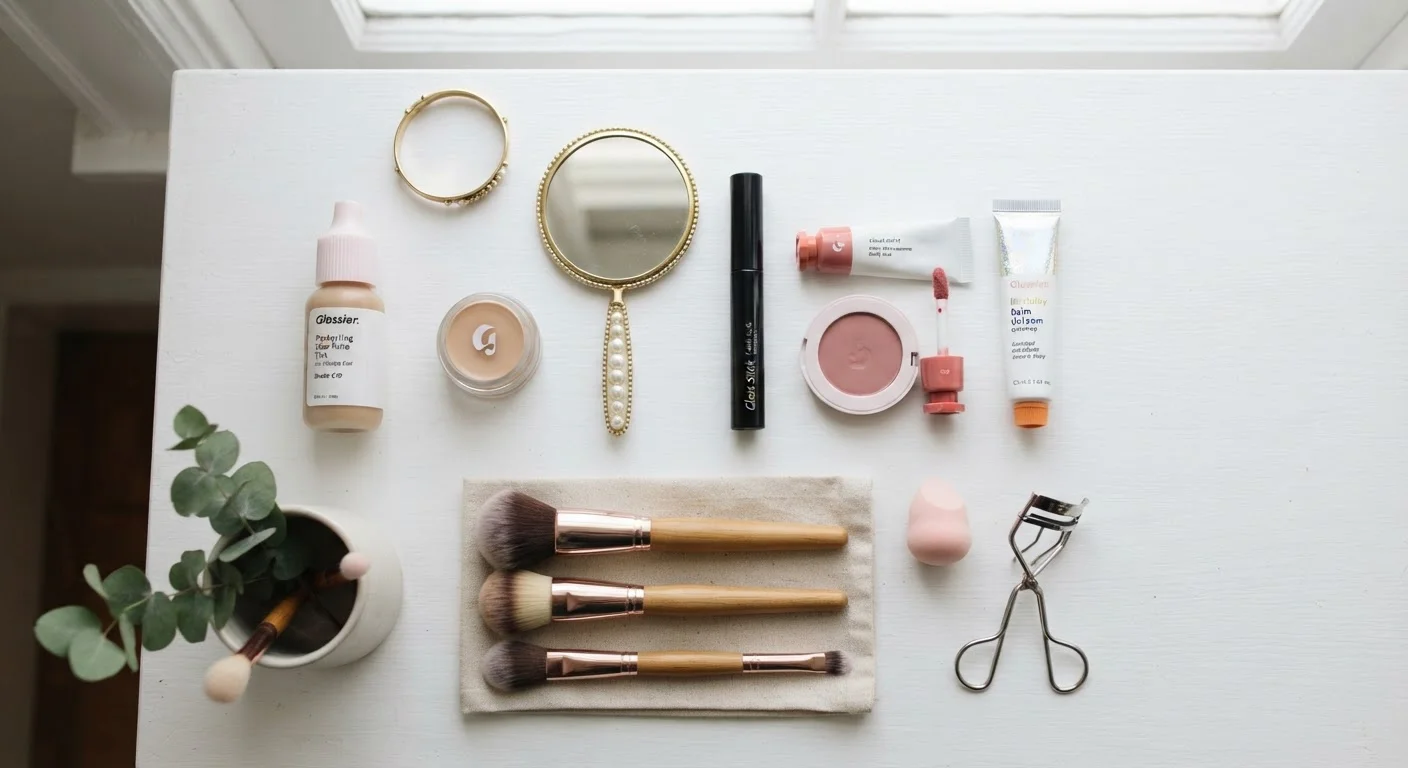
- Tinted moisturizer or light-coverage foundation — evens skin tone without masking it. A skin-tint formula is especially forgiving for beginners.
- Concealer — targets specific spots, redness, or under-eye circles. One shade lighter than your skin tone works well under the eyes.
- Mascara — opens up the eyes with minimal effort. Black or dark brown suits most people.
- Cream or powder blush — adds warmth and dimension. A neutral rose or soft peach works across most skin tones.
- Setting powder or setting spray — locks everything in place and reduces shine or dryness depending on your formula choice.
If budget is a consideration, prioritize in this order: concealer, mascara, blush, then foundation. A solid concealer and a little blush can create a complete-looking result faster than a full foundation application done poorly. For broader budgeting strategies, our budgeting basics hub offers practical frameworks that apply just as well to building a beauty kit as to any other spending category.
Applying Makeup in the Right Order
Sequence is one of the most overlooked aspects of makeup for beginners, yet it directly affects how the finished look holds up. Follow this general order:
- Moisturizer + SPF — always the first step, applied to clean skin.
- Primer (optional) — helps makeup adhere and can address specific concerns like large pores or oiliness.
- Foundation or tinted moisturizer — apply from the center of the face outward using a damp sponge or foundation brush.
- Concealer — applied after foundation, so you only use what's truly needed to cover remaining spots.
- Setting powder — press lightly under the eyes and across the T-zone to prevent creasing.
- Blush — smile softly and apply to the apples of the cheeks, blending upward.
- Eye makeup — mascara at minimum; eyeshadow and liner if desired.
- Setting spray (optional) — mist from arm's length to meld layers and extend wear.
One habit worth avoiding early on: applying concealer before foundation. It seems logical, but foundation often covers most of what you were planning to conceal — wasting product and adding unnecessary buildup. Our article on makeup habits that work against you covers this and other common missteps in detail.
Everyone's Routine Will Look Different
The order above is a reliable general framework, but your routine will naturally adapt to your skin type, the products you use, and how much time you have. Someone with dry skin may skip setting powder entirely; someone with oily skin might use primer every day. Treat the sequence as a starting structure, not a rigid rule.
Tools, Habits, and What to Skip First
You don't need a brush for every product. A damp makeup sponge (often called a blending sponge) can apply foundation, concealer, and even powder with a natural, skin-like finish. It's one of the most versatile tools a beginner can own and typically costs very little.
A few habits worth building from the start:
- Less product, more blending. Use a pea-sized amount of foundation and build coverage gradually rather than applying a heavy layer at once.
- Blend into the neck. Foundation that stops at the jawline creates a visible line. Carry a small amount down onto the neck and blend until the edge disappears.
- Clean your tools regularly. Sponges and brushes used with liquid products should be washed at least once a week to prevent buildup and skin irritation.
What to skip until you have the basics down: contouring, cut-crease eyeshadow, and precise lip liner. These techniques require a steady hand and some understanding of your face's structure. Once your daily five-step routine feels effortless, those are natural next steps — not starting points.
If you're working toward a more minimal approach overall, the principles in our minimalist skincare guide translate well to makeup: fewer, well-chosen products used consistently will always outperform a sprawling collection used inconsistently.
This article is for general informational and educational purposes only. Individual skin types and needs vary — if you have a skin condition or sensitivity, consult a dermatologist before introducing new products.