

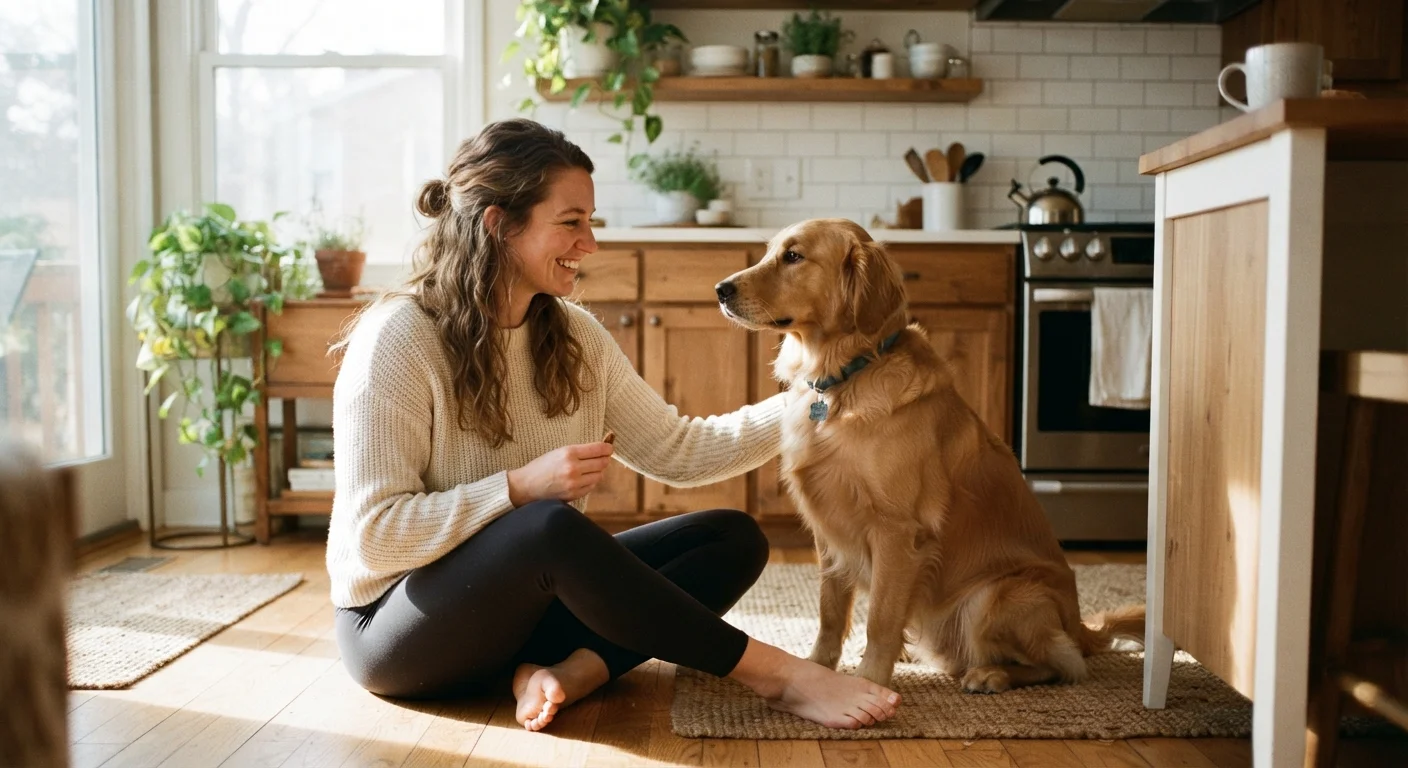
Key Takeaways
- Short, frequent training moments woven into daily routines produce more durable skills than occasional formal sessions.
- Mealtimes, walks, and play are natural contexts for practicing cues your pet already knows.
- Consistency across all household members and environments strengthens a pet's ability to generalize learned behaviors.
- Mental stimulation from training reduces boredom-related behavior problems over time.
- Always match the difficulty of the task to your pet's current energy level and focus capacity.
Why Everyday Training Outperforms Scheduled Sessions Alone
Most pet owners picture training as a dedicated 15-minute block — treats ready, pet focused, cues repeated. That kind of intentional practice is genuinely valuable, and our readiness checklist can help you make the most of it. But research in animal learning consistently shows that behaviors become reliable when they are practiced across many different contexts, not just one controlled setting. A dog that sits beautifully in the living room may ignore the same cue on a busy sidewalk — because from the animal's perspective, those are entirely different situations.
Integrating short learning moments throughout the day solves this problem. It builds what behaviorists call stimulus generalization — the pet's ability to apply a learned behavior regardless of location, distraction level, or who is giving the cue. It also deepens the bond between owner and pet, turning ordinary interactions into cooperative exchanges rather than one-sided demands.
Use mealtimes as built-in training opportunities every day.
Food is one of the most powerful motivators for most pets, and it's already part of every day. Asking your pet to perform a known cue — sit, wait, down — before the bowl is placed reinforces impulse control without adding any time to your schedule. Over weeks, this repetition makes the behavior deeply automatic.
Practice cues during walks at naturally occurring pause points.
Walks are rich with distractions — exactly the environment where generalized skills are built. Brief pauses at curbs, before sniffing spots, or when greeting other dogs are ideal moments to ask for a cue, reward, and continue. This also teaches leash manners more effectively than corrections alone.
Turn play sessions into low-pressure skill practice.
Play is intrinsically motivating, so embedding cues within it keeps training from feeling like a chore for your pet. Asking for a 'drop it' before throwing a toy again, or a brief 'sit' mid-play, leverages the game itself as the reinforcer. This approach works well for cats too — a recall cue can be paired with wand toy sessions.
Involve every household member in consistent, unified cue use.
Pets learn from every interaction, not just formal training time. If one person uses 'off' and another uses 'down' for the same behavior, the pet receives conflicting information, which slows learning and increases frustration on all sides. A brief family agreement on cue words and response rules resolves this quickly.
Keep individual in-the-moment sessions to two to five repetitions.
Cognitive fatigue in animals is real and underestimated. Asking for too many repetitions in a row reduces response quality and can make the pet start avoiding the interaction. Short bursts distributed throughout the day produce far more reliable results than a single long block, particularly for puppies and senior pets.
Core Practices for Embedding Training Into Daily Life
The following approaches are grounded in positive reinforcement principles widely recommended by certified animal behaviorists and veterinary behavior specialists. None require special equipment — just consistency, attention, and a willingness to see routine moments as opportunities.
Keeping Momentum: Troubleshooting and Long-Term Consistency
Even well-established behaviors can wobble. If your pet stops responding reliably to a cue they previously knew, the cause is almost always environmental or motivational rather than a sign of stubbornness. Our guide on why training stalls walks through the most common factors and fixes.
Daily training also serves a broader wellness purpose. The mental stimulation pets need that comes from regular problem-solving helps reduce anxiety and boredom-driven behaviors like excessive barking, destructive chewing, or attention-seeking. For a deeper look at what constitutes meaningful enrichment beyond training cues, see what counts as enrichment.
When to Consult a Professional
Daily integration works well for reinforcing known, calm behaviors. If your pet shows fear responses, growling, lunging, or avoidance during any training interaction, pause and consult a certified professional — either a Certified Professional Dog Trainer (CPDT-KA) or a veterinary behaviorist. These responses signal that the training approach or the pet's emotional state needs expert assessment before continuing.
Finally, adjust expectations based on your pet's life stage. Puppies have short attention spans and tire quickly; older pets may need gentler pacing. Our overview of exercise needs across life stages applies equally to training load — more is not always better.
“Animals learn from every interaction with their environment. The question is never whether they are learning — it's what they are learning.”
— Susan Friedman, Behavior analyst and applied behavior science educator specializing in animal learning
This article provides general educational information about pet training practices. It is not a substitute for guidance from a certified animal behaviorist or veterinary professional, particularly for pets displaying fear, aggression, or other complex behavioral concerns.