

Key Takeaways
- Enrichment addresses mental and emotional needs, not just physical exercise.
- Unstimulated pets frequently develop problem behaviors like destructive chewing or excessive vocalization.
- Enrichment is species-specific — what works for a dog may not suit a cat or rabbit.
- Everyday routines like mealtime and walks can easily double as enrichment opportunities.
- Variety matters: rotating enrichment types prevents habituation and sustains engagement.
Pet Enrichment
Pet enrichment refers to any activity, object, or environmental feature that stimulates an animal's natural behaviors and mental faculties. It goes beyond basic food and shelter to address a pet's cognitive, sensory, and social needs. Good enrichment challenges pets in ways that are appropriate for their species, age, and individual personality.
In applied animal behavior science, enrichment is categorized into five main types: nutritional, sensory, cognitive, social, and physical — each targeting different aspects of behavioral health.
Why Enrichment Is a Core Need, Not a Bonus
Many pet owners treat enrichment as an optional extra — a fun puzzle toy on rainy days. In reality, enrichment meets a core biological need. Every domesticated animal retains instincts shaped by millions of years of evolution: hunting, foraging, exploring, problem-solving, and social bonding. When a pet's environment offers no outlet for these drives, the brain doesn't simply go quiet — it finds other ways to express them, often in ways owners find frustrating or alarming.
Veterinary behaviorists widely recognize that behavioral problems are frequently enrichment deficits in disguise. Destructive chewing, excessive barking, feather plucking in birds, repetitive pacing, and inappropriate elimination can all signal that an animal's cognitive and emotional needs are unmet. This is not a character flaw in the animal; it is a predictable response to an under-stimulating environment.
For a broader look at how environment shapes behavior, see signs your pet's environment may be causing stress.
85%
Dogs showing behavioral issues linked to boredom or under-stimulation
Behavioral surveys in companion animal medicine consistently identify under-stimulation as a leading driver of common problem behaviors in pet dogs.
5 types
Core enrichment categories recognized in animal welfare science
Nutritional, sensory, cognitive, social, and physical enrichment together form the framework used by zoological facilities and veterinary behaviorists worldwide.
10–15 min
Effective minimum session length for cognitive enrichment
Short, frequent sessions are generally more effective than infrequent long ones; multiple daily interactions better reflect natural behavioral rhythms in most companion species.
The Five Categories of Enrichment
Animal welfare researchers typically organize enrichment into five categories. Understanding them helps owners build a balanced plan rather than defaulting to only one type:
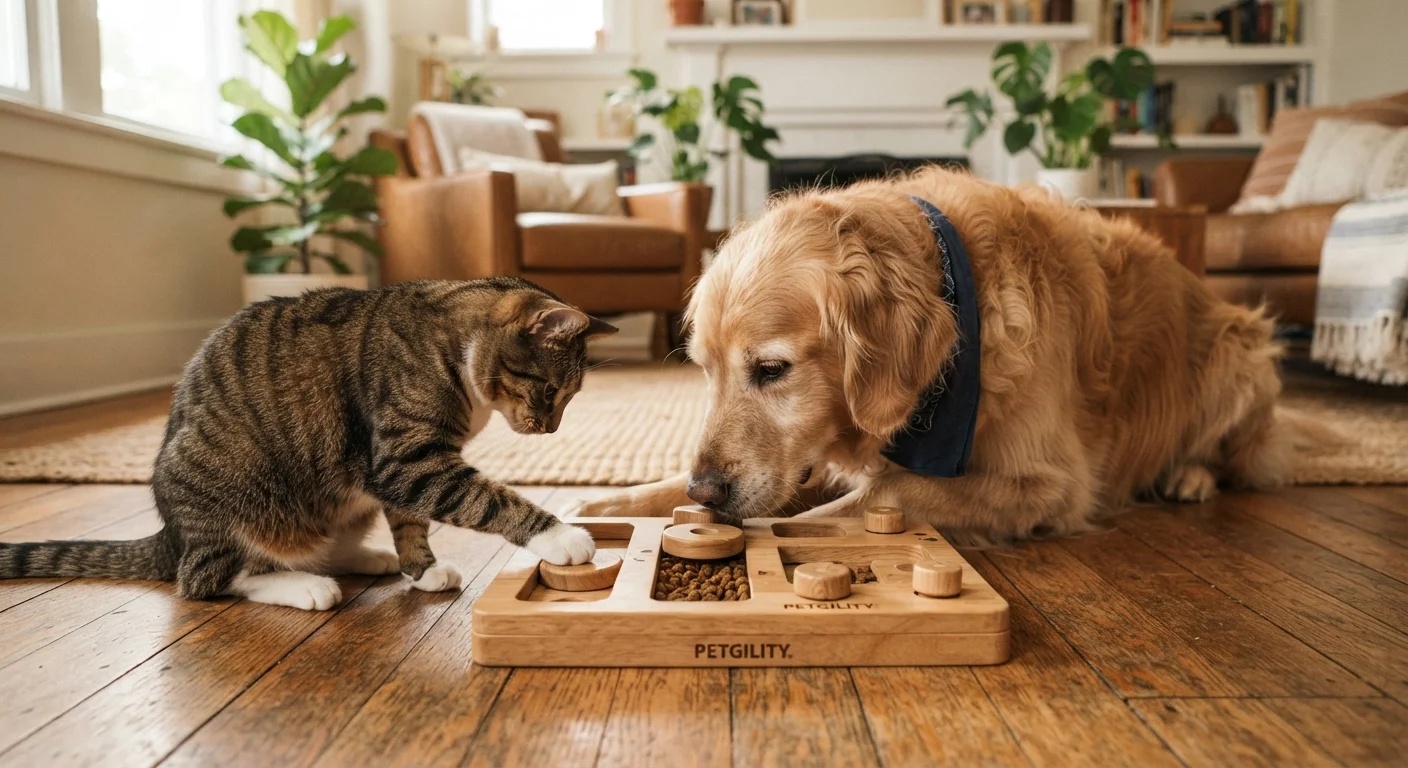
- Nutritional enrichment — delivering food in ways that mimic foraging. Puzzle feeders, scatter feeding, lick mats, and food-stuffed toys all qualify. This is often the easiest entry point for owners.
- Sensory enrichment — engaging smell, sight, hearing, and touch. Novel scents, nature sounds, window perches with outdoor views, and textured surfaces all provide sensory variety.
- Cognitive enrichment — tasks that require problem-solving. Treat puzzles, training exercises, and hide-and-seek games challenge the brain and build confidence.
- Social enrichment — positive interaction with humans, other pets, or supervised novel individuals. For highly social species like dogs, this is non-negotiable.
- Physical enrichment — environmental features that encourage movement and species-typical postures. Cat trees, digging boxes for dogs, tunnels for small mammals, and climbing structures for birds all fall here.
Cognitive enrichment and training overlap naturally. Weaving training into daily routines is one of the most efficient ways to deliver cognitive enrichment without setting aside dedicated sessions.
Enrichment Is Not the Same as Exercise
A common misconception is that a long walk or vigorous play session covers all of a pet's stimulation needs. Physical exercise and enrichment are complementary but distinct. A dog can return from an hour-long run still mentally restless — and proceed to dismantle a sofa cushion. Conversely, a senior pet with limited mobility still needs robust cognitive and sensory enrichment even when physical activity is appropriately reduced.
Exercise needs change across life stages, but the need for mental engagement remains constant from puppyhood through the senior years. Enrichment can actually help fill the gap when physical activity must be limited due to injury, illness, or age-related changes — always in consultation with your veterinarian.
Rotate to Prevent Habituation
Even the most engaging enrichment loses its effect if it becomes too familiar. Keep two or three enrichment options in rotation and reintroduce items after a week or two away. You don't need more enrichment — you need varied enrichment. This simple practice sustains novelty without additional cost.
For an overview of how enrichment fits alongside feeding, hygiene, and vet care, the first-time pet owner's daily care roadmap offers a practical starting framework.
This article is for general informational purposes only and is not a substitute for professional veterinary or behavioral advice. Consult a qualified veterinarian or certified animal behaviorist for guidance specific to your pet's needs.