

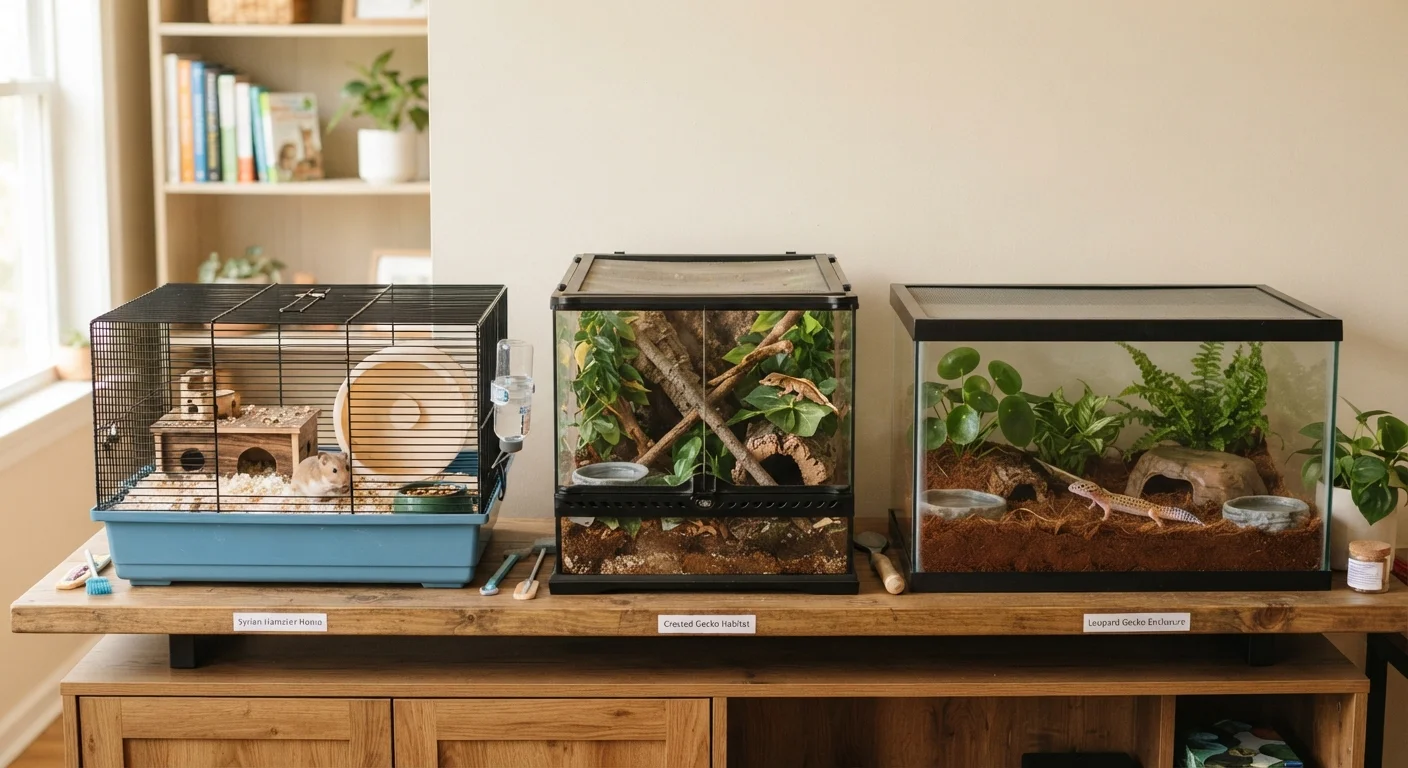
Key Takeaways
- Wire cages offer superior ventilation and are best suited for rabbits, guinea pigs, and chinchillas.
- Glass tanks retain humidity well, making them appropriate for reptiles and amphibians but poor for most small mammals.
- Enclosure size requirements vary widely by species — undersizing is one of the most common owner mistakes.
- Ventilation, escape-proofing, and ease of cleaning are practical factors that should guide enclosure selection.
- Always verify species-specific requirements with a veterinarian or certified exotic animal specialist before purchasing.
Our Verdict
No single enclosure type suits every small pet. Wire cages work best for social mammals that need airflow; glass tanks serve reptiles and humidity-dependent species; mesh or hybrid enclosures bridge the gap for species with mixed needs. Matching the enclosure to the animal's biology — not aesthetics or price — is the most important decision an owner can make.
| Best for | Recommended |
|---|---|
| Rabbits, guinea pigs, and chinchillas | Wire cage with solid floor panel |
| Reptiles and amphibians requiring humidity control | Glass tank or terrarium |
| Hamsters and gerbils needing deep substrate | Glass or plastic tank with mesh lid |
| Arboreal species needing vertical space | Tall mesh or screen enclosure |
Why Enclosure Type Matters More Than You Think
The enclosure a small pet lives in isn't just a container — it's the primary environment that shapes its temperature regulation, respiratory health, stress levels, and opportunity to express natural behaviors. Choosing based on visual appeal or convenience often leads to animals housed in conditions mismatched to their biology.
Before selecting an enclosure, owners should identify three things: the species' natural habitat conditions (arid, humid, temperate), its activity pattern (burrowing, climbing, roaming), and the adult size it will reach. For a broader introduction to setting up your new pet's environment, see our guide to creating a safe, comfortable space.
| Wire Cage | Glass Tank | Mesh/Screen Enclosure | |
|---|---|---|---|
| Ventilation | Excellent | Poor without screen lid | Excellent |
| Humidity retention | Low | High | Low |
| Best species fit | Rabbits, guinea pigs, chinchillas | Reptiles, amphibians, hamsters | Chameleons, arboreal reptiles |
| Deep substrate support | Limited — substrate spills | Excellent | Limited |
| Ease of cleaning | Moderate | Moderate to difficult | Easy to moderate |
| Escape risk (small animals) | Moderate — bar spacing critical | Low with secure lid | Low to moderate |
| Temperature control | Minimal retention | High retention | Minimal retention |
Wire Cages: Airflow and Accessibility
Wire cages are the most common enclosure for small mammals such as rabbits, guinea pigs, chinchillas, and ferrets. Their primary advantage is cross-ventilation — wire panels allow constant air exchange, which prevents ammonia buildup from urine and reduces respiratory disease risk. This matters especially for rabbits, which are highly sensitive to poor air quality.
Key considerations for wire cages:
- Bar spacing: Must be narrow enough that the animal cannot push its head through or get limbs caught. Guinea pigs typically require spacing no wider than 1 inch; smaller animals need tighter gaps.
- Floor type: Wire floors cause pressure sores (pododermatitis) in rabbits and guinea pigs. Always choose models with solid floors or cover wire floors with solid mats.
- Minimum footprint: The House Rabbit Society recommends at least 8 square feet of enclosure space for a single rabbit, with additional exercise space. Guinea pig welfare organizations suggest no less than 7.5 square feet for one or two animals.
Solid Floors Are Non-Negotiable for Rabbits
Wire flooring is a leading cause of pododermatitis (sore hocks) in pet rabbits. If your cage has a wire floor, cover it entirely with a solid surface — untreated wood, ceramic tile, or a fitted fleece mat all work well. Check your rabbit's hind feet weekly for early signs of redness or hair loss, and consult a veterinarian if you notice any changes.
Wire cages are generally poor choices for hamsters and gerbils, who need deep substrate for burrowing and can slip through many standard bar spacings.
Glass Tanks and Terrariums: Humidity and Containment
Glass enclosures excel at retaining heat and humidity, making them the standard choice for reptiles (geckos, bearded dragons, corn snakes) and amphibians (tree frogs, salamanders). A sealed or partially sealed glass tank allows keepers to dial in the specific temperature gradient and humidity range a species needs to thermoregulate and stay healthy.
For small mammals, however, glass tanks present serious risks. Without adequate ventilation, ammonia concentrations rise rapidly and can cause chronic respiratory irritation. A mesh or screen lid is the minimum requirement if a glass tank is used for a hamster or gerbil — and many exotic animal veterinarians caution that glass tanks should only be used for mammals when purpose-designed ventilated models are chosen.
6–12 in
Recommended substrate depth for Syrian hamsters
Animal welfare researchers and European laboratory animal guidelines increasingly support deeper substrate to allow natural burrowing behavior in hamsters.
8 sq ft
Minimum enclosure space for one rabbit
The House Rabbit Society recommends at least 8 square feet of enclosure space, combined with several hours of daily supervised exercise outside the enclosure.
Glass tanks do offer one practical benefit for burrowing species: they allow deep substrate layers (6–12 inches for Syrian hamsters is increasingly recommended by animal welfare researchers) without the substrate spilling out through cage bars.
Mesh and Screen Enclosures: Vertical Space and Arboreal Species
Tall mesh or screen enclosures — sometimes called bioactive enclosures or flex-style terrariums — are designed for animals that live and move vertically: chameleons, crested geckos, some tree frogs, and certain bird species. Height is the primary functional dimension here; a chameleon benefits far more from a 24-inch-tall enclosure than a wider but shorter one.
Mesh enclosures allow excellent airflow and are generally easier to clean than glass tanks, but they cannot hold humidity the way a glass enclosure can. This makes them unsuitable for high-humidity species. They also require thoughtful placement away from drafts and temperature extremes — something covered in more depth in our seasonal pet care guide.
Sizing, Cleaning, and Placement: Practical Factors for Every Enclosure
Regardless of enclosure type, three practical factors affect long-term welfare and owner compliance:
- Sizing
- Always research adult-size requirements before purchasing — juvenile animals may appear comfortable in a small enclosure while young, but will be confined as they grow. Species-specific welfare guidelines from organizations such as the ASPCA or relevant exotic animal societies are useful reference points.
- Cleaning access
- Front-opening doors make spot-cleaning and feeding significantly easier than top-only access, particularly for larger enclosures. Difficult-to-clean enclosures are cleaned less often, raising disease risk.
- Placement
- Avoid direct sunlight (which causes overheating), high-traffic areas (which stress prey species), and kitchens (where cooking fumes can harm birds and reptiles). Pet-proofing your home room by room addresses household hazard zones relevant to enclosure placement.
If you're in the early stages of pet ownership, our first-pet health and wellness primer covers broader setup considerations alongside nutrition and veterinary care basics.
This article provides general educational information about small pet housing and is not a substitute for species-specific guidance from a qualified exotic animal veterinarian or certified animal care specialist. Requirements vary significantly between and within species — always consult a professional before finalizing your setup.