

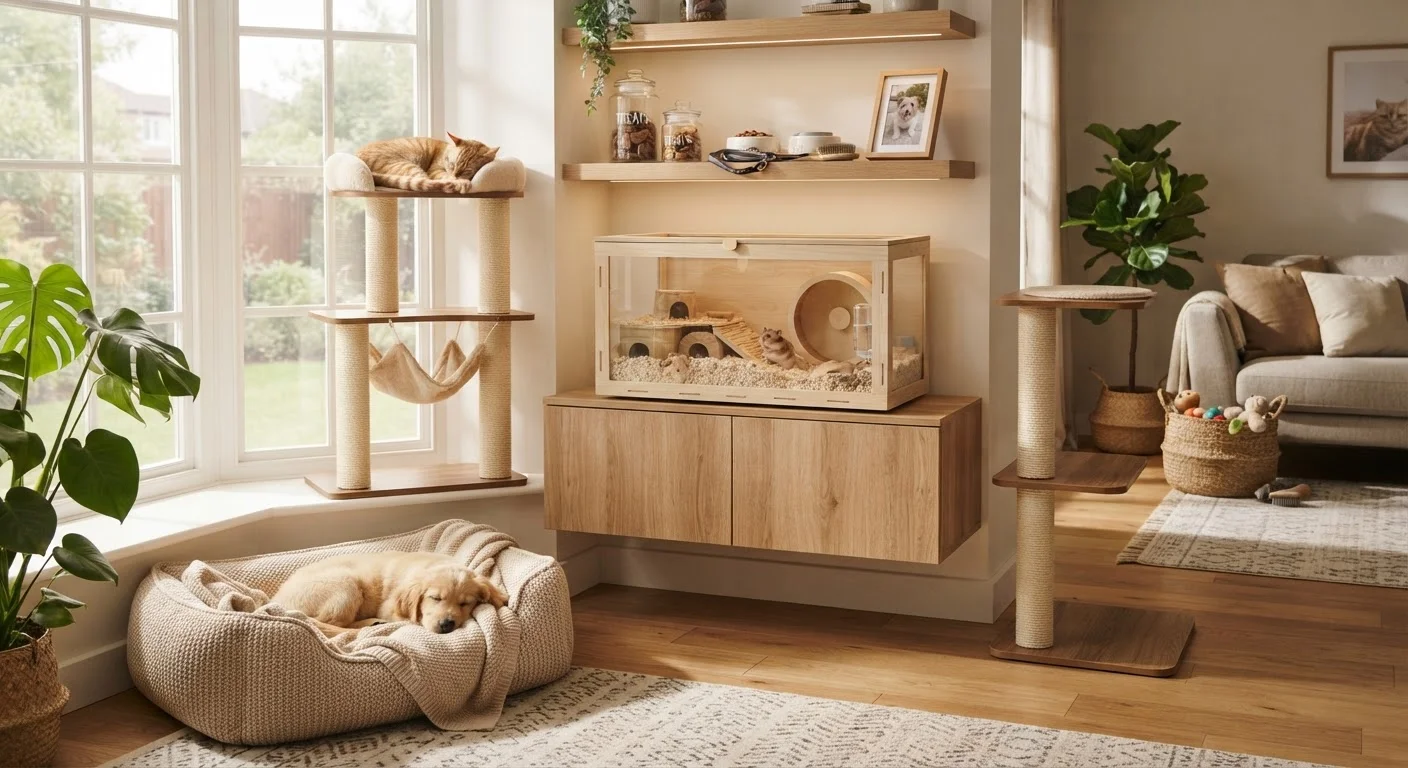
Key Takeaways
- Designate a quiet, low-traffic zone as your pet's home base before they arrive.
- Remove or secure household hazards specific to your pet's species and size.
- Consistent temperature, lighting, and noise levels reduce new-environment stress.
- Species-appropriate enclosures, bedding, and enrichment are essential from day one.
- Gradual room introductions prevent overwhelm and help build confidence over time.
What you will need
Why the Setup Phase Shapes Long-Term Behavior
The environment a pet encounters in their first days at home has a measurable influence on how quickly they settle, how secure they feel, and how readily they learn. Veterinary behaviorists describe this period as a critical window for establishing trust between the animal and its new surroundings. A chaotic or hazardous setup can trigger chronic low-level stress that makes training harder and health problems more likely down the road.
This is true across species. Dogs, cats, small mammals, and birds all benefit from a predictable, species-appropriate environment established before they arrive. The steps below apply broadly, with species-specific notes where the differences matter most. For health considerations that run alongside the setup process, see our health and wellness primer for new pet owners.
Toxic Hazards Can Be Hidden in Plain Sight
Many common household items — certain houseplants, cleaning products, human foods, and medications — are dangerous or fatal to pets. Before your pet comes home, consult our guide to household substances toxic to pets and remove every identified risk from accessible areas. If you suspect your pet has ingested something harmful, contact a veterinarian or pet poison helpline immediately.
What You'll Need Before You Begin
Gather supplies and prepare the space before your pet's first arrival — not after. Last-minute scrambling raises the stress level in the household, which animals detect and mirror. Review the prerequisites and tools below, then work through the steps in order.
What you will need
Species-appropriate enclosure or crate
Provides a secure, defined home base that helps the pet feel contained and safe during the adjustment period.
Bedding or nesting material
Gives the pet a comfortable surface matched to their thermoregulation and comfort needs.
Food and water dishes
Non-tip, easy-to-clean bowls appropriate to the animal's size ensure consistent access to hydration and nutrition.
Baby gates or room dividers
Allow controlled access to specific areas of the home without confining the pet to a crate.
Cord covers or cable organizers
Prevent chewing injuries by encasing exposed electrical wires within the pet's reach.
Pheromone diffuser (species-specific)
Synthetic pheromone products designed for dogs or cats may help reduce stress; discuss suitability with your vet.
Bring a Familiar Scent From the Start
If you can obtain a small cloth or piece of bedding that carries the scent of your pet's previous environment — a shelter, breeder, or foster home — place it in their new resting area. Familiar scent cues have been shown in veterinary behavioral literature to reduce stress responses during environmental transitions. This is particularly effective for dogs, cats, and rabbits.
Step-by-Step: Setting Up the Space
Follow these steps sequentially. Each builds on the last, and skipping ahead — particularly past pet-proofing — can create safety risks or behavioral setbacks that take weeks to undo.
Choose and prepare a dedicated home-base zone
Select a low-traffic area — a spare room, a sectioned-off corner of a living room, or a quiet hallway alcove — that will serve as your pet's primary space for the first days or weeks. This zone should be away from loud appliances, heavy foot traffic, and exterior doors that open frequently.
Clean the area thoroughly, remove any clutter, and ensure the flooring is easy to clean in case of accidents. For dogs, a room where the family spends moderate time works well; for cats, a quieter room with a door they can retreat behind is often preferable.
Pet-proof the space before your pet enters
Get down to your pet's eye level — literally — and scan for hazards. Secure loose electrical cords with cable covers. Move toxic plants, cleaning supplies, and human medications out of reach or into closed cabinets. Check for small objects a curious animal could swallow.
For a thorough room-by-room approach, see our home pet-proofing walkthrough. Pay particular attention to gaps behind appliances and under furniture where small pets can become trapped.
Set up the enclosure, crate, or resting area
Place the crate, enclosure, or bed in the prepared zone before your pet arrives. Line it with appropriate bedding — fleece or toweling for dogs and cats, species-specific substrate for small animals, and appropriate perches and liners for birds. The space should feel enclosed enough to feel secure, not exposed.
For dogs, crate placement in a room where the family gathers (but not in the middle of high-activity areas) supports the balance of connection and calm. If you're housing a rabbit, hamster, or reptile, review enclosure sizing and ventilation requirements for your species before finalizing placement.
Establish feeding and water stations
Place food and water dishes in a consistent location within the home-base zone. Consistency matters: animals learn feeding zones quickly, and moving dishes creates confusion and competition stress in multi-pet households. Use heavy, non-tip bowls sized for your pet.
For birds and small mammals, confirm appropriate food types and quantities with your veterinarian — overfeeding, incorrect seed mixes, or unsuitable fresh foods can cause immediate health issues. Avoid placing dishes directly under perches or near a litter box.
Introduce the space calmly, then step back
When your pet first enters, allow them to explore the designated zone at their own pace. Avoid carrying them directly to the enclosure or forcing interaction. Sit quietly nearby and let curiosity drive the exploration. For cats especially, this self-directed discovery is important for building a sense of ownership over the space.
For dogs, a calm first-day approach lays the groundwork described in our first week with a new dog guide. Resist the urge to invite friends and family over immediately — quiet and consistency are more valuable than socialization in the first 48–72 hours.
Expand access gradually over days and weeks
Once your pet shows relaxed body language in their home-base zone — eating consistently, resting voluntarily, and approaching you without hesitation — begin introducing one additional room at a time. Use baby gates to control transitions. Supervise every new-space exploration until you're confident hazards are managed and the pet is reliably calm.
Track your pet's behavior during expansions. Stress signals like hiding, refusing food, or excessive vocalization suggest the pace is too fast. Revisit our daily care routines guide to build consistent schedules that reinforce the security your pet is developing.
Avoid Overwhelming a New Pet With Too Much Space Too Soon
Giving a new dog, cat, or small animal free run of the entire home immediately can trigger anxiety, territorial marking, and accidents. Start with one well-prepared room or zone and expand access gradually as your pet shows confidence and calm behavior. This is especially important for rescue animals adjusting after shelter stress.
Once your pet is settled, the next priority is establishing daily care routines. Our first-time pet owner's daily care roadmap covers feeding schedules, hygiene habits, and vet visit timelines in a format you can act on immediately.
This article provides general guidance for educational purposes and is not a substitute for advice from a licensed veterinarian. Every pet's needs differ; consult a vet for guidance specific to your animal's species, age, and health status.