

| Most reported pet toxin category | Human medications (ASPCA Animal Poison Control Center annual data) |
| Antifreeze lethal dose (cats) | As little as 1 teaspoon (Veterinary toxicology consensus references) |
| Pets at risk from lily ingestion | Cats (kidney failure risk); all Lilium/Hemerocallis species (ASPCA Poison Control) |
| Xylitol risk species | Primarily dogs; some evidence of risk in cats (Veterinary clinical guidance) |
| Emergency contact | ASPCA Animal Poison Control: (888) 426-4435 (fee may apply) |
| Chocolate toxicity rank | Dark > milk > white (by theobromine content) (Standard veterinary toxicology references) |
Why Household Toxins Are a Top Pet Safety Concern
Pets explore the world through smell and taste, which means they frequently encounter substances never intended for them. The ASPCA Animal Poison Control Center handles hundreds of thousands of cases annually, with the majority involving items found in ordinary homes — not exotic or industrial chemicals.
Understanding which substances are dangerous is a practical foundation of daily pet care. This reference guide covers four major categories: foods, plants, cleaning products, and medications. For a broader look at eliminating hazards room by room, see our room-by-room pet-proofing guide.
| Most reported pet toxin category | Human medications (ASPCA Animal Poison Control Center annual data) |
| Antifreeze lethal dose (cats) | As little as 1 teaspoon (Veterinary toxicology consensus references) |
| Pets at risk from lily ingestion | Cats (kidney failure risk); all Lilium/Hemerocallis species (ASPCA Poison Control) |
| Xylitol risk species | Primarily dogs; some evidence of risk in cats (Veterinary clinical guidance) |
| Emergency contact | ASPCA Animal Poison Control: (888) 426-4435 (fee may apply) |
| Chocolate toxicity rank | Dark > milk > white (by theobromine content) (Standard veterinary toxicology references) |
This article is for general informational purposes only and is not veterinary advice. If you believe your pet has ingested a toxic substance, contact your veterinarian or an animal poison control hotline immediately.
Toxic Foods: What Never to Share
Many foods safe for humans can cause organ failure, neurological damage, or death in pets. The following are among the most clinically significant:
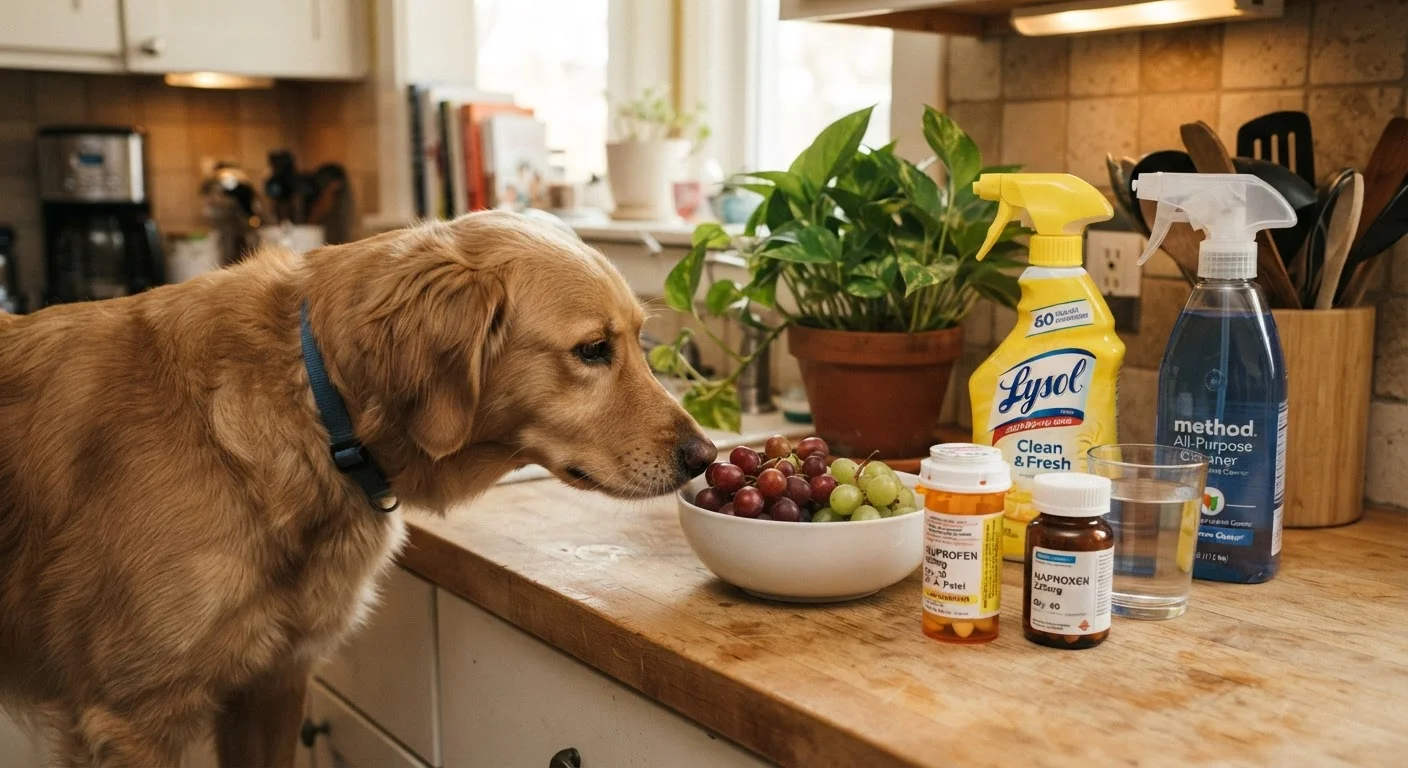
- Grapes and raisins — Can cause acute kidney failure in dogs and cats. Even small amounts carry risk; no safe threshold has been established.
- Xylitol — A sugar substitute found in gum, some peanut butters, and baked goods. Triggers a rapid insulin surge in dogs, leading to hypoglycemia and potentially liver failure.
- Onions, garlic, leeks, and chives — Damage red blood cells in dogs and cats, causing hemolytic anemia. Powdered forms are especially concentrated and dangerous.
- Chocolate and caffeine — Contain methylxanthines (theobromine and caffeine) that can cause vomiting, seizures, and cardiac arrhythmias. Dark chocolate and baking chocolate carry the highest risk.
- Macadamia nuts — Cause weakness, hyperthermia, and tremors in dogs within 12 hours of ingestion.
- Alcohol and raw yeast dough — Both produce ethanol in a pet's system, causing dangerous drops in blood sugar, blood pressure, and body temperature.
For a deeper look at how feeding habits affect long-term health, see common feeding mistakes that harm pets over time.
Toxic Plants, Cleaning Products, and Medications
Hazards extend well beyond the kitchen. Plants, cleaning supplies, and human medications are responsible for a significant share of pet poisoning cases.
Common Toxic Plants
- Lilies — All parts of true lilies (Lilium and Hemerocallis species) are highly toxic to cats, causing kidney failure even in small amounts. Dogs face lower risk but can experience gastrointestinal upset.
- Sago palm — All parts, especially seeds, cause liver failure in dogs and cats. Prognosis is poor even with prompt treatment.
- Azalea and rhododendron — Contain grayanotoxins that disrupt heart rhythm and cause vomiting, weakness, and collapse.
- Autumn crocus (Colchicum autumnale) — Extremely toxic; causes severe gastrointestinal bleeding, multi-organ failure, and respiratory distress.
Cleaning Products and Household Chemicals
- Bleach and disinfectants — Even diluted bleach causes oral and esophageal burns. Phenol-based cleaners (many pine-scented products) are particularly dangerous for cats, who metabolize phenols poorly.
- Antifreeze (ethylene glycol) — Has a deceptively sweet taste. A few tablespoons can be fatal to a medium-sized dog; just a teaspoon can kill a cat.
- Essential oils — Tea tree, eucalyptus, peppermint, and citrus oils are toxic to cats and, in concentrated form, to dogs. Diffusers can expose pets via inhalation.
Medications
- NSAIDs (ibuprofen, naproxen) — A single tablet of ibuprofen can cause stomach ulcers and kidney failure in dogs and cats.
- Acetaminophen — Destroys red blood cells in cats; toxic to dogs in high doses. No safe dose exists for cats.
- ADHD medications and antidepressants — Can cause tremors, elevated heart rate, and seizures in pets.
Methylxanthines
A class of compounds that includes theobromine and caffeine, found in chocolate, coffee, and tea. They stimulate the nervous system and cardiovascular system in ways that can be dangerous or fatal to dogs and cats.
Hemolytic anemia
A condition in which red blood cells are destroyed faster than they can be produced. In pets, it can be triggered by compounds in alliums (onions, garlic) and causes weakness, pale gums, and lethargy.
Ethylene glycol
The active ingredient in most automotive antifreeze products. It is rapidly absorbed and metabolized into toxic compounds that cause acute kidney failure in both dogs and cats.
Grayanotoxin
A toxin found in plants of the Ericaceae family, including azaleas and rhododendrons. It disrupts sodium channels in cell membranes, affecting the heart, muscles, and nerves.
Xylitol
A sugar alcohol used as an artificial sweetener in many human products. In dogs, it causes a rapid and dangerous drop in blood sugar and, in larger doses, can lead to liver failure.
Phenols
Organic compounds used as disinfectants in many household cleaning products. Cats have limited ability to metabolize phenols, making products containing them especially hazardous to feline health.
Holiday seasons bring additional risks. Our seasonal pet care guide covers holiday plant and food hazards in more detail.
What to Do If You Suspect Poisoning
Speed matters in poisoning cases. If you observe symptoms such as vomiting, tremors, excessive drooling, difficulty breathing, collapse, or seizures — or if you witnessed ingestion — act immediately:
- Stay calm and keep your pet still to reduce further absorption.
- Do not induce vomiting unless explicitly directed by a veterinary professional. Some substances cause additional damage on the way back up.
- Contact your veterinarian or an animal poison control hotline. Have the product name, estimated amount ingested, and your pet's weight ready.
- Bring the packaging or a photo of the substance with you to the clinic.
Do Not Wait for Symptoms to Appear
Some toxins — including xylitol, antifreeze, and lilies — cause damage at the cellular level before visible symptoms develop. Waiting to see if your pet 'seems okay' can significantly reduce treatment effectiveness. If ingestion is known or strongly suspected, contact a vet or poison control line immediately, even if your pet appears normal.
Building awareness of toxins is one part of a larger safety picture. If you're setting up space for a new pet, the guide to creating a safe environment for a new pet offers practical steps for reducing exposure from day one.