

| Short/Smooth Coat Brushing | Once weekly with rubber curry or soft bristle brush |
| Long/Silky Coat Brushing | Daily; wide-tooth comb and slicker brush |
| Double Coat Brushing | 2–3 times per week; daily during shedding season |
| Curly/Wavy Coat Brushing | Every 1–2 days with slicker brush and metal comb |
| Professional Grooming Interval (Curly Coats) | Every 4–6 weeks |
| Double Coat Shaving | Not recommended — disrupts temperature regulation |
Why Coat Type Drives Every Grooming Decision
Not all fur is created equal — and a one-size-fits-all grooming routine can do more harm than good. Brushing a thin-coated Greyhound the same way you'd brush a Bernese Mountain Dog, or bathing a Poodle mix on the same schedule as a Labrador, often leads to matting, skin irritation, or a stressed-out pet. The foundation of good grooming is understanding what your pet's coat actually requires.
Veterinary dermatologists generally categorize pet coats into five broad types: short and smooth, long and silky, double (dense undercoat with a guard layer), wire or rough, and curly or wavy. Each has distinct grooming needs around brushing frequency, tool selection, bathing intervals, and seasonal adjustments. To understand what your pet's coat may be communicating about their overall health, see what your pet's coat is actually telling you.
| Short/Smooth Coat Brushing | Once weekly with rubber curry or soft bristle brush |
| Long/Silky Coat Brushing | Daily; wide-tooth comb and slicker brush |
| Double Coat Brushing | 2–3 times per week; daily during shedding season |
| Curly/Wavy Coat Brushing | Every 1–2 days with slicker brush and metal comb |
| Professional Grooming Interval (Curly Coats) | Every 4–6 weeks |
| Double Coat Shaving | Not recommended — disrupts temperature regulation |
Coat-by-Coat Grooming Breakdown
Short and Smooth Coats
Dogs and cats with short, smooth coats — think Beagles, Domestic Shorthair cats, or Boxers — are relatively low-maintenance but still benefit from weekly brushing with a rubber curry comb or soft-bristle brush. This removes loose hair, distributes natural skin oils, and gives you a chance to check for lumps, parasites, or skin changes. Bathing every six to eight weeks is typically sufficient unless the animal gets into something messy.
Long and Silky Coats
Breeds like the Afghan Hound, Yorkshire Terrier, or Persian cat require daily brushing to prevent tangles that can tighten into painful mats against the skin. A wide-tooth comb followed by a slicker brush works well for most silky coats. Start from the ends and work upward toward the skin to avoid pulling. Professional trims every six to eight weeks help manage length and reduce grooming time at home.
Double Coats
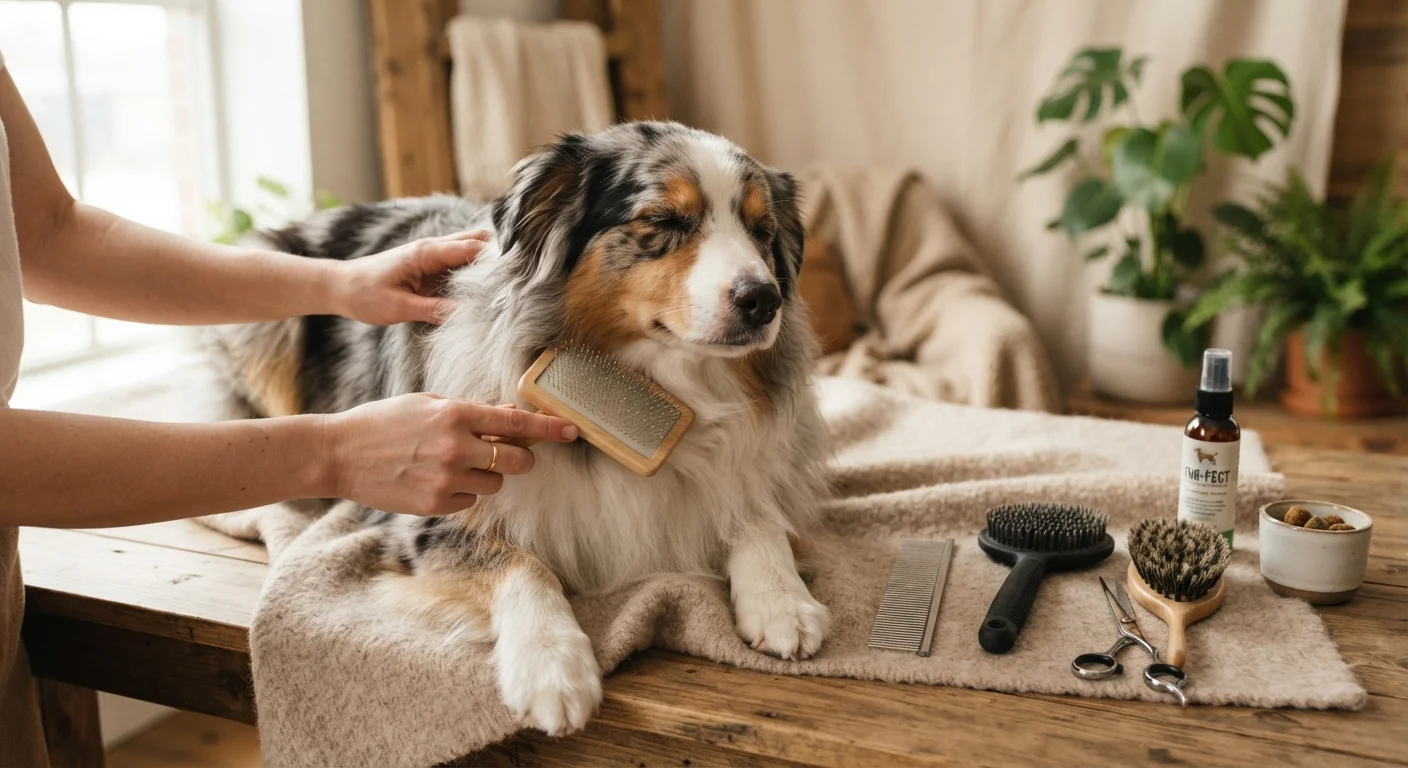
Siberian Huskies, Golden Retrievers, and Maine Coon cats carry a dense undercoat beneath a protective outer layer. During shedding seasons — typically spring and fall — this undercoat loosens in volume. An undercoat rake or de-shedding brush used two to three times per week (daily during heavy shedding) prevents the undercoat from compacting into mats. Importantly, double coats should never be shaved; the layered structure regulates body temperature in both heat and cold. For seasonal coat shifts and how to adapt your routine, see seasonal pet care adjustments.
Wire or Rough Coats
Terriers and some mixed breeds carry a coarse, textured outer coat that benefits from a technique called hand-stripping — where dead outer hairs are pulled rather than cut — to maintain proper texture. Clipping a wire coat softens it over time. Weekly brushing with a stiff bristle brush keeps the coat tidy between professional grooming sessions.
Curly and Wavy Coats
Poodles, Bichons, and Doodle-type mixes have continuously growing, low-shedding coats that mat quickly if not brushed every one to two days with a slicker brush and metal comb. Without consistent brushing, curly coats can develop pelting — a dense, tight matting close to the skin that may require a full shave-down by a groomer. Professional grooming every four to six weeks is standard for most curly-coated pets. For bathing frequency guidance by coat type, see how often pets actually need a bath.
Undercoat
The dense, soft layer of fur beneath a pet's visible outer coat. It provides insulation and is most prominent in double-coated breeds. Undercoats shed seasonally and require specific tools to manage effectively.
Slicker Brush
A flat or slightly curved brush with fine, short wire pins set close together. It is effective at detangling and removing loose hair from medium to long or curly coats.
Matting
The tangling and compacting of loose or shed hairs into dense clumps close to the skin. Mats can restrict circulation, hide skin infections, and cause significant discomfort if left unaddressed.
Hand-Stripping
A grooming technique used primarily on wire-coated breeds where dead outer hairs are manually pulled out rather than cut. It preserves the natural texture and color of the coat.
Pelting
A severe stage of matting in which the entire coat becomes one dense, solid mass against the skin. It typically requires a professional groomer to safely remove with clippers.
De-shedding Tool
A grooming instrument designed to reach through the outer coat and remove loose undercoat hair. Common examples include undercoat rakes and grooming blades suited for heavy-shedding breeds.
Building a Sustainable Grooming Routine
Regardless of coat type, grooming works best when it's introduced gradually and associated with calm handling. Short, positive sessions — especially with younger or anxious animals — build tolerance over time. Nail trimming, ear checks, and dental hygiene should be folded into your regular grooming routine; these are not optional extras. If nail care has been stressful or inconsistent, where nail trimming goes wrong offers practical guidance on common mistakes and how to correct them.
If you notice sudden coat changes — excessive shedding outside shedding season, patches of hair loss, a dull or greasy texture, or persistent skin flaking — consult your veterinarian before adjusting grooming products or frequency. These changes can indicate nutritional gaps, allergies, hormonal imbalances, or parasites that grooming alone won't resolve.
This article is for general informational purposes only and is not a substitute for veterinary advice. Always consult a qualified veterinarian or professional groomer for guidance specific to your pet's health and coat condition.