

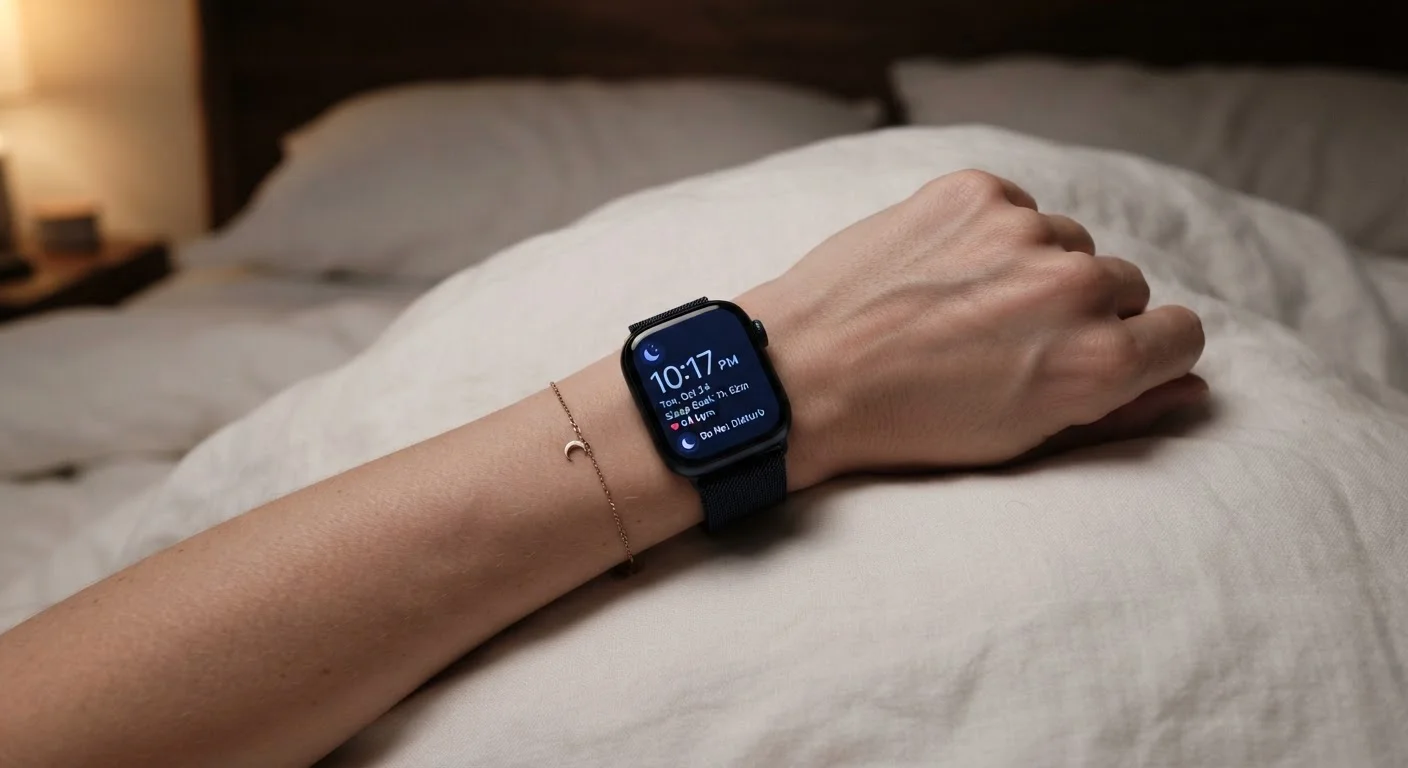
Key Takeaways
- Fit and placement directly affect sensor contact quality and the reliability of your sleep readings.
- Accurate personal profile data — age, weight, and biological sex — helps algorithms interpret raw sensor signals correctly.
- Keeping firmware and companion apps updated ensures you benefit from the latest sleep-detection improvements.
- A consistent sleep schedule gives your device more reliable baseline data to work with over time.
- Sleep scores are estimates, not clinical diagnoses — interpret trends rather than individual nightly numbers.
Why Wearable Sleep Data Isn't as Precise as It Looks
Most wearables estimate sleep stages using a combination of heart rate variability, movement data from accelerometers, and skin temperature — not the brainwave measurements (EEG) used in clinical sleep studies. The result is a useful approximation, but one that carries real uncertainty. Understanding that gap helps you use the data more wisely.
Before worrying about accuracy, confirm your device is properly configured. Our setup checklist for new wearables covers the foundational steps — health profile, firmware, and permissions — that affect every health metric your device reports, including sleep.
Consumer Wearables vs. Clinical Sleep Studies
Polysomnography (PSG) — the gold-standard clinical sleep study — measures brain electrical activity, eye movements, and muscle tone simultaneously. Consumer wearables use motion and optical heart rate data as proxies, which is a fundamentally different methodology. Research comparing the two generally finds wearables are reasonably accurate at distinguishing sleep from wakefulness, but less reliable at differentiating specific sleep stages like REM from light sleep. Treat your device's stage breakdown as a useful directional signal, not a clinical measurement.
Core Practices for More Reliable Readings
The following habits address the most common reasons wearable sleep data drifts from reality. Implement a few consistently and you'll typically see more stable, trustworthy trend lines within a couple of weeks.
Wear your device snugly, one finger-width above the wrist bone
Optical heart rate sensors need consistent skin contact to detect blood flow changes accurately. A loose or low-positioned device introduces motion artifacts that distort both heart rate and movement data, causing the algorithm to misclassify sleep stages.
Keep your personal health profile current and complete
Sleep algorithms use age, weight, and biological sex to calibrate heart rate thresholds and movement baselines. Stale or missing profile data causes the device to apply incorrect reference ranges, skewing stage detection.
Install firmware and app updates promptly
Manufacturers regularly refine their sleep-detection algorithms through software updates. Running outdated firmware means you may be missing corrections that improve stage accuracy or fix known sensor processing bugs.
Maintain a consistent bedtime and wake time
Many wearables use your historical sleep window to anchor their detection models. Highly variable schedules make it harder for the device to identify when you actually fell asleep versus when you were lying still while awake.
Charge the device before bed rather than overnight
A wearable removed during sleep produces no data for those hours, creating gaps that inflate apparent wake time and distort your sleep efficiency score. Charging in the evening preserves full-night tracking.
Quick Wins You Can Apply Tonight
You don't need to overhaul your entire routine to improve data quality. A handful of immediate changes can make a noticeable difference starting with your next reading.
For broader context on what your device's health metrics actually mean — and where they reliably fall short — see our guide on interpreting smartwatch health data.
Reading Your Data the Right Way
Even well-collected sleep data requires careful interpretation. A single poor night's reading may reflect a sensor contact issue, an unusual sleeping position, or simply the algorithm's limitations — not a meaningful health signal. Focus on weekly and monthly trends rather than reacting to one-night outliers.
~80%
Wearable accuracy detecting sleep vs. wake
Multiple peer-reviewed studies comparing consumer wearables to polysomnography suggest devices detect sleep versus wakefulness with roughly 80% accuracy, though stage-specific accuracy is considerably lower.
2–4 weeks
Time for trend data to become meaningful
Most sleep researchers suggest examining at least two to four weeks of consistent wearable data before drawing conclusions about your sleep patterns.
It's also worth noting that setup errors outside of sleep tracking can quietly corrupt related readings. Common pitfalls are covered in detail in wearable setup mistakes that undermine your health data.
This article is for general informational purposes only and does not constitute medical advice. If you have concerns about your sleep health, consult a qualified healthcare professional.