

Key Takeaways
- Sleep mechanics — friction, pressure, and moisture loss — directly affect hair strand integrity.
- Silk or satin pillowcases meaningfully reduce friction-related breakage compared to cotton.
- Protective styles worn overnight can help, but excessive tension may cause long-term damage.
- Leave-in treatments and overnight masks vary widely in effectiveness depending on hair type.
- Consistent sleep quality influences the hormones and circulation that support scalp health.
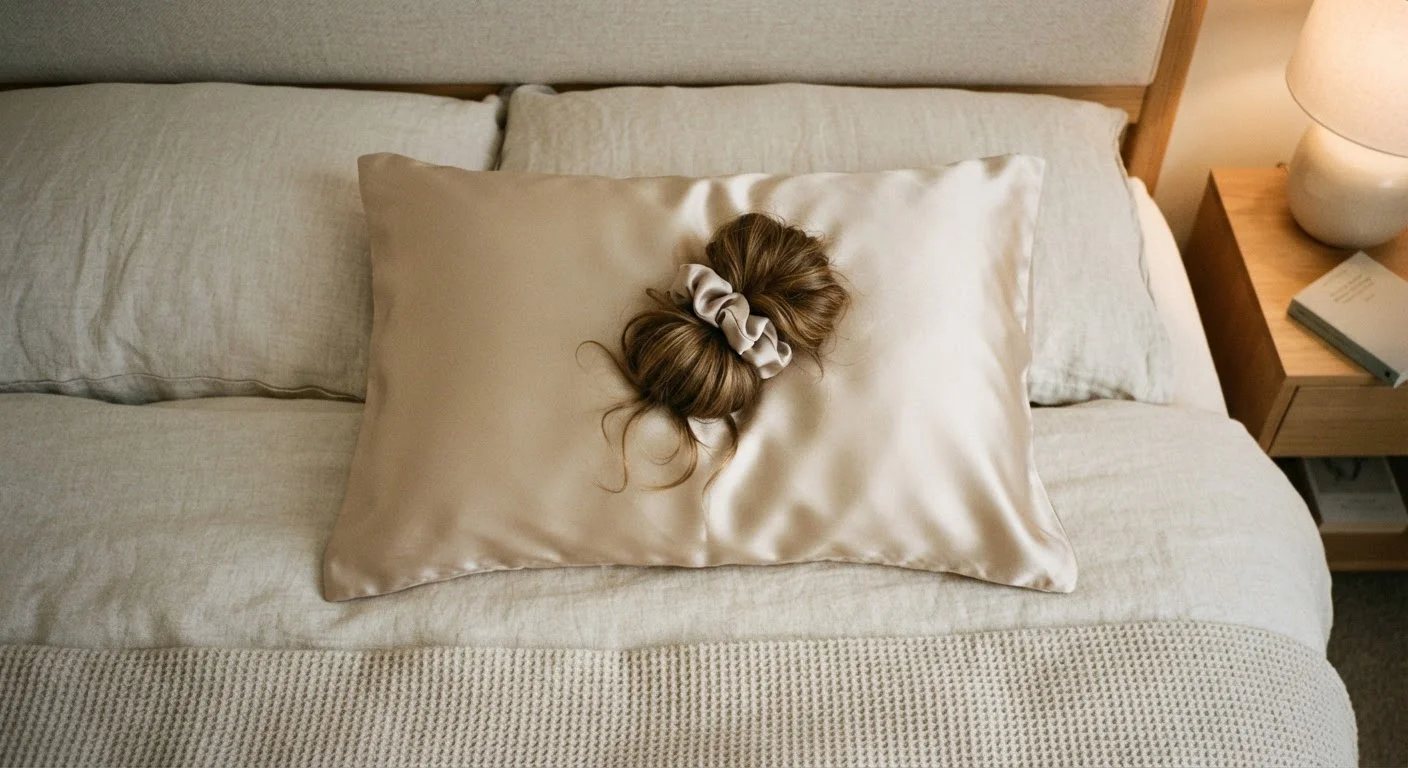
Silk pillowcases measurably reduce hair friction
Studies comparing textile surfaces show that smoother fabrics generate less mechanical force against hair strands, helping preserve the cuticle layer that governs shine and porosity.
Protective styles limit overnight tangling and breakage
Containing hair in a loose style prevents strands from rubbing against each other and the pillow, reducing the mechanical damage that accumulates over hundreds of nights.
Leave-in treatments can improve moisture retention
Applying a lightweight conditioner or sealing oil before sleep gives hair extended contact time with hydrating ingredients — particularly beneficial for high-porosity or chemically treated hair.
Consistent habits reduce morning detangling trauma
Less friction and containment during sleep means fewer knots to work through in the morning, cutting down on the forceful brushing that is a common source of breakage.
Low cost relative to other hair care interventions
A satin pillowcase or a silk bonnet is a one-time, inexpensive purchase that pays ongoing dividends — no salon visit or recurring product spend required.
Overnight masks rarely outperform standard conditioning
Most conditioning ingredients penetrate the hair shaft within 20–30 minutes; extended overnight contact offers diminishing returns for the majority of product formulas currently on the market.
Tight protective styles create traction stress
Braids, buns, or ponytails worn too tightly night after night place sustained tension on follicles, which over time can contribute to traction-related hair thinning along the hairline or parts.
Heavy product buildup can irritate the scalp
Applying rich butters or oils nightly near the scalp without adequate cleansing can block follicular openings and create an environment that is uncomfortable or counterproductive for scalp health.
Routine benefits are incremental, not transformative
Nighttime habits improve hair condition gradually over weeks and months — they won't reverse existing damage to the hair shaft, which is non-living tissue that cannot repair itself from within.
Our Verdict
Nighttime hair care is neither a miracle solution nor marketing hype — it occupies practical middle ground. Reducing friction, retaining moisture, and protecting vulnerable strands during sleep are habits with genuine, cumulative benefits. However, the impact of overnight treatments is more modest and formula-dependent than marketing often suggests.
Anyone experiencing breakage, dryness, or tangles will benefit most from refining their nighttime hair routine, particularly those with textured, color-treated, or chemically processed hair.
What Sleep Actually Does to Your Hair
While you sleep, your hair is exposed to several physical forces that can quietly erode its condition over time. Friction is the primary culprit: tossing and turning against a rough pillowcase surface repeatedly lifts and roughens the hair's outer cuticle layer. A raised cuticle makes strands more prone to tangling, frizz, and mechanical breakage — none of which require a dramatic single event to accumulate.
Moisture is also at stake. Cotton pillowcases are absorbent by design, which means they draw moisture from both skin and hair throughout the night. For already dry or porous hair, that overnight dehydration can compound the brittleness that develops from daytime heat styling or environmental exposure.
There's a broader connection here, too. Sleep quality shapes more than just your morning mood — it influences the hormonal environment and circulatory function that support follicle activity. Poor or disrupted sleep may subtly affect scalp health over the long term, though the relationship is complex and individual.
The Real Pros of a Nighttime Hair Routine
Building intentional sleep-time hair habits offers several documented or well-supported benefits, particularly for those prone to breakage or dryness.
Silk pillowcases measurably reduce hair friction
Studies comparing textile surfaces show that smoother fabrics generate less mechanical force against hair strands, helping preserve the cuticle layer that governs shine and porosity.
Protective styles limit overnight tangling and breakage
Containing hair in a loose style prevents strands from rubbing against each other and the pillow, reducing the mechanical damage that accumulates over hundreds of nights.
Leave-in treatments can improve moisture retention
Applying a lightweight conditioner or sealing oil before sleep gives hair extended contact time with hydrating ingredients — particularly beneficial for high-porosity or chemically treated hair.
Consistent habits reduce morning detangling trauma
Less friction and containment during sleep means fewer knots to work through in the morning, cutting down on the forceful brushing that is a common source of breakage.
Low cost relative to other hair care interventions
A satin pillowcase or a silk bonnet is a one-time, inexpensive purchase that pays ongoing dividends — no salon visit or recurring product spend required.
Protective styles deserve special mention. A loose braid, a low bun, or a pineapple updo keeps hair contained and reduces friction between strands during movement. For an in-depth look at balancing style and scalp safety, see protective styling principles that genuinely preserve hair.
The Limitations Worth Knowing
Nighttime routines carry real limitations that are often glossed over in product marketing. Understanding these helps set realistic expectations.
Overnight masks rarely outperform standard conditioning
Most conditioning ingredients penetrate the hair shaft within 20–30 minutes; extended overnight contact offers diminishing returns for the majority of product formulas currently on the market.
Tight protective styles create traction stress
Braids, buns, or ponytails worn too tightly night after night place sustained tension on follicles, which over time can contribute to traction-related hair thinning along the hairline or parts.
Heavy product buildup can irritate the scalp
Applying rich butters or oils nightly near the scalp without adequate cleansing can block follicular openings and create an environment that is uncomfortable or counterproductive for scalp health.
Routine benefits are incremental, not transformative
Nighttime habits improve hair condition gradually over weeks and months — they won't reverse existing damage to the hair shaft, which is non-living tissue that cannot repair itself from within.
It's also worth noting that overnight hair care addresses surface-level and structural strand concerns — it does not directly influence follicle biology or internal health. For a fuller picture of what hair condition can and cannot tell you, learn what your strands reveal about your body.
Building a Routine That's Actually Worth Your Time
The most effective nighttime hair habits tend to be simple, consistent, and tailored to your specific hair texture and condition. A few practical principles:
- Switch your pillowcase surface. A silk or satin pillowcase is one of the most evidence-supported changes for reducing overnight friction. It's also reversible — no commitment required.
- Use styles that contain without constricting. A loose braid or scrunchie-secured pineapple is very different from a tight elastic at the nape. Tension held for eight hours, night after night, accumulates into traction stress on the follicle.
- Apply leave-in treatments strategically. If your hair is prone to dryness, a lightweight leave-in conditioner or hair oil applied before bed can help seal moisture — particularly on the mid-lengths and ends. Understand what oils actually do before committing to a nightly application.
- Keep it scalp-aware. Avoid heavy overnight products near the scalp if you're prone to buildup or scalp sensitivity, as occlusion for extended periods can affect the follicular environment.
Hair Type Changes What Works
Coarser, textured, or color-treated hair tends to be more porous and benefits more noticeably from moisture-sealing overnight habits. Fine or naturally oily hair may experience product buildup from the same regimen. There's no universal overnight routine — consider your own hair's porosity, texture, and condition when deciding which elements to adopt.
These habits connect directly to broader grooming consistency. Everyday grooming practices that are small individually can compound into meaningful results over months.
This article is for general informational purposes only and is not a substitute for advice from a licensed dermatologist or trichologist. If you're experiencing significant hair loss, scalp changes, or other concerns, consult a qualified healthcare professional.