

Key Takeaways
- Dogs pull on the leash because of instinct and learned reinforcement, not stubbornness or dominance.
- Every time a dog pulls and still moves forward, that behavior is reinforced.
- Consistent loose-leash training, not punishment, is the approach supported by behavioral science.
- Managing the environment during training prevents the dog from rehearsing the unwanted behavior.
- Most dogs can learn to walk politely on a leash at any age with patient, structured practice.
Leash Pulling
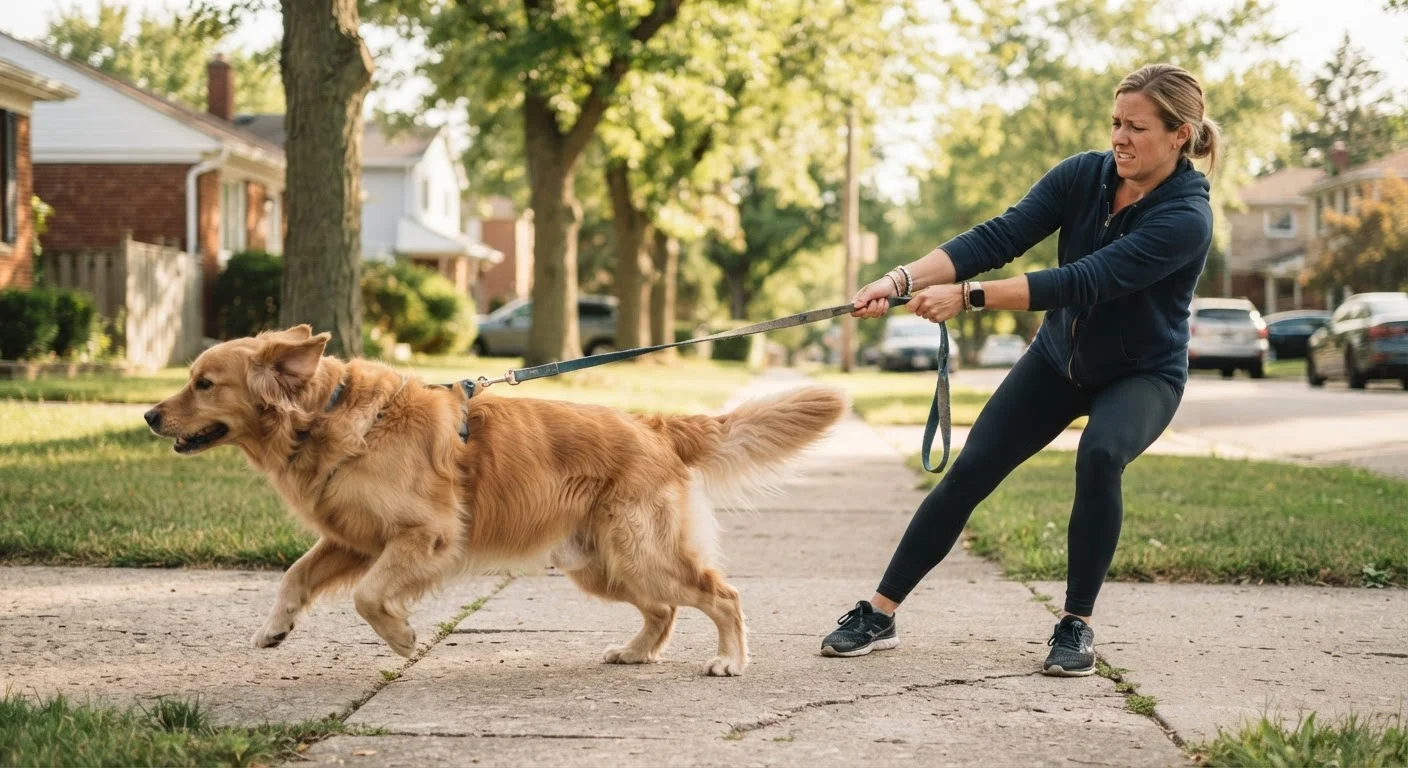
Leash pulling occurs when a dog moves ahead of or away from its handler with enough force to create tension in the leash. It's not a sign of dominance or defiance — it's typically the result of natural canine instincts combined with unintentional reinforcement by the owner. Dogs pull because, in their experience, pulling forward gets them where they want to go.
Behaviorally, leash pulling is maintained by negative reinforcement — the dog pulls, the leash tension eases as the owner follows, and the pulling behavior is strengthened through that release.
The Instinct Behind the Pull
Dogs experience the world primarily through smell. When a dog steps outside, it encounters an overwhelming cascade of scent information — who passed by, what they ate, where a squirrel ran twenty minutes ago. That olfactory pull toward the environment is biological, not behavioral defiance.
Dogs also naturally move faster than humans. Their comfortable trotting pace often exceeds a leisurely human walk, meaning even a relaxed dog may drift ahead simply because of gait differences. Add in excitement about the outdoors, and forward momentum becomes the default.
None of this is a dog attempting to dominate or control the walk. Dominance-based explanations for leash pulling have been largely discredited by contemporary animal behavior research. The dog isn't power-hungry — it's just very interested in what's ahead.
Breed Tendencies Affect Baseline Drive
Certain breeds were selectively developed for work that requires pulling — sled dogs, draft breeds, and some terriers bred to follow scent with intensity. These dogs are not 'worse' at leash manners; they simply have a higher baseline drive that requires thoughtful management and more consistent practice. Knowing your dog's breed history helps set realistic expectations.
How Pulling Becomes a Habit
The mechanism that turns an instinct into a persistent habit is straightforward: reinforcement. Each time a dog pulls forward and the owner follows — even reluctantly — the dog learns that pulling works. The reward isn't food or praise; it's simply getting where the dog wants to go.
Behaviorally, this is a form of negative reinforcement: the tension in the leash is aversive, and when the owner walks forward, that tension releases. The dog's pulling behavior is strengthened by the relief of tension, not by any deliberate reward from the owner.
This cycle can build quickly. A puppy that pulls slightly during its first few walks may be pulling with full body weight within weeks if the pattern goes unaddressed. The longer the behavior is rehearsed, the more established it becomes — which is why early, consistent training matters.
~80%
Dog owners who cite leash pulling as a top concern
Surveys of dog owners consistently rank leash pulling among the most common and frustrating day-to-day behavior challenges, according to veterinary behavior literature.
4–8 weeks
Typical early improvement window with consistent training
Certified professional dog trainers generally report that owners who apply loose-leash techniques consistently begin seeing meaningful change within this window, though full reliability takes longer.
What Effective Training Actually Looks Like
The behavioral science is clear: punishment-based approaches to leash pulling — including collar corrections or harsh verbal reprimands — do not address the underlying motivation and can increase anxiety and reactivity. Positive reinforcement methods are consistently supported by the research for modifying leash behavior.
The core principle of loose-leash training is simple: forward movement only happens on a loose leash. The moment tension occurs, the handler stops — or changes direction — removing the reward (forward progress). When the dog returns to the handler's side and the leash goes slack, movement resumes and the dog is rewarded, often with a treat or calm praise.
Key practices include:
- Start in low-distraction environments — a quiet yard or an empty sidewalk — before moving to busier settings.
- Keep sessions short: five to ten minutes of structured practice is more effective than a single long, frustrating walk.
- Reward frequently for check-ins — moments when the dog looks at the handler voluntarily.
- Manage the environment between sessions so the dog isn't rehearsing pulling when training isn't happening.
Weaving these moments into daily routines accelerates progress without requiring dedicated formal sessions at every walk.
Reward the Check-In, Not Just the Heel
Many owners wait for perfect heel position before rewarding. In practice, reinforcing any moment the dog voluntarily glances back at you — called a 'check-in' — builds the habit of keeping attention on the handler during walks. Start there, and formal heel position can follow naturally.
Reading Your Dog During Walks
Leash behavior rarely exists in isolation. A dog that lunges and pulls toward other dogs may be displaying frustration or excitement — or it may be showing early signs of leash reactivity, a pattern that benefits from early intervention. Understanding what your dog is communicating matters.
Body language cues — tail position, ear set, muscle tension — give real-time information about the dog's emotional state during a walk. A dog pulling with a loose, waggy body is in a very different state than one pulling with a stiff posture and fixed gaze.
If a dog's pulling is accompanied by intense fixation, lunging, barking, or apparent fear, the issue may go beyond simple leash manners. In those cases, consulting a certified applied animal behaviorist or a veterinary behaviorist is worth considering. General training tips are a starting point, not a substitute for professional assessment of complex behavior.
This article is for general informational and educational purposes. For concerns about your dog's specific behavior or health, consult a qualified veterinary or behavioral professional.