

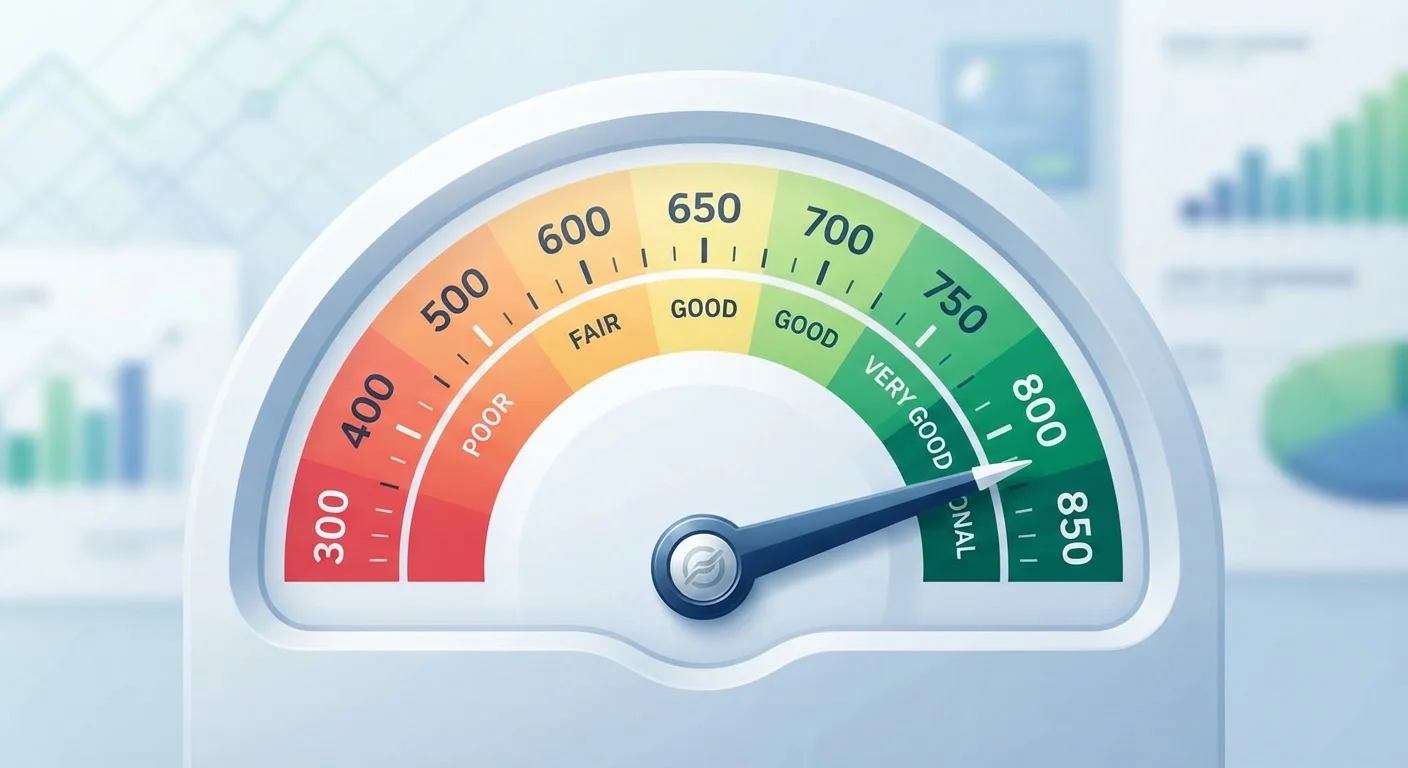
Key Takeaways
- Payment history is the single largest factor in most credit scoring models, accounting for roughly 35% of a FICO Score.
- Credit utilization — how much of your available credit you use — typically makes up about 30% of your score.
- A longer credit history generally helps your score, while opening many new accounts in a short period can hurt it.
- Different scoring models exist; a score from one model may differ from another even when using the same credit data.
- Checking your own credit score does not lower it — only hard inquiries from lenders can have that effect.
- Your score is a snapshot in time and can change month to month as your credit activity updates.
Credit Score
A credit score is a three-digit number, typically ranging from 300 to 850, that summarizes how reliably a person has managed borrowed money over time. Lenders use it to quickly estimate the likelihood that a borrower will repay a new debt as agreed. The higher the score, the lower the perceived risk to a lender.
The most widely used scoring model in the US is the FICO Score, developed by Fair Isaac Corporation. VantageScore is another common model. Both use similar inputs but may weight factors differently, so scores can vary slightly between models.
Why Lenders Care About a Three-Digit Number
When you apply for a loan, a credit card, or even an apartment, the lender or landlord needs a fast, standardized way to assess financial risk. A credit score provides exactly that: a single number distilled from years of borrowing behavior. Instead of reading through every line of your credit history manually, a lender can check your score and get a statistically grounded estimate of how likely you are to miss a payment in the next 24 months.
It is important to understand that a credit score does not measure your income, your net worth, or your overall financial health. It measures one specific thing — credit risk as predicted by past credit behavior. Someone earning a modest salary with consistent on-time payments may score higher than a high earner with a history of missed bills. For a fuller picture of what sits behind the score, see our plain-language walkthrough of your credit report.
≈35%
Weight of payment history in FICO Score
According to FICO's published scoring breakdown, payment history is the single largest factor in calculating a standard FICO Score.
300–850
Standard FICO Score range
FICO Scores span this range, with higher scores indicating lower predicted credit risk to lenders.
7 years
How long most negative items remain on report
Under the Fair Credit Reporting Act, most derogatory marks such as late payments and collections can stay on a credit report for up to seven years.
The Five Factors That Build Your Score
Under the FICO model — the most widely referenced in US lending — five categories of information feed into your score. Understanding each one helps you see which actions move the needle most.
- Payment history (≈35%): Whether you pay on time is the heaviest factor. A single 30-day late payment can meaningfully lower a score, especially if the history was previously clean.
- Amounts owed / credit utilization (≈30%): This measures how much of your available revolving credit you are currently using. Using a large proportion of your credit limits signals higher risk. Credit utilization deserves a closer look because many borrowers underestimate how quickly a high balance can drag a score down — even if they pay in full each month.
- Length of credit history (≈15%): Older accounts and a longer average account age generally help. This is why closing an old, unused card can sometimes reduce your score.
- Credit mix (≈10%): Having a variety of account types — revolving credit such as cards, and installment loans such as auto or student loans — can modestly benefit your score.
- New credit / recent inquiries (≈10%): Applying for several new accounts in a short window can signal financial stress to lenders. Each application typically triggers a hard inquiry, which can cause a small, temporary dip.
For plain definitions of terms like hard inquiry, charge-off, and utilization, our credit and debt glossary is a useful reference.
Keep Utilization Below 30% for Best Results
A common guideline is to keep your credit utilization ratio below 30% on each individual card and across all cards combined. Some scoring experts suggest that borrowers with excellent scores tend to use even less — around 10% or below. You can lower your utilization by paying down balances before the statement closing date, since that is typically when the balance is reported to the bureaus.
Common Misunderstandings About Credit Scores
Several persistent myths lead people to make decisions that either fail to help their score or actively harm it. For a detailed breakdown, our article on common credit score myths separates fact from fiction. Two of the most consequential misconceptions are worth addressing here:
- Carrying a balance does not help your score. Paying your full statement balance each month demonstrates responsible use without the cost of interest. The scoring model sees utilization, not whether you carry debt month to month.
- Checking your own score does not hurt it. When you view your own score — through a bank portal, a credit bureau, or a consumer service — it is recorded as a soft inquiry, which has no effect on your score. Only hard inquiries initiated by lenders can cause a small, temporary decrease.
Scores Vary by Model and Bureau
It is normal to see different credit scores on different platforms. A score pulled using the FICO 8 model from Experian will differ from one pulled using VantageScore 3.0 from TransUnion — even if your underlying credit behavior is identical. When a lender tells you the score they used, ask which model and bureau so you can compare apples to apples.
How Scores Translate Into Real Financial Consequences
The practical stakes of a credit score extend well beyond whether a loan is approved or declined. Lenders use score tiers to set interest rates — borrowers with higher scores typically qualify for lower rates, while those with lower scores may be offered the same product at a significantly higher cost. Over the life of a mortgage or auto loan, that rate difference can translate into thousands of dollars in additional interest.
Beyond loans, scores can affect security deposits for apartments, and in some states employers in certain industries may review credit reports as part of background checks. Insurance underwriters in some states also use credit-based insurance scores — a related but distinct calculation — when setting premiums. Credit and financial decisions rarely exist in isolation; they can ripple outward into areas like choosing the right insurance coverage as well.