
Brake Maintenance Explained: Pads, Rotors, and the Sounds You Shouldn't Ignore

Key Takeaways
- Brake pads typically need replacement every 25,000–70,000 miles depending on driving habits and pad material.
- Squealing, grinding, or a pulsating pedal are warning signs that require prompt attention.
- Rotors can often be resurfaced rather than replaced, but only if enough material thickness remains.
- Delaying brake service turns a routine maintenance cost into a much larger repair bill.
- A qualified mechanic should inspect brakes if you're unsure about their condition.
Brake System Wear
Brake system wear refers to the gradual degradation of brake pads, rotors, and related components through repeated friction during stopping. Every time you press the brake pedal, friction material on the pads is consumed and rotors experience heat and mechanical stress. Recognizing the signs of wear — and acting on them promptly — is one of the most important things a driver can do for road safety.
Most passenger vehicles use disc brakes at all four wheels, though some older or economy models retain drum brakes at the rear. The principles of wear and warning signs differ slightly between these systems.
How Brake Pads and Rotors Actually Work
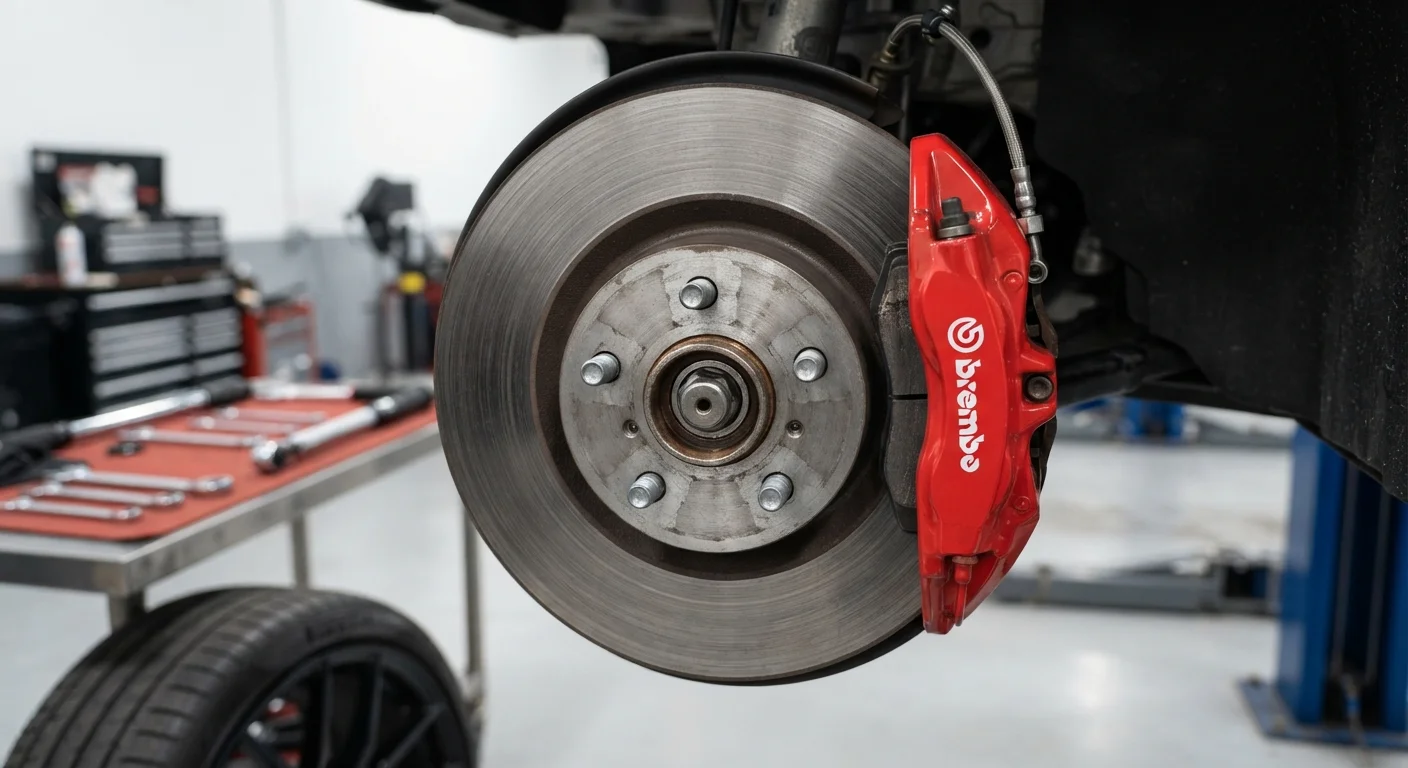
The disc brake system found on most modern vehicles operates on a straightforward principle: friction converts kinetic energy (motion) into heat, slowing the vehicle. When you press the brake pedal, hydraulic pressure forces a caliper to clamp brake pads against a spinning metal disc called a rotor. The resulting friction brings the vehicle to a stop.
Brake pads are the consumable element of this system. They're made of friction material — typically organic, semi-metallic, or ceramic compounds — bonded to a metal backing plate. Rotors are cast-iron or occasionally composite discs that must withstand enormous heat cycles over their lifespan. Neither component lasts forever, and each wears in a predictable pattern that drivers can learn to recognize.
Understanding this system is foundational to safe driving. Brakes are one of the few components where deferred maintenance carries immediate safety consequences, not just long-term mechanical ones.
25,000–70,000 mi
Typical brake pad lifespan range
Widely cited by automotive maintenance sources; actual lifespan depends heavily on driving habits, environment, and pad material.
3mm
Pad thickness that typically triggers replacement
Many mechanics and automotive guidelines recommend inspection or replacement when friction material reaches approximately 3mm remaining.
~30%
Increase in stopping distance with severely worn pads
General automotive safety guidance notes that heavily degraded pads can meaningfully extend stopping distances, though exact figures vary by vehicle and conditions.
Reading the Warning Signs
Your brake system communicates its condition through sound, feel, and — in many vehicles — warning lights. Learning to interpret these signals early can prevent minor wear from becoming a costly repair.
Sounds to take seriously
- Squealing or squeaking: A high-pitched squeal when braking is often the wear indicator — a small metal tab built into the pad that contacts the rotor when friction material gets thin. This is the system's designed early warning.
- Grinding: A metal-on-metal grinding noise typically means pads are fully worn through and the backing plate is contacting the rotor directly. At this stage, rotor damage is likely occurring with every stop.
- Clicking or rattling: Can indicate a loose brake pad or caliper hardware — worth investigating promptly.
Sensations to notice
- Pedal pulsation: A pulsating or vibrating brake pedal often points to rotor thickness variation (commonly called warping), causing uneven contact as the disc rotates.
- Soft or spongy pedal: A pedal that sinks unusually far before braking engages may indicate low brake fluid or air in the hydraulic lines — a situation requiring immediate professional attention.
- Pulling to one side: If the car drifts left or right under braking, a sticking caliper or uneven pad wear may be the cause.
Make Brake Checks Part of Tire Rotations
Tying brake inspections to your tire rotation schedule — typically every 5,000–7,500 miles — ensures your brake system gets regular attention without requiring a separate service visit. Most technicians can visually assess pad thickness and rotor condition while wheels are already off. See tire rotation basics for more on that interval.
Pad Lifespan, Rotor Service, and What Affects Both
Brake pad lifespan is highly variable. The commonly cited range of 25,000–70,000 miles reflects real-world differences driven by:
- Driving environment: City driving with frequent stops consumes pads significantly faster than steady highway miles.
- Pad material: Ceramic pads tend to last longer and produce less dust than semi-metallic options, though they may not perform as well under extreme heat.
- Driver behavior: Drivers who brake late and hard wear pads faster than those who anticipate stops and brake gradually.
- Vehicle weight: Heavier vehicles — trucks, SUVs, or vehicles carrying cargo — generate more braking force, accelerating pad wear.
Rotors have their own service considerations. Unlike pads, rotors don't always need full replacement when they show wear. A mechanic can measure rotor thickness against the manufacturer's minimum specification and, if adequate material remains, machine the surface smooth — a process called resurfacing or turning. However, repeated resurfacing removes material, so there's a finite number of times this is possible before replacement is necessary.
Neglecting brake service is one of the clearest examples of how skipping routine maintenance creates larger expenses. Worn pads that gouge rotors turn a straightforward pad swap into a full rotor replacement job. Brakes also fit naturally into your broader vehicle maintenance schedule — tying inspections to other service intervals makes it easier to stay consistent.
When to DIY and When to Call a Mechanic
Brake pad replacement is within the skill range of many home mechanics with basic tools, a vehicle jack, jack stands, and a willingness to follow instructions carefully. Resources like the factory service manual for your specific vehicle provide the correct torque specifications and procedures.
That said, several situations call for a qualified professional rather than a DIY approach:
- Any symptom involving the hydraulic system (spongy pedal, fluid leaks, ABS warning light)
- Uncertainty about whether rotors need resurfacing or replacement
- Brake pulling or uneven stopping behavior, which may involve calipers or wheel bearings
- Rear drum brake service, which involves a more complex mechanism than disc brakes
If you're unsure, a visual inspection by a trusted shop — many of which offer free brake checks — can give you an objective assessment without any financial commitment. The real costs of car ownership almost always favor catching brake wear early, whatever path you take to address it.
This article provides general educational information about brake system maintenance and is not a substitute for professional mechanical advice. If you have concerns about your vehicle's brakes, consult a qualified mechanic.