

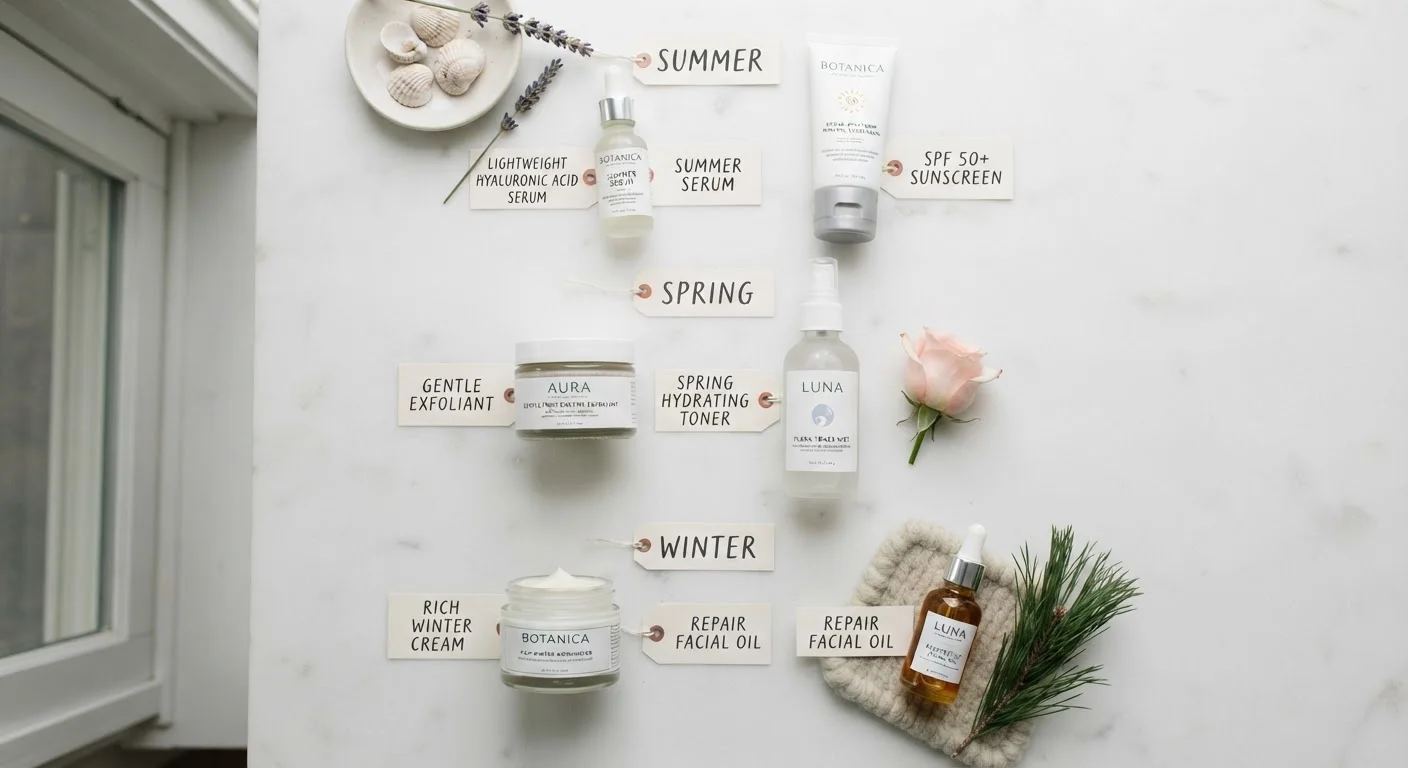
Key Takeaways
- Temperature and humidity shifts directly affect how much oil and moisture your skin retains.
- Sunscreen is a non-negotiable step in every season, not just summer.
- Exfoliation frequency should decrease in winter and increase cautiously in spring.
- Barrier repair is the central goal of fall and winter skincare transitions.
- A few targeted product swaps — not a full routine overhaul — are usually enough between seasons.
Why Skin Needs Change With the Seasons
Your skin is a living organ that responds continuously to its environment. When humidity drops in winter, the air pulls moisture from the outer skin layer, triggering tightness and flaking. When summer heat and humidity rise, sebaceous glands produce more oil, which can lead to congestion and breakouts. UV index peaks in summer but remains significant year-round — even on overcast days.
Understanding these environmental drivers helps you make smarter, more targeted adjustments. Rather than buying an entirely new product lineup every few months, most people only need to shift one or two steps in their existing routine. For a complementary look at seasonal transitions in another area of daily life, see seasonal wardrobe strategies.
90%
Visible skin aging attributed to UV exposure
According to research cited by the Skin Cancer Foundation, approximately 90% of visible skin aging is caused by sun exposure rather than intrinsic aging processes.
~40%
Drop in skin hydration in low-humidity environments
Studies on transepidermal water loss indicate that relative humidity below 40% measurably increases moisture evaporation from the skin's outer layers.
2 hrs
Recommended sunscreen reapplication interval outdoors
The American Academy of Dermatology recommends reapplying sunscreen every two hours during outdoor activity, or after swimming or sweating.
Spring: Reset and Renew
After months of heavy, protective products, spring is the time to lighten your routine without abandoning support. Rising temperatures mean your skin's natural oil production begins to increase, and the heavier balms of winter can start to feel occlusive or pore-clogging.
- Reintroduce gentle exfoliation. If you scaled back chemical exfoliants in winter, spring is a reasonable time to work them back in — slowly. Start with once weekly to avoid disrupting the skin barrier you rebuilt over colder months.
- Swap heavy creams for lighter moisturizers. Gel-cream hybrids or water-based lotions often perform well as temperatures climb. Look for humectant ingredients like hyaluronic acid or glycerin.
- Update your SPF. If your winter SPF was incorporated into a thick moisturizer, consider moving to a standalone broad-spectrum sunscreen as UV exposure increases.
Spring allergens can also trigger reactive or sensitized skin in people who don't typically deal with sensitivity. If your skin seems more irritated than usual in spring, simplifying your routine temporarily — removing actives and fragrance — can help. For ingredient-specific guidance, our skin concerns and ingredients reference is a useful companion resource.
Spring Is a Good Time for a Routine Audit
Pull out everything in your skincare rotation and check expiration dates — many active ingredients, including vitamin C serums and retinoids, degrade before the bottle is empty. Spring's longer daylight hours are a natural reset point to simplify and refresh what you're actually using.
Summer: Shield and Hydrate
Summer presents two competing skin challenges: excess oil production and dehydration. High temperatures cause perspiration, which can strip the skin of electrolytes and disrupt its natural pH, while air conditioning indoors creates a dry environment that quietly pulls moisture from skin throughout the day.
- Prioritize broad-spectrum SPF 30 or higher daily. UV exposure is the single most well-documented contributor to premature skin aging and skin cancer risk. Reapplication every two hours during outdoor exposure is the standard dermatological recommendation.
- Use a lightweight, non-comedogenic moisturizer. Even oily skin types need hydration — skipping moisturizer can prompt the skin to overproduce oil as compensation.
- Cleanse thoughtfully after sweating. A gentle, low-pH cleanser removes sweat and sunscreen without stripping the skin's acid mantle. Over-cleansing is a common summer mistake that leads to rebound oiliness.
In summer, apply your moisturizer within 60 seconds of cleansing — while skin is still slightly damp — to maximize humectant absorption before surface moisture evaporates.
Humectants like hyaluronic acid draw moisture from the environment or from the surface of the skin; applying to damp skin gives them more to work with.
If your skin feels congested in summer but not visibly oily, check your sunscreen — some chemical UV filters can contribute to clogged pores in combination with sweat and heat.
Switching to a mineral-only SPF (zinc oxide or titanium dioxide) is a common recommendation for acne-prone or congested skin types during high-heat months.
If you wear makeup during summer, look for formulas described as oil-free or non-comedogenic, and consider a setting spray with skin-conditioning ingredients to extend wear without layering on heavy product.
Fall: Repair and Transition
Fall is arguably the most important transitional season for skin. Summer UV exposure, heat, and chlorine or salt water can leave skin with lingering damage — uneven tone, compromised barrier function, or residual dryness. Fall is the ideal window to address this before harsher winter conditions set in.
Fall Is the Time to Book a Skin Check
End-of-summer is an ideal moment to schedule a full-body skin exam with a board-certified dermatologist, particularly after a season of increased UV exposure. Early detection of atypical moles or sun damage remains the most effective tool for managing skin cancer risk. Don't wait for visible changes to appear before consulting a professional.
- Introduce or increase retinoids carefully. Cooler, less sunny months are traditionally when dermatologists suggest starting or stepping up retinol use, since sun sensitivity is a known side-effect. Always pair retinoid use with daily SPF.
- Shift to a richer moisturizer. As ambient humidity begins to drop, barrier-supporting ingredients — ceramides, fatty acids, cholesterol — become more important. These help replenish the lipid layer that keeps moisture locked in.
- Don't abandon SPF. UV rays remain present even as daylight decreases. UVA rays, which penetrate clouds and glass, are consistent year-round and are primarily responsible for photoaging.
Winter: Protect and Nourish
Cold air holds less moisture than warm air, and indoor heating systems reduce humidity further. This combination creates optimal conditions for transepidermal water loss (TEWL) — the process by which moisture evaporates through the skin's outer layers. The result for many people is tightness, flaking, redness, and increased sensitivity.
- Use an occlusive or emollient-rich moisturizer. Ingredients such as shea butter, squalane, and plant-based oils form a protective layer that slows TEWL. Apply to slightly damp skin after cleansing to trap surface moisture.
- Reduce active ingredient frequency. Retinoids, AHAs, and BHAs can increase dryness and sensitivity in winter. Many people benefit from scaling back to once or twice weekly rather than daily use.
- Consider a humidifier indoors. Adding moisture back to your indoor environment supports the skin's natural barrier function, particularly during sleep when skin repair processes are most active.
For deeper context on how lifestyle factors connect to skin and overall wellness, our guide on hair and skin wellness across your whole life explores related biology and self-care principles.
Don't Layer Too Many Actives in Winter
Using retinoids, AHAs, and BHAs together on already-compromised winter skin can accelerate barrier breakdown, leading to increased sensitivity, redness, and peeling. If your skin is feeling reactive, pare back to a single active ingredient and prioritize barrier repair before reintroducing others.
Year-Round Habits That Anchor Every Routine
Seasonal adjustments matter, but several foundational habits serve your skin regardless of the calendar. These are the non-negotiables that underpin every seasonal routine:
- Daily broad-spectrum sunscreen. No other single habit has stronger evidence behind it for long-term skin health.
- Consistent, gentle cleansing. Twice daily with a low-stripping formula supports the skin barrier in all conditions.
- Internal hydration. Adequate water intake supports the skin's ability to regulate itself, though it is not a substitute for topical moisturizer in very dry conditions.
- Sleep and stress management. Cortisol fluctuations from chronic stress are associated with increased oil production, inflammation, and impaired skin barrier repair — factors that can worsen in any season.
Seasonal skincare doesn't need to be complicated or expensive. Most adjustments come down to texture (lighter vs. richer), frequency (how often you use actives), and protection (SPF and barrier support). Building from a stable, consistent base makes adapting far more manageable.
Skin Concerns and Ingredient Reference
A lookup-style companion guide pairing common skin concerns — acne, hyperpigmentation, dryness, sensitivity — with the ingredients most associated with addressing each. Useful when evaluating seasonal product swaps.
American Academy of Dermatology — Sun Protection Guidelines
The AAD publishes free, evidence-based guidance on sunscreen use, UV exposure, and skin cancer prevention — a reliable reference for year-round SPF decisions.
Seasonal Wardrobe Transition Strategies
Adapting what you wear between seasons follows similar logic to skincare transitions. This practical guide covers layering and storage without a full wardrobe overhaul.
This article is for general informational purposes only and does not constitute medical or dermatological advice. Consult a licensed dermatologist or healthcare professional for guidance tailored to your specific skin concerns or conditions.