

Key Takeaways
- A budget is a forward-looking plan, not a ledger of past spending.
- Budgeting is for everyone — not just people in debt or with high incomes.
- A budget does not eliminate spending; it directs spending toward your priorities.
- Effective budgets are flexible and updated regularly as circumstances change.
- A budget only works if it reflects your real income and actual expenses.
Personal Budget
A personal budget is a written or recorded plan that maps your expected income against your planned spending over a set period — usually a month. It tells your money where to go before it arrives, rather than wondering where it went afterward. A budget is not a record of what you spent; it is a forward-looking decision about how you intend to spend.
In personal finance, a budget is sometimes called a "spending plan" or "cash flow plan" to emphasize that it is a proactive allocation tool, not simply an accounting document.
The Core Definition — and Why It's Misunderstood
When most people hear the word "budget," they picture restriction: no eating out, no fun, a spreadsheet full of guilt. That framing misses the point — and it's one reason so many people avoid budgeting altogether.
At its core, a personal budget is simply a plan for your money. It lists your expected income for a given period and assigns that income to specific categories of spending and saving before the period begins. The goal is intentionality — knowing what you plan to do with each dollar rather than reacting to a dwindling bank balance.
A budget is not:
- A record of what you already spent (that's expense tracking)
- A punishment for past financial mistakes
- A one-size-fits-all template
- Something only people in financial trouble need
Understanding what a budget actually is — and isn't — matters because the misconception is what stops people from starting. If you'd like to explore some of the most common myths around this topic, see our article on budgeting myths that keep people from starting.
Budgeting vs. Expense Tracking: A Key Distinction
Expense tracking — reviewing bank statements or using an app to categorize past spending — is a valuable habit and a useful input when building a budget. But tracking is backward-looking, while budgeting is forward-looking. Many people track without ever making a plan, which provides information but not direction. A budget uses that information to make intentional decisions about future spending.
What a Budget Actually Contains
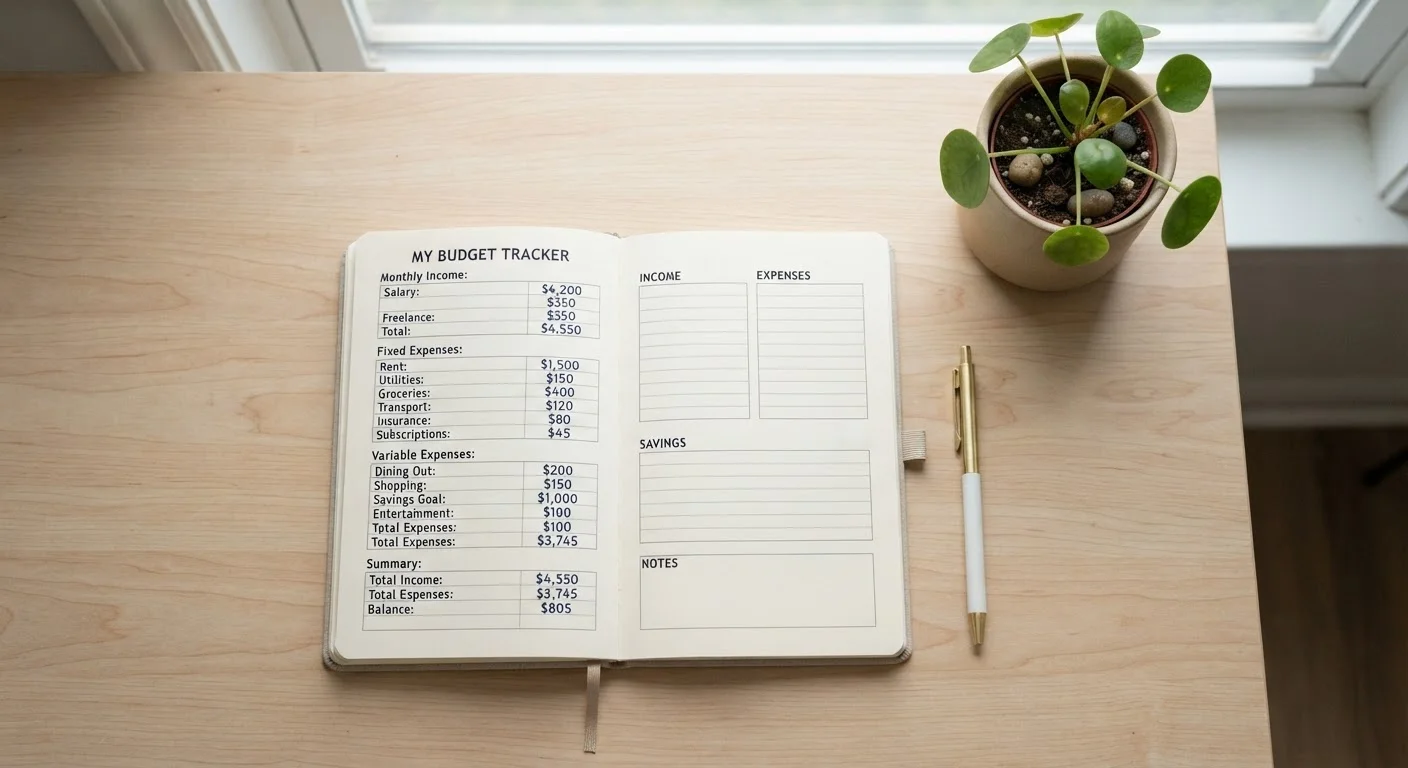
A functional personal budget has two fundamental components: income and expenses. Income includes every source of money coming in — wages, freelance income, rental income, government benefits, and so on. Expenses cover everything money goes toward, divided into categories that reflect how you actually live.
Most budgets organize expenses into broad groups:
- Fixed expenses — amounts that don't change month to month, like rent or a car payment
- Variable necessities — costs that fluctuate but are non-negotiable, like groceries or utilities
- Discretionary spending — choices, like dining out, subscriptions, or entertainment
- Savings and debt repayment — money set aside for the future or to reduce what you owe
The goal is for total planned spending plus saving to equal total income. If expenses exceed income in the plan, the budget gives you an opportunity to make deliberate trade-offs before a shortfall becomes a problem. For a detailed breakdown of what to include, see budget categories every household should account for.
~33%
US adults who use a detailed written budget
According to Gallup polling data, roughly one in three American adults report maintaining a detailed household budget, suggesting budgeting remains underutilized despite its broad benefits.
60%+
Americans living paycheck to paycheck
Multiple consumer surveys over recent years have consistently found that a majority of US adults report having little financial cushion between paychecks, highlighting the practical need for deliberate spending plans.
A Plan That Works With Your Life, Not Against It
One of the most important things to understand about budgeting is that it is a living document, not a fixed contract. A budget that was accurate in January may be completely wrong by April if your rent increases, your income changes, or an unexpected expense appears. Effective budgets are updated regularly.
This flexibility is also why the idea of a "strict budget" deserves nuance. Tight control over every spending category can build discipline — but it also carries real trade-offs in terms of flexibility and sustainability. Our article on the upsides and downsides of strict budgeting walks through both sides of that equation.
What matters most is that your budget reflects your actual income and real expenses — not an idealized version of your life. A budget built on wishful thinking doesn't help you; a budget built on honest numbers does.
Start Simple — One Month at a Time
If you've never budgeted before, don't try to plan an entire year at once. Begin with a single month: list your expected income, write down your known expenses, and assign the remainder to savings or discretionary spending. A simple starting budget that you actually use is far more valuable than a complex one you abandon.
Ready to put these ideas into practice? Our guide to personal budgeting from the ground up walks through every step for first-timers, and the complete budgeting framework covers the full lifecycle of a budget from setup to refinement.
This article is for general informational and educational purposes only and does not constitute personalized financial advice. For guidance specific to your situation, consider consulting a qualified financial professional.