
Collision vs. Comprehensive Auto Coverage: The Difference Matters More Than You Think

Key Takeaways
- Collision coverage pays for damage when your car hits — or is hit by — another vehicle or object.
- Comprehensive coverage applies to damage from events like theft, hail, fire, floods, and animal strikes.
- Both coverages are optional under state law but are typically required by lenders and lessors.
- Each carries its own deductible, which you pay before the insurer covers the remaining loss.
- Understanding which type applies helps you file the right claim and avoid unexpected gaps.
- Actual payout depends on your policy's terms, deductible amount, and the vehicle's value at the time of loss.
Option A
Collision Coverage
The coverage triggered by how your car moves.
Best for: Drivers who want protection when their vehicle is damaged in an accident involving another car or object.
Option B
Comprehensive Coverage
The coverage triggered by what happens around your car.
Best for: Drivers who want protection from theft, weather events, and other non-collision damage outside their control.
If you frequently drive in high-traffic areas or on busy roads
Collision Coverage
Accident risk is higher in dense traffic. Collision coverage addresses the most common source of vehicle damage in those conditions.
If you live in an area prone to severe weather, flooding, or wildlife
Comprehensive Coverage
Hailstorms, falling trees, flash floods, and deer strikes are non-collision events that only comprehensive coverage addresses.
If your vehicle is financed or leased
Both Collision and Comprehensive
Most lenders and leasing companies contractually require both coverages to protect the asset until it is fully paid off.
If you drive an older vehicle with a low market value
Evaluate both carefully before purchasing
When a vehicle's value is low, the potential payout after a deductible may not justify the added premium cost for either coverage type.
The Core Distinction: Motion vs. Environment
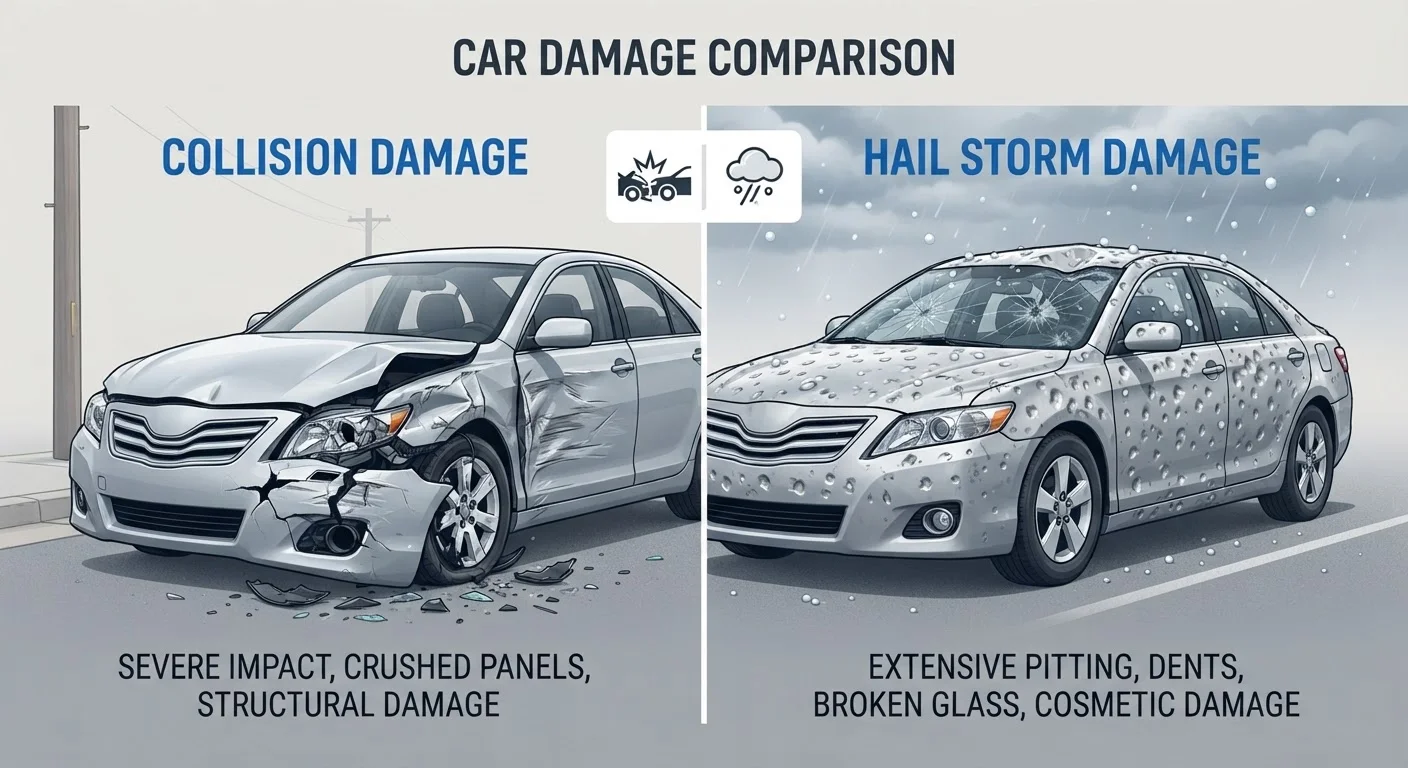
Most drivers know they need some auto insurance, but the line between collision and comprehensive coverage trips up even experienced policyholders. The simplest way to keep them straight: collision is about how your car moves; comprehensive is about what happens to your car while it's just sitting there — or while forces outside your control act on it.
Collision coverage responds when your vehicle physically collides with something — another car, a guardrail, a telephone pole, or even a ditch if you roll into one. The common thread is impact involving your vehicle's movement.
Comprehensive coverage, by contrast, responds to damage caused by events largely outside your control that are unrelated to a collision. Think fire, theft, vandalism, hailstorms, flooding, a tree limb falling on your roof, or a deer darting into your path. If the damage didn't involve your car colliding with something, it almost certainly falls under comprehensive — if you have it.
For a broader look at how these terms fit into the full picture of auto insurance, see the field guide to auto insurance coverage types.
| Criterion | Collision Coverage | Comprehensive Coverage |
|---|---|---|
| What triggers it | Your car strikes or is struck by an object or vehicle | Non-collision events: theft, weather, fire, animals |
| Common examples | Rear-end accident, hitting a guardrail, rollover | Hail damage, car theft, flood, falling tree, deer strike |
| State law requirement | Not required by state law | Not required by state law |
| Lender/lessor requirement | Usually required when vehicle is financed or leased | Usually required when vehicle is financed or leased |
| Deductible applies | Yes — you choose the amount | Yes — separate deductible from collision |
| Payout basis | Actual cash value minus deductible | Actual cash value minus deductible |
| Driver fault relevance | Applies regardless of fault | Fault is generally not a factor |
Deductibles, Payouts, and What to Expect at Claim Time
Both collision and comprehensive are first-party coverages — meaning they pay for damage to your vehicle, not to another party's property. Each carries its own deductible: the amount you pay out of pocket before the insurer covers the rest. Common deductible levels run from $250 to $1,500, and choosing a higher deductible generally lowers your premium.
When you file a claim, the insurer assesses the damage and determines whether repair costs exceed the vehicle's actual cash value (ACV) — its market value at the time of loss, factoring in depreciation. If repair costs exceed ACV, the insurer may declare the vehicle a total loss and pay out ACV minus your deductible. Understanding how insurers value losses matters — the difference between actual cash value and replacement cost can significantly affect your settlement.
~$522
Average annual collision coverage premium (US)
According to the National Association of Insurance Commissioners (NAIC) data, collision tends to be the costlier of the two optional coverages.
~$168
Average annual comprehensive coverage premium (US)
NAIC data indicates comprehensive coverage is generally less expensive than collision, reflecting the lower statistical frequency of qualifying events.
6 in 10
Insured drivers who carry comprehensive coverage
The Insurance Research Council has found that a majority of insured US drivers opt to carry comprehensive coverage on their vehicles.
One practical note: collision claims can sometimes affect your premiums at renewal, depending on your insurer and fault determination. Comprehensive claims are generally viewed differently because the events are considered outside the driver's control — though this varies by insurer and policy. Always review your policy documents and consult your insurer or a licensed agent before assuming how a claim will be treated.
When You're Required to Carry Both — and When You Might Reconsider
Neither collision nor comprehensive is mandated by state law the way liability coverage is. However, if you finance or lease your vehicle, your lender or lessor almost certainly requires both as a condition of the loan or lease agreement. This protects their financial interest in the asset.
If you own your vehicle outright, the decision is yours. A common rule of thumb — though not a guarantee — is to weigh the annual premium cost for each coverage against your vehicle's current market value minus your deductible. When the potential payout becomes very small relative to what you're paying, some owners opt to drop one or both coverages. This is a personal financial calculation, not a universal prescription. A licensed insurance agent can help you think through the decision based on your specific situation.
It's also worth understanding that gaps can appear between coverage types if your assumptions about what's covered don't match your policy language. The article on gaps between insurance coverage types explores how these misalignments catch people off guard.
A Note on Overlapping Scenarios
Some situations can cause initial confusion about which coverage applies. For example, if you swerve to avoid a deer and hit a tree, that's typically a collision claim — not comprehensive — because your vehicle struck an object. But if the deer actually hit your car, it would likely be a comprehensive claim. When in doubt, describe the event precisely to your insurer or agent and let them guide the classification.
This article provides general educational information about auto insurance coverage types and is not personalized insurance, financial, or legal advice. Coverage terms, exclusions, and availability vary by insurer and state. Always read your actual policy documents and consult a licensed insurance agent or adviser for guidance specific to your situation.