

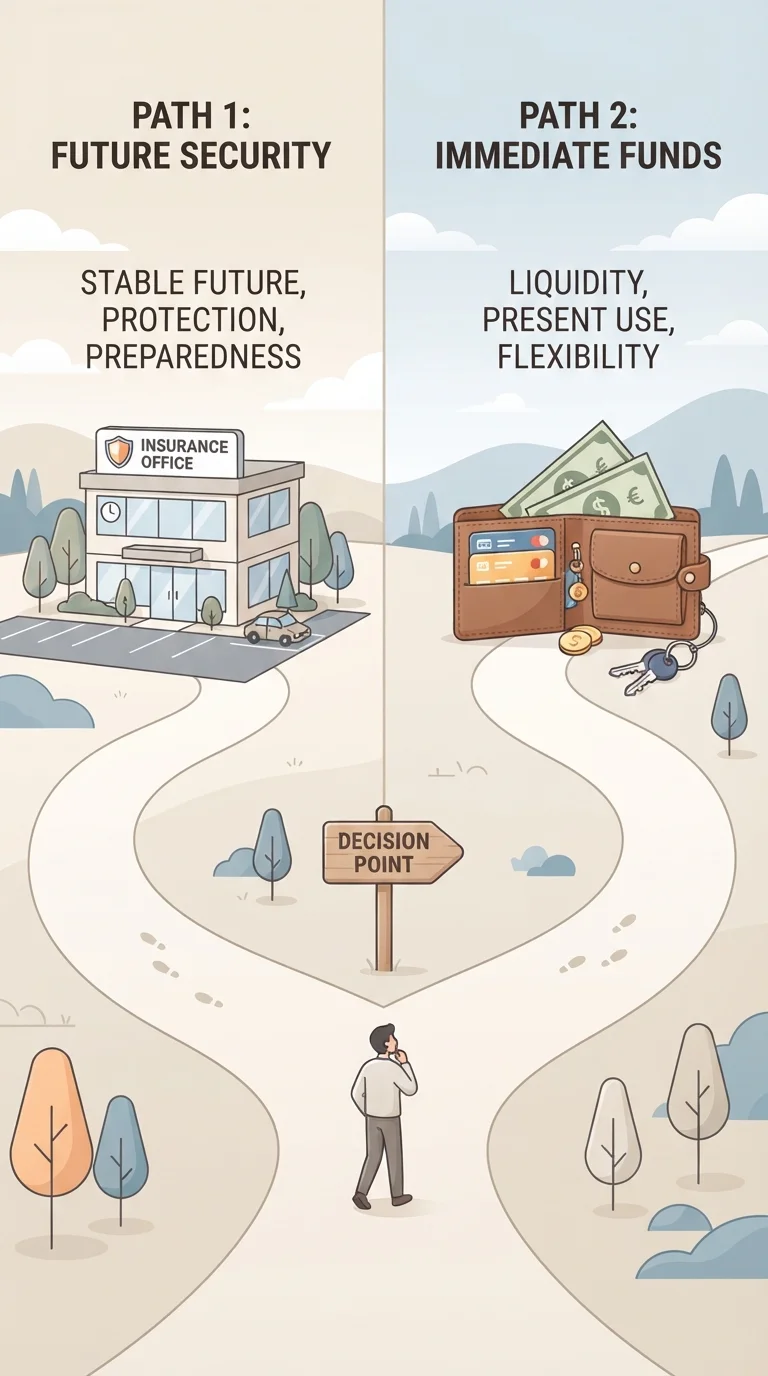
Key Takeaways
- Filing a claim can raise your premiums or trigger non-renewal, even when the claim is legitimate.
- If the repair cost is near your deductible, paying out of pocket often costs less overall.
- Multiple claims in a short period can significantly affect your insurability.
- Large or catastrophic losses almost always warrant a formal claim — that is what insurance is for.
- Your insurer may still note a reported incident even if no claim is ultimately paid.
- Consulting your policy and a licensed agent before deciding is always a sound first step.
Option A
Filing an Insurance Claim
The formal route that shifts financial burden to your insurer.
Best for: Large, unexpected losses that genuinely exceed your deductible and would strain your finances to absorb alone.
Option B
Paying Out of Pocket
The self-reliant approach that preserves your claims history.
Best for: Minor losses that are close to or below your deductible, where protecting your premium rate matters more.
If the loss amount is close to or below your deductible
Paying Out of Pocket
When the repair cost barely exceeds your deductible, you gain very little payout while still risking a premium increase. Absorbing the loss yourself is often the financially smarter move.
If the loss is large and would cause genuine financial hardship
Filing an Insurance Claim
Significant property damage, substantial medical costs, or major liability exposure are exactly the scenarios insurance is designed for. Filing protects your financial stability.
If you have already filed multiple claims in the past two to three years
Paying Out of Pocket
A pattern of claims can make you a higher-risk policyholder in your insurer's eyes, potentially leading to non-renewal. Paying directly for a smaller loss may protect your long-term coverage access.
If a third party may share liability for the loss
Filing an Insurance Claim
When another party's negligence contributed to your loss, your insurer can pursue subrogation — recovering costs on your behalf. Filing positions you to benefit from that process.
If you are uncertain about the full extent of the damage
Filing an Insurance Claim
Hidden or evolving damage — such as structural issues after a storm — can cost far more than an initial estimate. A formal claim keeps your coverage options open as the situation develops.
Why This Decision Is More Complicated Than It Looks
Most people assume that having insurance means they should use it whenever something goes wrong. That instinct is understandable — premiums are not cheap, and coverage exists for a reason. But the decision to file a claim carries consequences that extend well beyond the immediate payout. Understanding those consequences is the first step toward making an informed choice.
Insurers track your claims history. A single claim rarely causes major problems, but a pattern of claims — particularly frequent or small ones — can lead to premium increases at renewal or, in some cases, a decision by the insurer not to renew your policy at all. This does not mean you should avoid filing legitimate claims. It means the calculus involves more than just the dollar amount of the loss. See our common myths about insurance claims that can cost policyholders money for a fuller picture of how claims history works in practice.
| Criterion | Filing a Claim | Paying Out of Pocket |
|---|---|---|
| Immediate cost to you | Your deductible amount | Full repair or loss cost |
| Effect on premium | Possible increase at renewal | Generally no direct impact |
| Claims history impact | Recorded; may affect insurability | No claim added to record |
| Best suited for | Large or complex losses | Small losses near the deductible |
| Third-party recovery (subrogation) | Available through your insurer | You must pursue independently |
| Risk if damage worsens | Claim can be expanded | May be difficult to reopen |
The Math Behind the Decision
The most practical starting point is a straightforward comparison of numbers. Consider three figures: the total cost of the loss, your deductible, and a reasonable estimate of how much your premium could increase if you file.
If your deductible is $1,000 and the repair costs $1,200, your insurer would only pay $200 after the deductible — and that $200 benefit may be offset within a year or two if your annual premium rises by even a modest amount. In many cases, paying the $1,200 yourself preserves your claims record and costs you less over time.
Premium surcharges after a claim vary by insurer, policy type, state regulations, and the nature of the incident. You will not always know in advance how much a claim will affect your rate. Your policy documents and a licensed insurance agent are the best resources for understanding your specific situation — this article provides general education, not personalized advice.
~$500–$1,000
Typical auto insurance deductible range
According to the Insurance Information Institute, common auto collision deductibles fall between $500 and $1,000, which directly affects the break-even math for small claims.
Up to 40%
Potential premium increase after one at-fault claim
Rate increases after a claim vary widely by insurer and state, but industry analyses have found at-fault claims can raise auto premiums by 20% to 40% or more at renewal.
3 years
Typical look-back window for claims history
Most insurers review the prior three to five years of claims history when calculating premiums, meaning even older claims can influence your current rate.
Factors That Favor Filing a Claim
There are clear circumstances where filing makes unambiguous sense. The most important is scale: if a loss is large enough to create genuine financial hardship, that is precisely what insurance is designed to address. A roof destroyed by a hailstorm, a serious auto accident, or a significant liability judgment are not situations where paying out of pocket is a realistic or reasonable option for most households.
A second factor is complexity. When damage is difficult to assess — hidden water intrusion, structural issues, or injuries whose full impact is not yet known — filing a claim preserves your options. Once you decline to file and pay out of pocket, it can be difficult to reopen the matter later if the situation worsens. Our guide on documenting a loss before you call your insurer explains how to preserve your evidence regardless of which path you choose.
Third-party liability is another key factor. If someone else's negligence contributed to your loss, your insurer may be able to pursue that party through a process called subrogation — recovering costs that ultimately benefit you. That process only begins when a formal claim is filed. For a detailed look at how this works, see our overview of first-party vs. third-party claims.
One Important Caveat: Reporting vs. Filing
Many policyholders do not realize that simply reporting an incident to your insurer — even if no claim is ultimately paid — can be recorded in claims databases and may still affect your premium or insurability. This is worth understanding before you call your insurer just to ask a question about a potential claim.
The 'Inquiry' Problem: Know Before You Call
Some insurers log a contact as a potential claim in industry databases such as CLUE (Comprehensive Loss Underwriting Exchange) even when no payment is made. This record can be visible to other insurers when you shop for coverage. It does not happen in every case, and practices vary by insurer and state — but it is worth understanding before you pick up the phone. Asking your agent privately first is generally the lower-risk way to explore your options.
If you are unsure whether a loss warrants a claim, speaking with a licensed independent agent before contacting your insurer directly can help you think through the decision without creating a formal record. That step is especially useful when the loss falls in a gray zone — significant enough to consider filing, but small enough that you might prefer to pay directly. From there, what actually happens after you file an insurance claim provides a clear walkthrough of the process if you do decide to proceed formally.
This article is for general informational and educational purposes only and does not constitute personalized insurance, financial, or legal advice. Coverage terms, claim outcomes, and premium effects vary by policy, insurer, and state. Always read your actual policy documents and consult a licensed insurance professional before making decisions about your specific situation.