

Key Takeaways
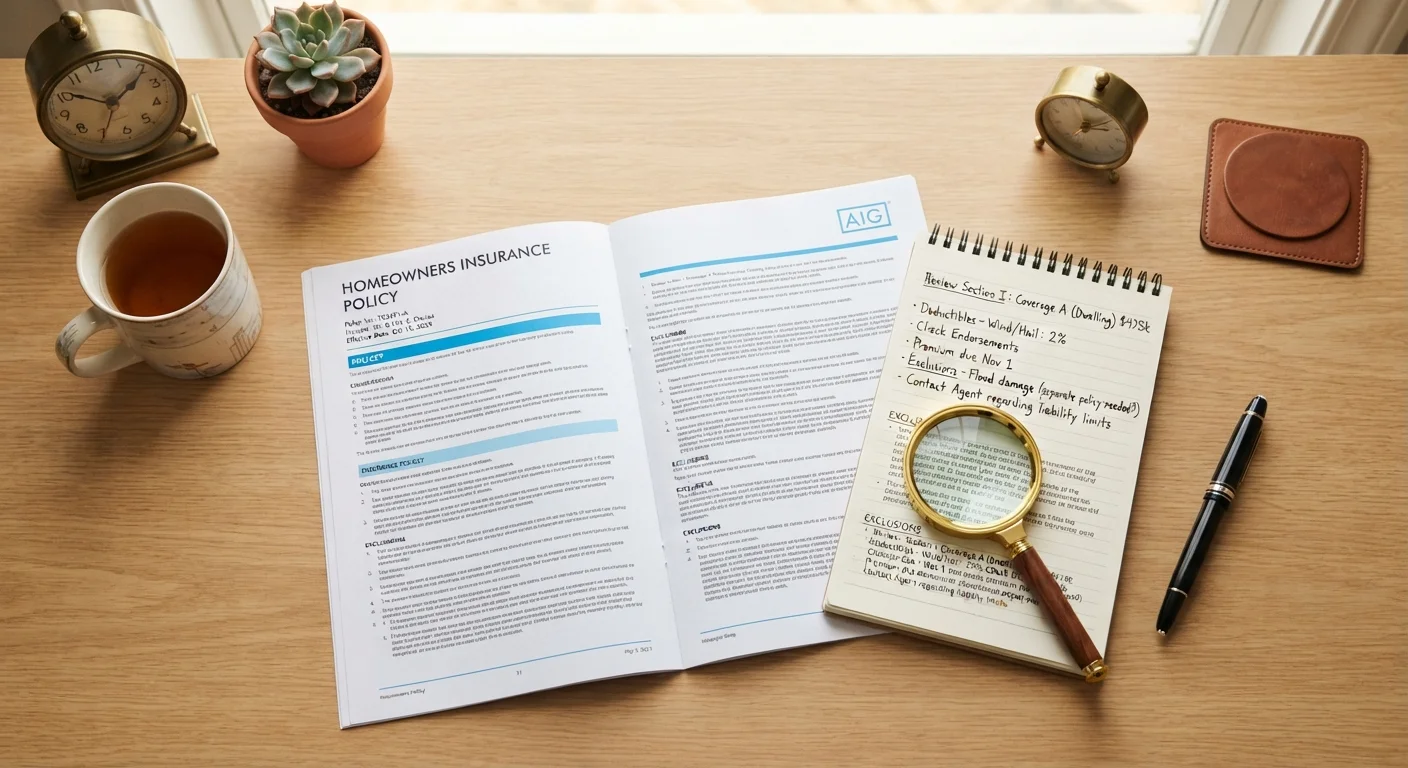
- Read the exclusions section first — it defines the real limits of your coverage.
- Your deductible should reflect what you could pay out-of-pocket without financial strain.
- Coverage limits and liability caps vary widely; matching them to your actual exposure matters.
- A policy's declarations page summarizes the most critical terms in one place.
- No single policy fits every situation — evaluate each offer against your specific circumstances.
Why Most People Evaluate Policies the Wrong Way
Most consumers compare insurance by leading with one question: what does it cost per month? Price matters, but using it as the primary filter is like judging a contract by its font size. A lower premium often reflects narrower coverage, higher cost-sharing, or exclusions that create real gaps — none of which are visible in the headline number.
A more reliable method is to evaluate any policy through four sequential lenses: what is actually covered, what is explicitly excluded, how costs are shared between you and the insurer, and whether the coverage limits match your realistic exposure. This framework applies whether you're reviewing health, auto, home, renters, or life insurance. For a foundational primer on how coverage works, see Insurance From Scratch.
“The time to read the fine print is before you sign, not after you file a claim. Most coverage disputes trace back to assumptions the policyholder made without checking the exclusions.”
— Insurance Basics Editorial Team, Consumer Insurance Education Publication
Step 1 — Start With the Exclusions, Not the Benefits
Insurance policies are written to define what the insurer will pay — but the more revealing section is what they won't. Exclusions are specific events, conditions, or circumstances the policy explicitly does not cover. They are usually listed after the coverage definitions and are often dense with policy-specific language.
Common exclusions to watch for include: flood damage in a standard homeowners policy, intentional acts in liability coverage, pre-existing conditions in certain supplemental health plans, and business-use exclusions in personal auto policies. Before you assess how generous a policy seems, confirm whether the risks most relevant to your life are actually covered. For a detailed walkthrough of policy document structure, Reading an Insurance Policy Without Getting Lost is a useful companion.
Use the Exclusions as a Shopping Checklist
When you find an exclusion that covers a risk you care about, treat it as a prompt — not a dead end. Many excluded perils can be added back through an endorsement (a policy add-on) or covered under a separate, specialized policy. Ask your insurer or agent specifically whether the excluded risk is insurable at all, and at what additional cost.
Step 2 — Size Your Deductible Against Your Cash Position
A deductible is the amount you pay before the insurer begins to pay. Higher deductibles reduce premiums, but they shift financial risk back to you. The practical question is: if a covered loss occurred tomorrow, could you cover that deductible without destabilizing your finances?
A general approach is to set your deductible at or near what you could realistically access within 30 days — from savings, not credit. If you'd need to borrow to meet a $2,500 deductible, a lower deductible with a modestly higher premium may represent better financial resilience for your situation.
1 in 3
Homeowners underinsured for full replacement cost
Industry research has consistently found that a substantial share of U.S. homeowners carry dwelling coverage limits below their property's actual rebuild cost.
40%+
Of renters have no renters insurance
Multiple consumer surveys have estimated that well under two-thirds of U.S. renters carry any renters insurance, leaving personal property and liability exposure unprotected.
Also note that some policies — particularly health insurance — have separate deductibles for different services (e.g., prescriptions vs. hospitalizations). Confirm whether a single deductible applies across all covered services or whether cost-sharing is segmented.
Step 3 — Match Coverage Limits to Your Actual Exposure
A coverage limit is the maximum dollar amount an insurer will pay for a covered claim. Policies with low limits may look affordable — until a claim exceeds the cap and you owe the remainder out of pocket.
For liability coverage (common in auto and home policies), consider your total assets: if you were found liable for a serious accident, how much could a judgment realistically reach? Liability limits that fall well below your net worth create meaningful financial exposure. For property coverage, verify that dwelling or contents limits reflect actual replacement cost, not market value or a flat default figure.
Thinking across your policies as a coordinated set — rather than isolated purchases — helps identify where limits are misaligned. Building a Personal Insurance Portfolio That Actually Makes Sense explores this systems-level view in more depth.
Step 4 — Review the Declarations Page and Note What's Missing
The declarations page (sometimes called the "dec page") is a one- to two-page summary at the front of most policies. It lists the policyholder's name, covered property or vehicles, policy period, coverage types, limits, and deductibles. Think of it as the policy's table of contents distilled into a snapshot.
Use the dec page as your checklist anchor: does each coverage type you expected appear? Are the limits you negotiated or selected actually reflected? Does the policy period align with your expectations? Discrepancies between what you requested and what appears on the dec page should be raised with the insurer or a licensed agent before you finalize the policy.
Once a policy is active, periodic review matters as much as the initial evaluation. The Insurance Coverage Audit provides a structured set of questions to apply to existing policies. For guidance on what happens after a loss, Claims & Rights covers the policyholder's path through the claims process.
Coverage Terms and Regulations Vary by State
Insurance is regulated at the state level in the United States, which means the same policy type can differ meaningfully in coverage requirements, mandated protections, and available endorsements depending on where you live. What's standard in one state may be optional or unavailable in another. Always confirm that the policy you're evaluating complies with your state's rules and reflects your specific location.
This article is for general informational and educational purposes only and does not constitute personalized insurance, financial, or legal advice. Coverage terms, exclusions, and regulations vary by provider, policy, and state. Always read your actual policy documents carefully and consult a licensed insurance agent or adviser for guidance specific to your situation.