

Key Takeaways
- Parking, tolls, and registration fees rarely appear in standard ownership cost estimates but add up fast.
- Roadside assistance, car washes, and permit fees are recurring costs most drivers never formally budget for.
- Tracking every vehicle-related expense for one full year often reveals a spending gap of hundreds of dollars.
- Small recurring costs — individually minor — can collectively rival a monthly car payment in annual total.
- Building a realistic vehicle budget means accounting for these overlooked categories alongside fuel and insurance.
The Gap Between Estimated and Actual Ownership Costs
When drivers calculate what a car will cost them, they typically account for the loan payment, insurance, and fuel. Some include an oil change or two. What rarely makes the list are the dozens of smaller, recurring charges that accumulate quietly in the background — parking meters, toll transponder replenishments, state registration renewals, permit stickers, car washes, and roadside assistance memberships.
These aren't exceptional expenses. They happen to nearly every driver, on a predictable schedule, year after year. Yet because no single charge feels large, they often escape formal budgeting. The result is a real-world ownership cost that consistently outpaces estimates by a meaningful margin. Our full breakdown of what US drivers actually spend illustrates just how wide that gap can be.
The seven categories below represent the most commonly overlooked ownership expenses. Understanding them is the first step toward building a budget that reflects reality.
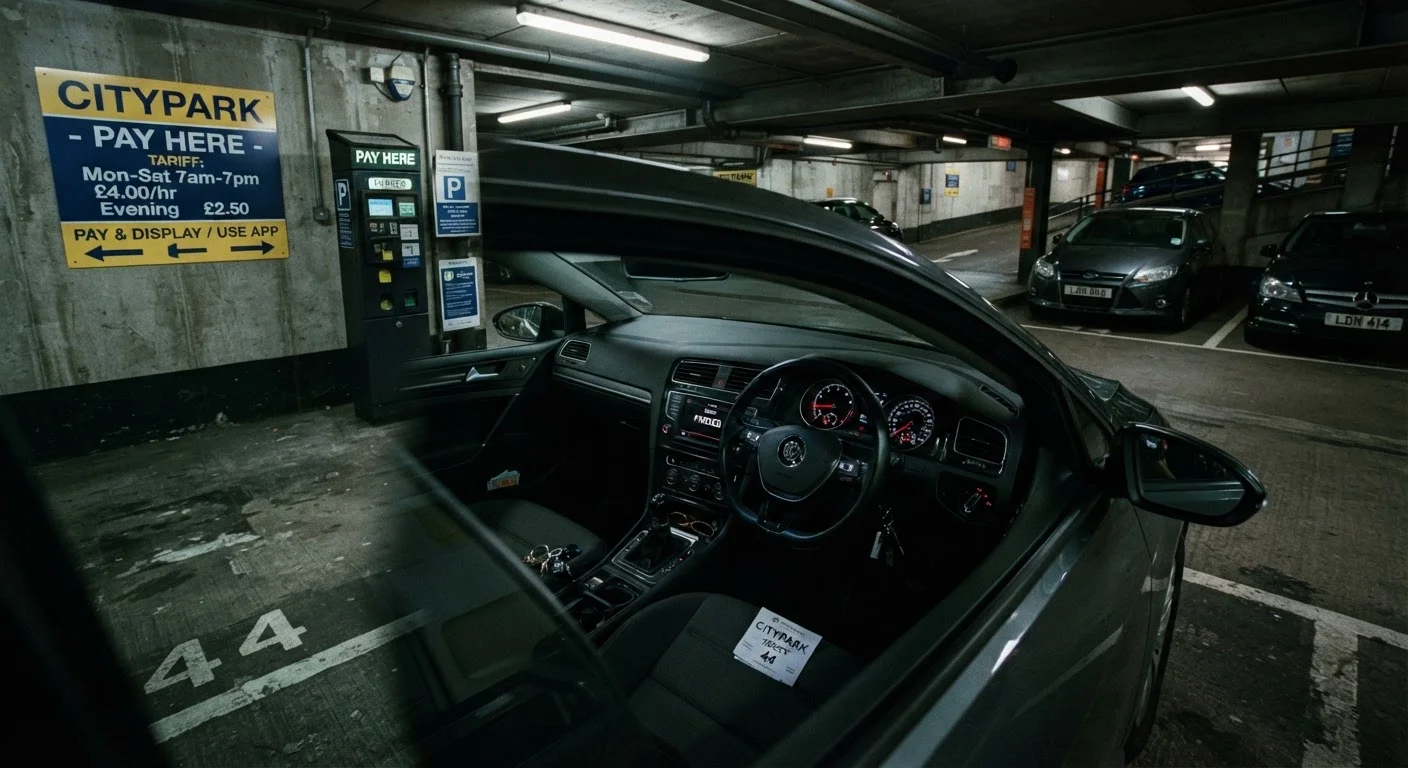
Parking Fees and Garage Costs
Urban and suburban drivers routinely pay for street parking, paid lots, and monthly garage access — but these charges seldom appear in ownership cost calculations. Depending on how often you park in paid locations, annual parking costs can range from negligible to several hundred dollars. Drivers in metropolitan areas sometimes spend more on parking than on routine maintenance. Tracking even two or three paid parking events per week across 52 weeks adds up quickly.
Urban drivers can spend more on annual parking fees than on routine vehicle maintenance.
Tolls and Transponder Replenishment
Toll infrastructure has expanded across the US, and many drivers pay tolls multiple times per week without factoring them into their vehicle budget. Electronic transponder accounts (such as E-ZPass or regional equivalents) are replenished automatically, making the cost nearly invisible. Commuters who regularly use toll roads or bridges can accumulate $300–$800 in annual toll charges, depending on their route and region — a significant sum that deserves its own budget line.
Regular toll road commuters can accumulate hundreds in charges that never appear in ownership estimates.
Registration Renewals and Title Fees
Annual vehicle registration is a known cost, yet it frequently gets lumped into a vague mental category rather than explicitly budgeted. Renewal fees vary considerably by state and, in some states, by vehicle value — meaning they can shift year to year. Additional title transfers, specialty plate fees, or emissions inspection charges layer on top. Drivers who relocate between states may face title and registration costs they hadn't anticipated at all. For reference ranges by category, see the annual vehicle cost reference.
Registration costs can shift year to year in states that tie fees to vehicle value.
Roadside Assistance Memberships
Many drivers maintain a roadside assistance membership independently or through a club, often paying $50–$150 per year. Others have this coverage bundled into their auto insurance or a credit card benefit — and pay for a redundant standalone membership without realizing it. Conversely, some drivers assume they're covered only to discover they're not when a breakdown occurs. Auditing what roadside assistance you actually have, and what you're paying for, is a straightforward way to eliminate duplicate costs or close a genuine gap.
Duplicate roadside assistance coverage is one of the most easily overlooked redundant vehicle expenses.
Car Washes and Detailing
A single professional car wash seems inconsequential. But drivers who wash their vehicles weekly or bi-weekly across a full year — particularly those using automatic tunnel washes or interior cleaning services — can spend $200–$600 annually on vehicle cleaning alone. Seasonal detailing adds further. These are entirely legitimate expenses that preserve paint and resale value, but they belong in the budget. Untracked, they contribute to the gap between what drivers think they spend and what they actually spend.
Frequent car washes can quietly accumulate to several hundred dollars over a single year.
Residential and Work Parking Permits
Residents in permit-restricted zones pay annual fees for the right to park near their own homes. These permits are often renewed automatically or tied to vehicle registration, making them easy to overlook as a discrete cost. Work parking permits, garage stickers at universities or hospitals, and neighborhood association parking programs all fall into the same category. The fees are usually modest individually, but they represent a real, recurring vehicle-related expense most budgeting tools don't prompt drivers to include.
Residential and workplace parking permits are recurring fees that rarely appear in ownership cost tools.
Accessories, Mats, and Minor Replacements
Floor mats wear out. Windshield wipers need replacing more often than most drivers budget for. Phone mounts, cargo organizers, replacement key fobs, and USB adapters are all routine vehicle purchases that accumulate throughout the year. None of these items is expensive in isolation, but together they represent a category of spending — call it vehicle accessories and minor replacements — that most ownership cost frameworks ignore entirely. Tracking these purchases reveals a consistent annual spend that deserves its own modest line in any vehicle budget. The maintenance costs that catch drivers off guard covers related ground on the upkeep side.
Small accessory and replacement purchases collectively form a real spending category most budgets miss.
Putting It All Together in Your Budget
Individually, none of these costs feels alarming. Collectively, depending on where you live and how you drive, they can add anywhere from several hundred to well over a thousand dollars per year to your ownership total. That's a figure worth knowing before it appears on your bank statement.
Track Before You Trim
Before cutting any vehicle-related expense, spend 60–90 days logging every charge — including tolls, parking, car washes, and permit renewals. You can't optimize what you haven't measured. Many drivers find that simply seeing the full picture is enough motivation to eliminate the redundancies and redirect the savings.
The most effective approach is to track every vehicle-related transaction — including the ones that seem trivial — for a full 12-month period. Most drivers are surprised by what they find. For a structured method of capturing all of these categories in one place, the car ownership budget walkthrough offers a practical framework. And if you want to stress-test your assumptions, common ownership cost myths are worth reviewing — several relate directly to the categories covered here.
Smarter ownership doesn't require cutting every convenience. It requires knowing what you're actually spending — so that every dollar is a deliberate choice rather than a quiet surprise.